Who Built The Fargo-Moorhead Metro: 7 Key Developers · Fargo INC!
Businesses
The Ones Who Built The Metro
From a wheat field on Fargo’s edge to downtown towers, suburban neighborhoods and adaptive-reuse landmarks, these developers changed where the region lives, works, shops and gathers.
In shortA look at the developers who most shaped Fargo, Moorhead, and West Fargo through retail, residential, downtown rehabilitation, and adaptive-reuse projects spanning decades.
3 things to know
1West Acres opened in 1972 on a wheat field beyond Fargo's developed edge and grew to ~950,000 sq ft, helping establish 13th Avenue as a major commercial corridor.
2Kilbourne Group, EagleRidge, and Enclave each pursued mixed-use, infill, or integrated development models that added housing, offices, and public space rather than isolated standalone projects.
Generated by Claude · grounded in this articleNever used on sponsored content
A metro is never shaped by one blueprint. Fargo, Moorhead and West Fargo grew through a series of bets: that shoppers would drive beyond Fargo’s developed edge; that downtown buildings worth saving could become anchors again; that former farm ground could support complete neighborhoods; and that housing, offices, hospitality and entertainment could be assembled into districts rather than standalone projects.
The developers in this article made some of the region’s largest and most catalytic bets. This is not a ranking, and it is not an exhaustive list. Impact is measured here by the scale and staying power of the work, the extent to which a project redirected growth, and the developer’s influence on how later projects were conceived. That also means impact is not the same thing as an honor roll. One inclusion is deliberately cautionary, because the consequences of development finance can be as lasting as the buildings themselves.
Bill Schlossman
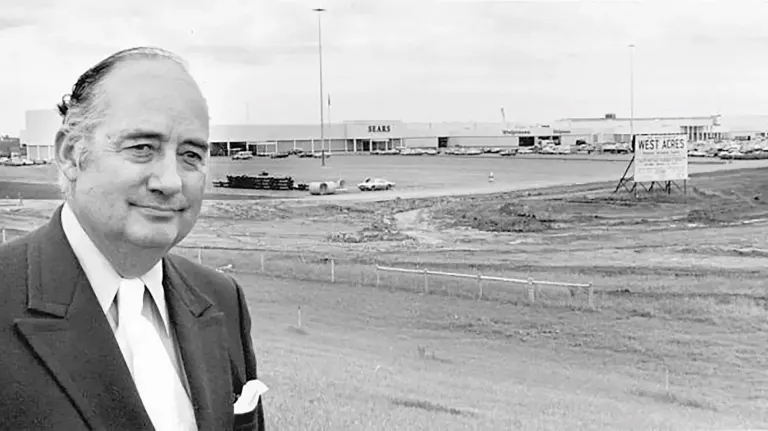
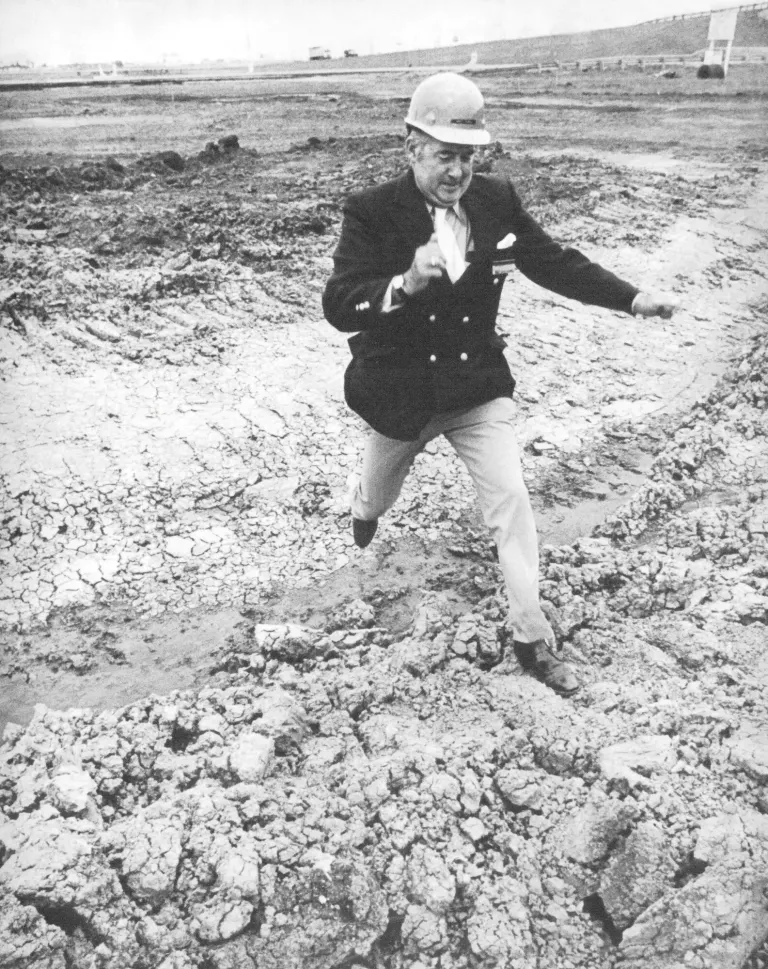
When Bill Schlossman began pursuing a regional shopping center, the location that became West Acres was not a natural choice. His first concept was tied to downtown Fargo, but after that plan failed to advance, he and local partners looked west. They acquired a wheat field near Interstate 29 and 13th Avenue South, more than a mile beyond Fargo’s developed edge. West Acres opened on August 2, 1972, with 52 stores, roughly 230,000 square feet of mall space and two department-store anchors. At the time, even 13th Avenue was not yet paved.
That gamble did more than create a mall. West Acres became a regional retail destination and helped establish 13th Avenue as one of the metro’s dominant commercial corridors. Housing, restaurants, hotels, and other retailers followed the traffic. The center eventually grew to about 950,000 square feet and more than 100 stores, but its larger legacy is that it proved that a project at the edge of Fargo could move the edge itself. Much of south and west Fargo’s later growth is easier to understand when viewed as part of the urban shift West Acres helped begin.
Kevin Christianson’s development career began after he sold a home-improvement business in 1993 and moved into hotels. Hospitality projects gave Christianson Companies experience in site selection, financing, construction, and operations, but the company’s most consequential local work came through residential land development. Christianson acquired large tracts in the mid-1990s and helped create communities including Amber Valley, Elmwood Court, Osgood, Timber Creek, and SpringHill.
The scale is difficult to overstate. Christianson Companies reports developing more than 6,000 single-family lots in the Fargo-Moorhead area. Osgood alone covered roughly 900 acres, with about 100 acres dedicated to the city for the golf course. What began on Fargo’s southern edge grew into a community with homes, apartments, schools, retail, restaurants, recreation, and senior living. Later entertainment projects in Timber Creek extended that mixed-use approach. Christianson’s impact is visible in the everyday map of south Fargo: streets, lots, and neighborhood centers that allowed population growth to become a durable part of the city rather than a scattering of isolated projects.
Kevin Christianson
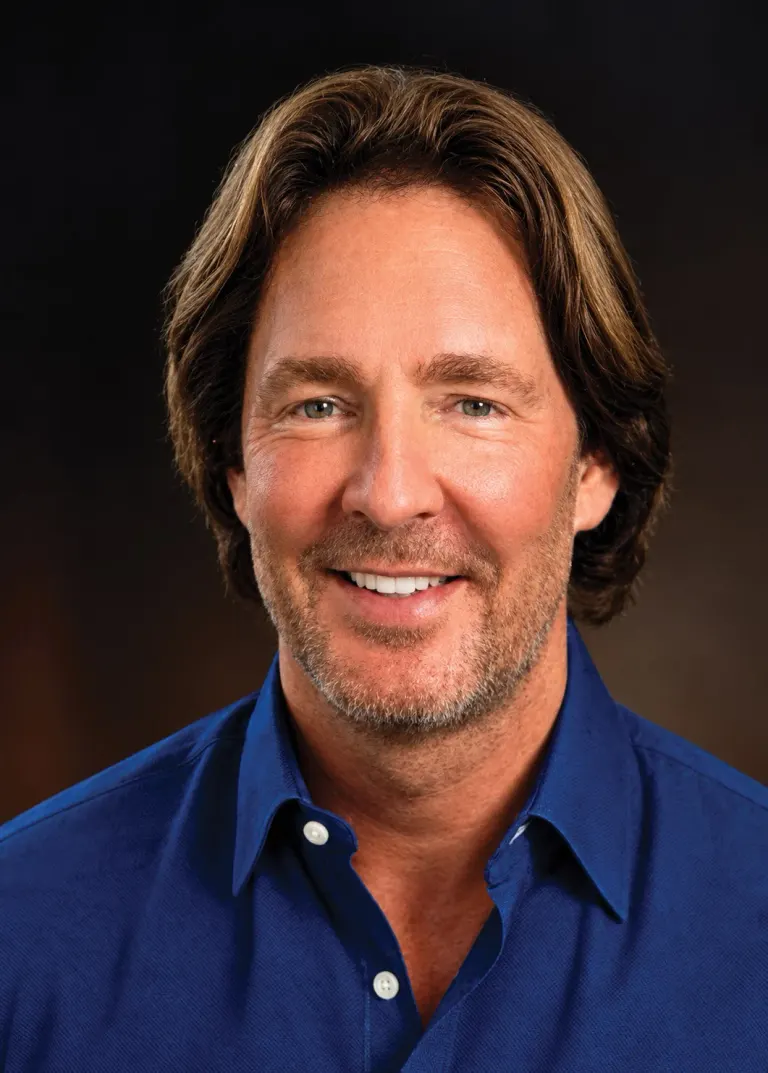
Doug Burgum
Doug Burgum founded Kilbourne Group in 2006 around the idea that downtown Fargo’s historic buildings and underused lots could support a thriving, mixed-use neighborhood. The firm’s first decade emphasized rehabilitation and preservation. Under President Mike Allmendinger’s leadership, that work expanded into larger infill projects that added housing, offices, hospitality, retail, and public space to the city’s core.
The results now form much of downtown Fargo’s modern identity. The 18-story RDO Building combined a hotel, offices, restaurants, retail, and condominiums beside Broadway Square. The Mercantile added 100 apartments, nine condominiums, and about 17,000 square feet of commercial space. The Kesler and The Landing at 1001 NP continued the conversion of surface parking and marginal sites into places where people live. Kilbourne’s influence is therefore not confined to a single tower. The Avery, a $60 million-plus housing, parking, and theater complex, and Fargo’s selected downtown convention-center concept show that the same model is still shaping the city’s next chapter.
Doug Burgum
Ace and Tyler Brandt
Ace Brandt built a business career around the John Deere organization his family acquired in 1992, but his local development legacy is most visible in the land south of Interstate 94. In the early 2000s, the Brandt family and its partners began planning Urban Plains on what had been open fields. The ambition was broader than a conventional subdivision, with housing, offices, restaurants, recreation, and major community amenities that would reinforce one another. Ace’s support of the Metro Sports Foundation also helped advance the financing and construction of what is now Scheels Arena.
Ace Brandt
Tyler Brandt carried that work into its next phase. Urban Plains now includes apartments, offices, trails, parks, hospitality and entertainment destinations, with Scheels Arena serving as the district’s civic anchor. Nearby projects such as Suite Shots, Kingpinz, and the Sanford Sports complex strengthened the area’s pull as a place people visit, not merely pass through. Not every building in the district belongs to the Brandts, and that is part of the impact: their land strategy and partnership model created the conditions for other institutions and developers to invest. Urban Plains helped transform south Fargo from an expanding edge into a regional destination.
Tyler Brandt
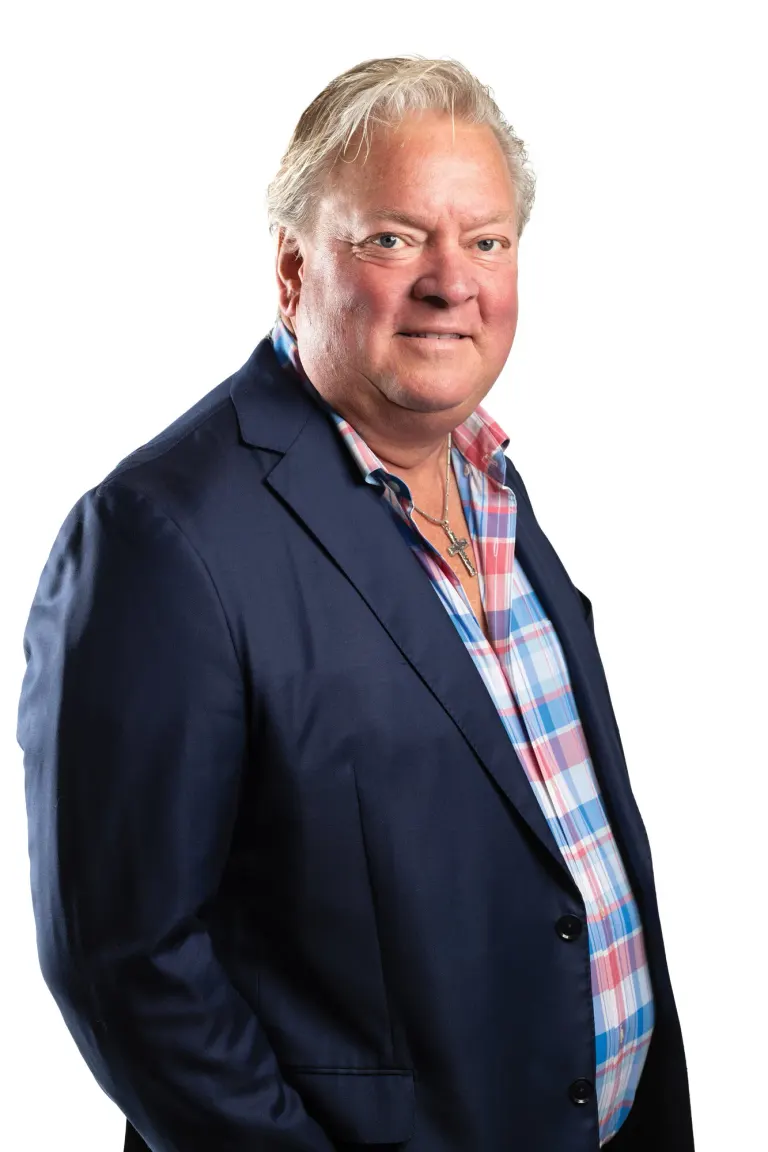
Jim Bullis and Jeff Laliberte
Jim Bullis and Jeff Laliberte founded EagleRidge Development in 2009, during a period when the housing market rewarded discipline more than bravado. The company grew from multifamily and residential land work into one of the metro’s most active developers of complete neighborhoods. EagleRidge reports a portfolio of more than 2,500 single-family home sites, 3,200 multifamily units and 250,000 square feet of commercial space.
Jim Bullis
Its work spans south Fargo, West Fargo, and Moorhead, but EagleRidge Plaza best captures the company’s development philosophy. The project introduced Class A office space, residences, structured parking, and a public plaza along Veterans Boulevard, using shared amenities to make the whole district more valuable. Nearby, Northern Lights added 196 apartments and more than 11,000 square feet of office and retail space with a skyway connection into The Lights district. In communities such as Golden Valley, West Haven and Madelyn’s Meadows, parks and trails are treated as core infrastructure rather than leftover space. Bullis and Laliberte’s influence lies in that shift from selling parcels to composing places.
Jeff Laliberte
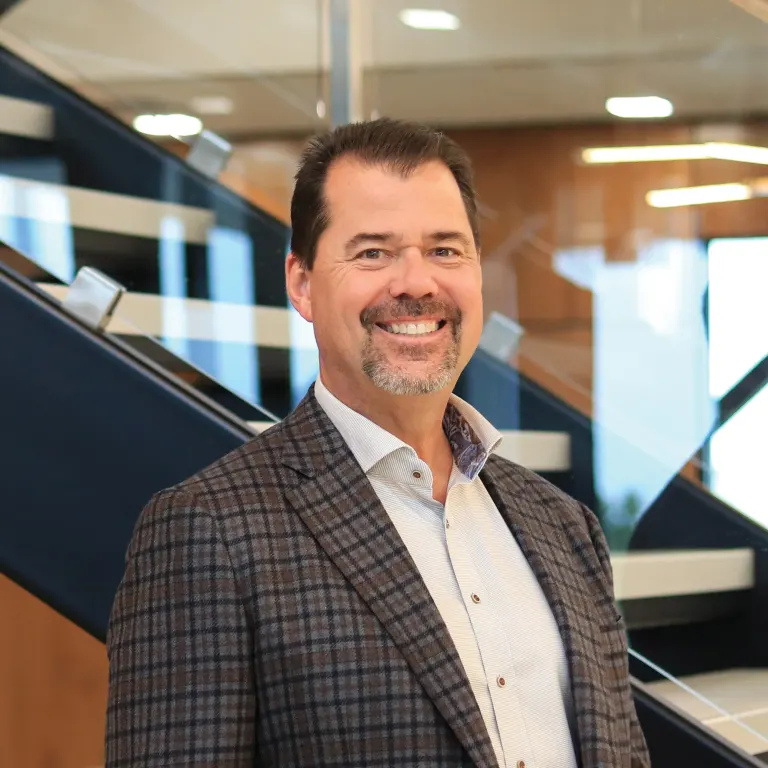
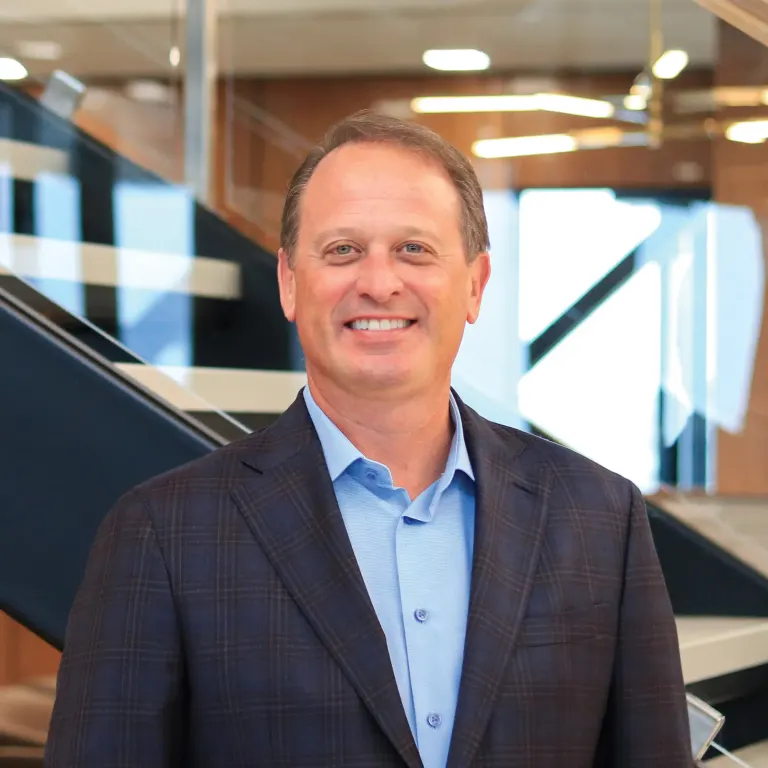
Austin Morris and Ben Meland
Austin Morris and Ben Meland founded Enclave in 2011 and built it around a unified model that includes development, design, construction, and property management working as one system. The approach gave the company tighter control over the entire life of a project, from the first sketch to leasing and operations. By 2022, Enclave said its real estate investments had surpassed $1 billion, with a platform that had expanded well beyond North Dakota.
Austin Morris
The Fargo-Moorhead-West Fargo area remains the clearest showcase of that growth. Enclave has delivered a deep inventory of apartments along with medical, office, industrial, and mixed-use projects. The 212-unit Rye at Tillstone and the 102-unit Origin helped establish a new residential node in south Fargo. In West Fargo, the company designed, developed, built, and manages its 86,200-square-foot headquarters beside other professional and medical uses. New projects such as the 130-unit Merit 38 continue to add housing at a metropolitan scale. Morris and Meland’s broader contribution is organizational: they showed that a Fargo-based firm could retain a local development identity while building an integrated platform capable of competing nationally.
Ben Meland
Kevin Bartram
Kevin Bartram’s impact is different from that of the metro’s largest subdivision developers. Working as both an architect and a developer, he has repeatedly focused on difficult old buildings whose character would be expensive to reproduce and easy to lose. The most visible example is Fargo’s former Northern Pacific Railway repair building. Bartram acquired the abandoned 1883 structure, imagined a new use for its masonry walls and timber frame, and connected with Drekker Brewing Company. Drekker’s Brewhalla campus opened there in 2018 and became a signature regional destination.
Bartram has pursued the same preservation-minded logic on the east side of the Red River. The Simon Warehouse in Moorhead was converted into loft housing, giving a former industrial building a new economic life. He later acquired downtown Moorhead’s former U.S. Bank building and outlined plans for a restaurant, boutique hotel, banquet space, and revived rooftop dining concept. Those plans are still unfolding, but the pattern is established where adaptive reuse can turn an old building into the thing that gives an entire district its identity.
Editor of Fargo INC! — covering the founders, companies, and ideas shaping business in Fargo-Moorhead. Eleven years in, still no opinions, no politics, all business.