In shortGrain Designs, a custom furniture and architectural design-build company near Fargo founded in 2013, produces commercial office furniture and architectural elements using solid hardwoods and steel for businesses across multiple industries.
3 things to know
1Founded in 2013 by two North Dakota State University architecture graduates, Grain Designs started in a two-stall apartment garage and now operates on a 19-acre property near Davenport, North Dakota.
2The company has completed office environments for more than 100 businesses, with projects including conference tables, sit-stand desks, shelving, signage, wall paneling, and reception desks.
3Grain Designs publishes starting prices on its website and offers free design consultations; its process moves from site analysis and design drawings through fabrication, installation, and follow-up.
Generated by Claude · grounded in this articleNever used on sponsored content
The reception desk may feel temporary or permanent. A conference table can invite collaboration or make every meeting feel transactional. The proportions of an office can create ease, or force employees to spend each day working around furniture that was never designed for the room.
Grant Koenig and Blain Mikkonen notice those signals because they were trained to see space before they were trained to build furniture.
Both graduated from North Dakota State University’s architecture program. In 2013, they combined that education with a desire to build something of their own and started Grain Designs in Mikkonen’s two-stall apartment garage. What began as an experiment in reclaimed wood and irregular design has grown into a custom furniture and architectural design-build company on a 19-acre property near Fargo. The site, at 4487 165th Avenue SE in Davenport, is also home to The Pines wedding and event venues.
The company still carries the logic of the garage. They look closely at the material, question the standard option, and make the object fit the life happening around it.
For commercial clients, that means treating furniture as part of the business strategy.
Beyond the Statement Piece
Custom furniture is often imagined as a single dramatic conference table—the object selected after the practical office is already complete. Koenig and Mikkonen believe that definition is too narrow.
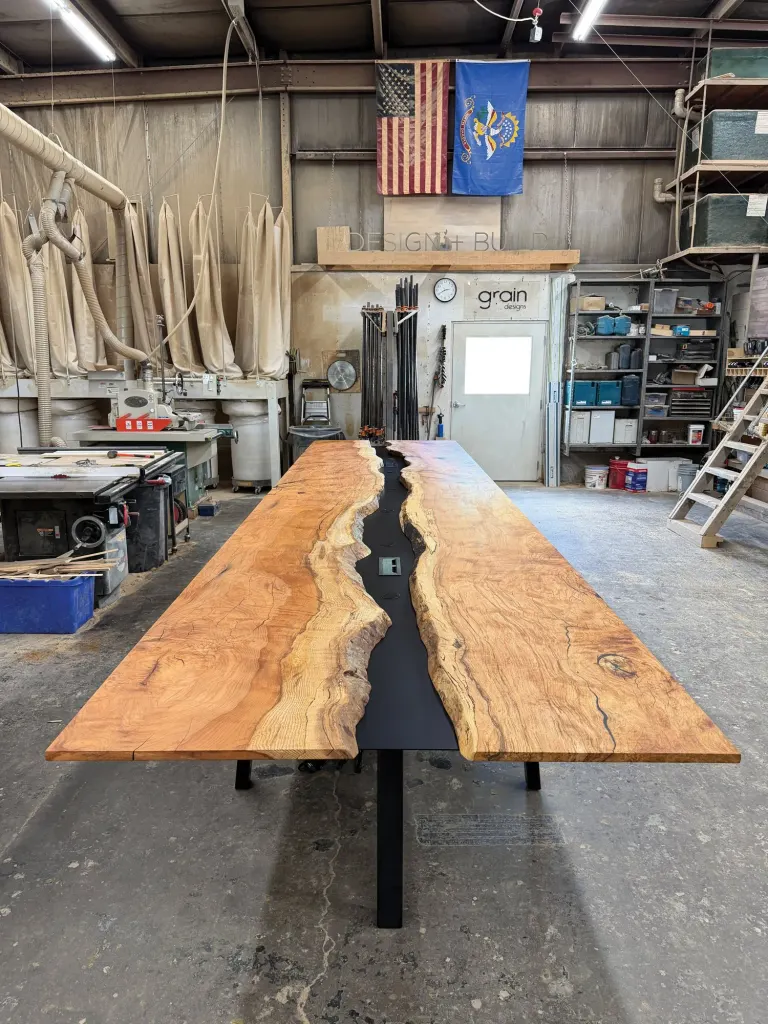
A live-edge table takes shape in the Grain Designs shop. Photo: Grain Designs
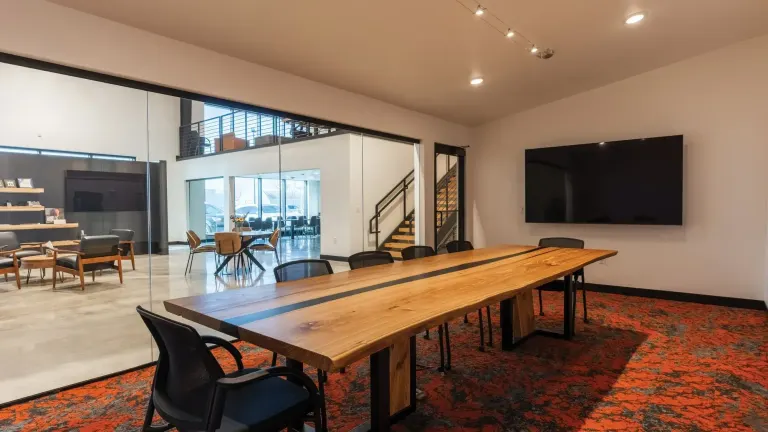
A custom solution may be a reception desk shaped to manage traffic and conceal technology. It may be a set of sit-stand workstations dimensioned for an unusual floor plan, shelving that turns dead space into usable storage, or a modesty panel that carries a company’s visual identity without overwhelming the room. Power, cable management, materials, and circulation can be resolved together rather than improvised after delivery.
That approach is especially valuable for businesses in which trust and longevity are part of the product. A financial firm, bank, law office, or professional-services company is asking clients to believe it will be there years from now. The physical environment either reinforces that promise or quietly works against it.
Solid wood communicates differently from a thin laminate. A reception area designed around the people who use it feels different from one assembled from whichever pieces happened to be available. None of that replaces good service, but it creates the setting in which service is experienced.
Grain Designs has completed office environments for more than 100 businesses. Its portfolio includes conference tables, sit-stand desks, and shelving for NorthStar Financial; desks and a podcast table for You Betcha; meeting tables and shelving for Enclave Companies; and a boardroom project for Dakota Medical Foundation using locally sourced wood and robust steel bases.
Architecture at Furniture Scale
Koenig and Mikkonen begin by understanding how the space needs to perform.
The conversation includes dimensions and aesthetics, but also behavior. How many people use the room? Where do clients enter? Which equipment must be within reach? What needs to be hidden? Does the team collaborate around one surface or work independently? Will the furniture need to adapt as the company grows?
Their architecture background helps them place the piece within a larger system. Using professional design software, the team can develop floor plans, three-dimensional models, and renderings so a client can see how proportions, circulation, and finishes will work before fabrication begins.
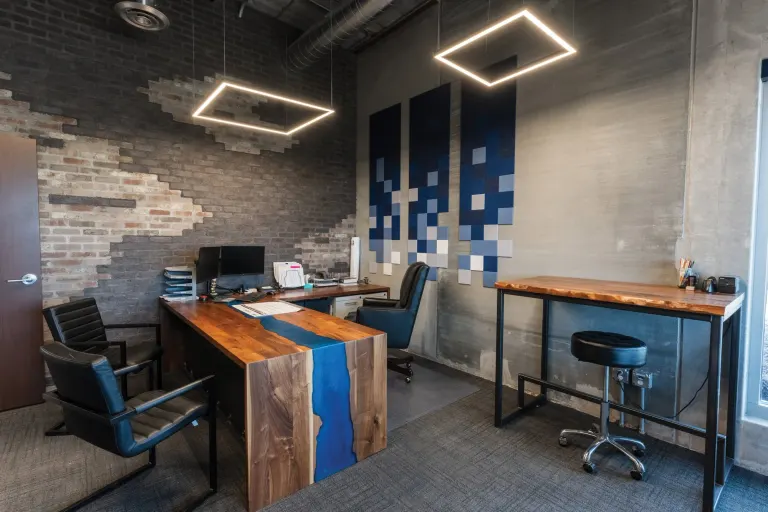
A walnut and blue epoxy desk in a brick-walled office. Photo: Grain Designs
That preview reduces one of the biggest anxieties in custom work: the fear of committing to something that exists only as an idea. Instead of asking a client to imagine the finished piece from a wood sample and a conversation, the design process creates checkpoints. Dimensions can change. A modesty panel can be simplified. Storage can move to the side where it will actually be used. A finish can be judged against the room, not in isolation.
The company describes its public process in three stages: connect and gather inspiration, develop a tailored quote and design drawings, then build and deliver the finished work. In practice, the commercial process is more iterative. Consultation leads to site and workflow analysis; drawings and finishes are reviewed; the shop translates the approved design into wood and steel; installation brings the piece into the space; and follow-up closes the loop.
That collaboration can be as hands-on as the client wants. The designers can guide the full process, or work from a strong concept already established by an architect, interior designer or business owner.
One of One for Every Room
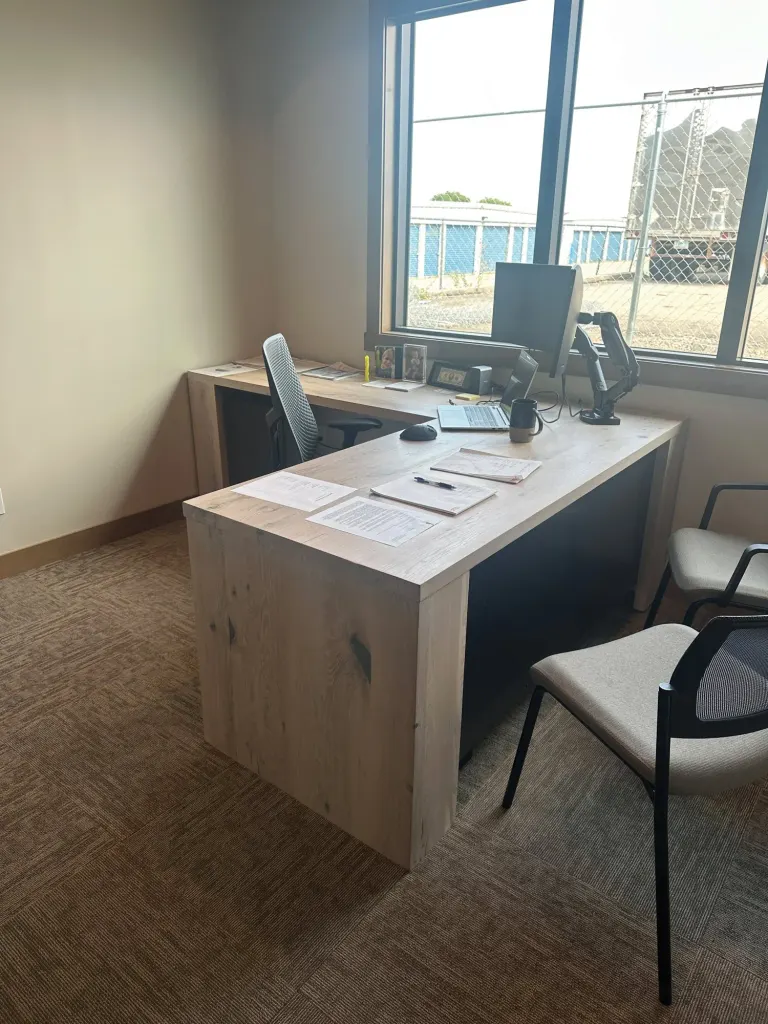
Custom desks for Epic Built. Photo: Grain Designs
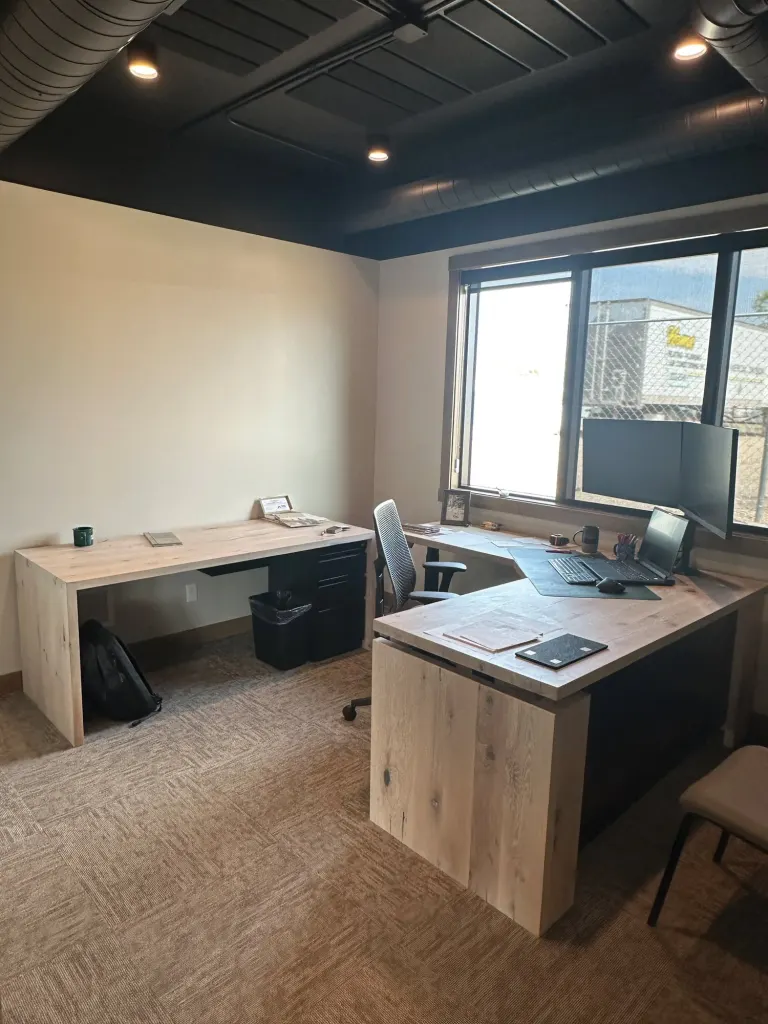
One of the custom desks built for Epic Built. Photo: Grain Designs
Another workstation from the Epic Built project. Photo: Grain Designs
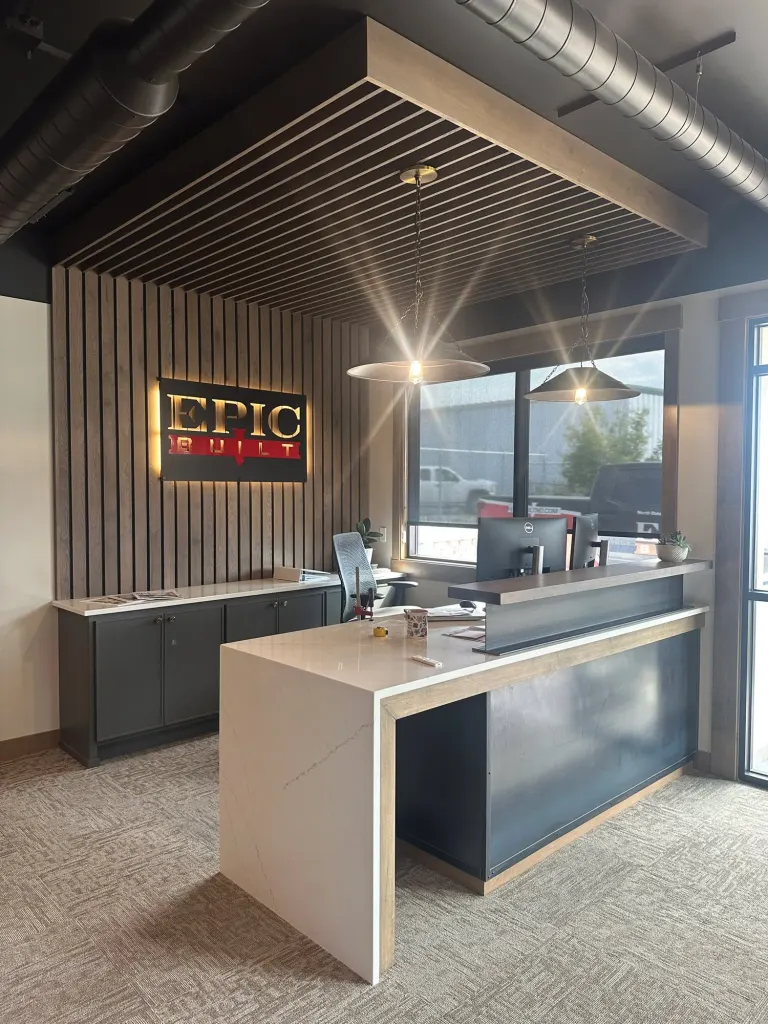
The Epic Built reception desk, Fargo, ND. Photo: Grain Designs
The first objection is usually cost. The second is time.
Koenig understands both. For years, the word custom has been shorthand for an unlimited budget and an indefinite timeline. Grain Designs has worked to make the numbers more concrete. Its website publishes starting prices across several commercial categories and offers free design consultations, giving prospective clients an earlier view of the likely investment.
The company also argues that custom hardwood furniture can compete with commercial office-furniture pricing. That comparison depends on the materials, quantity, features, installation, and alternatives being considered; a bespoke desk should not be compared casually with the least expensive particleboard option online. The more useful comparison is between products expected to serve the same purpose for a similar length of time.
That is where fit and durability enter the calculation.
A lower-priced desk that does not use the available floor plan, cannot manage the required technology, or needs replacement after a few years may be inexpensive only at checkout. A well-designed piece can create value by using space efficiently, supporting the work and remaining serviceable as trends change.
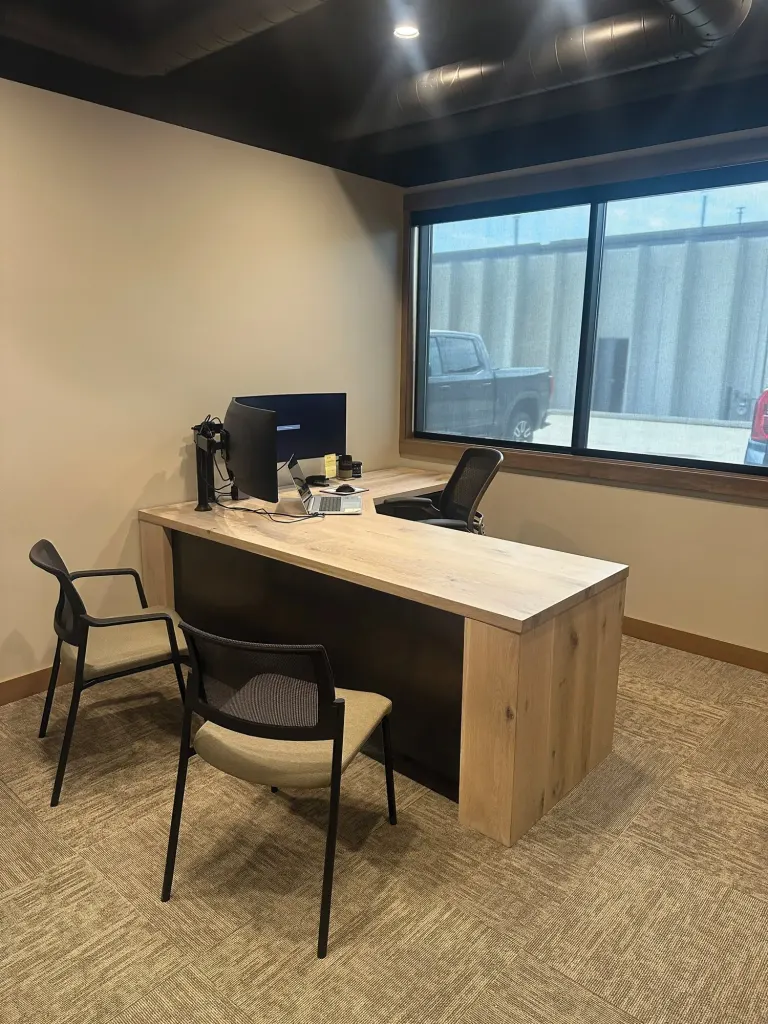
Grain Designs builds primarily with solid hardwoods, reclaimed wood, steel, and other premium materials. White oak is a consistent part of its inventory, while walnut, ash, maple and reclaimed species allow a project to take on different character. Hot-rolled steel is a common choice for bases and details because of its durability, availability, and visual warmth, although the team also works with stainless steel, aluminum, and other metals when the design calls for them.
What Custom Can Cost
Furniture type
Average price
Adjustable-height desk
$1,699 – $2,799
Meeting or office table
$1,849 – $3,499
Conference table
$2,999 – $7,799
L-shaped office desk
$3,099 – $4,899
Podcast or media desk
$3,249 – $7,499
Entry or reception desk
$3,699 – $8,499
U-shaped executive desk
$3,999 – $6,899
From Design Concept to Built Reality
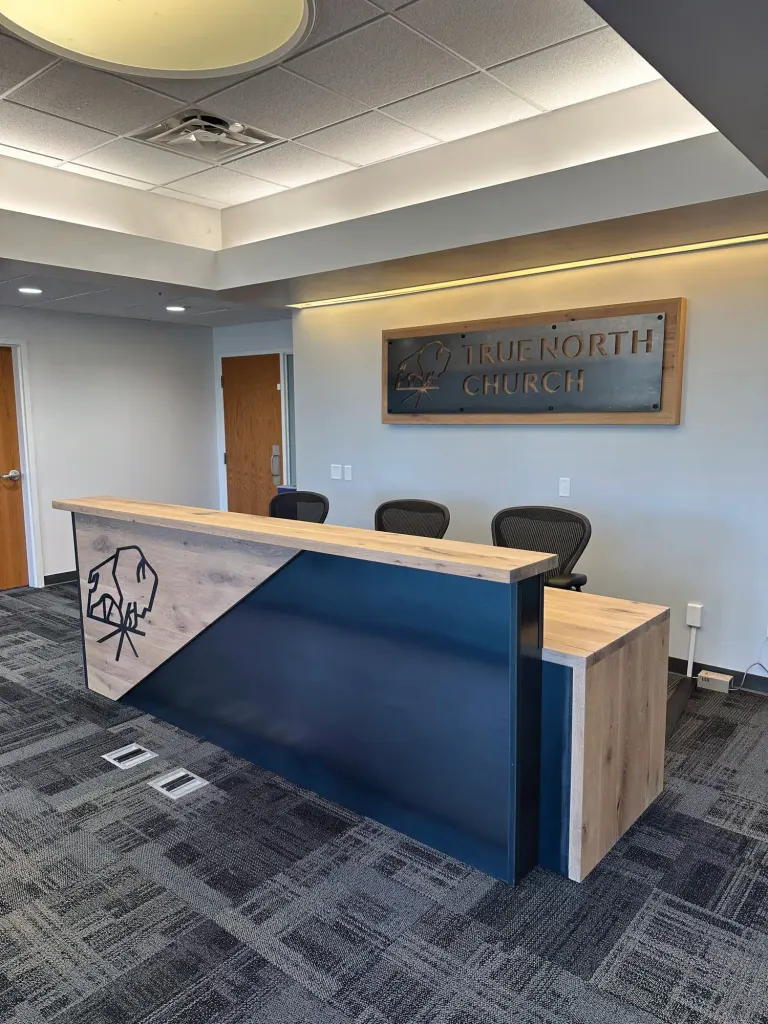
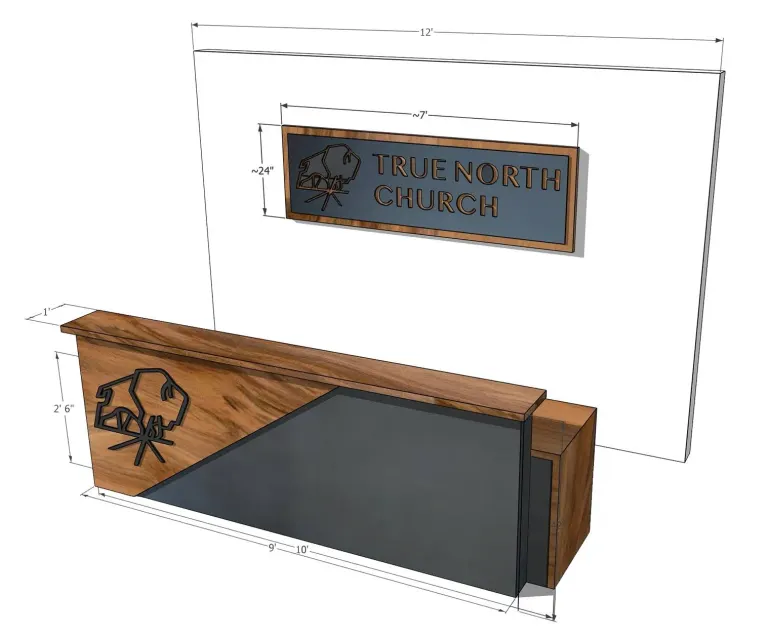
True North Reception Desk. Photo: Grain Designs
The True North reception desk design rendering. Photo: Grain Designs
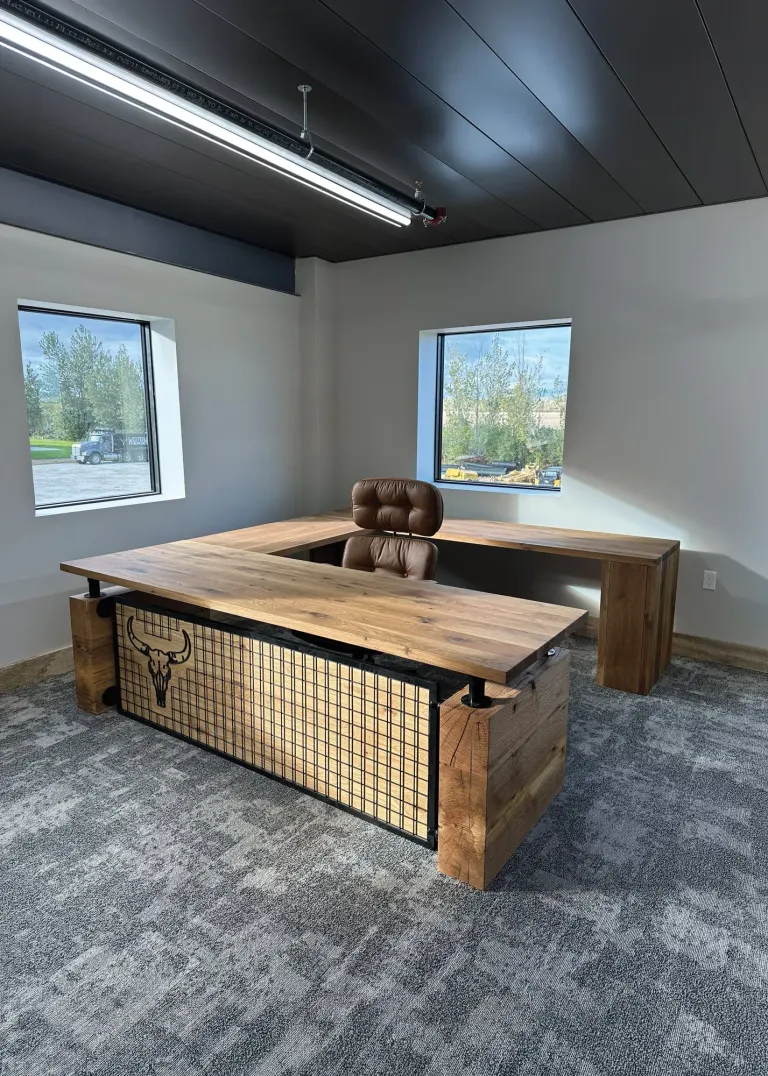
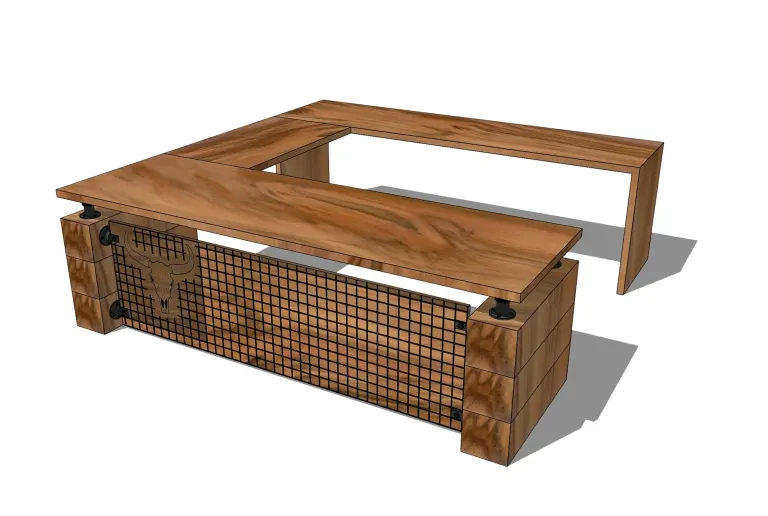
Western Excavation Desk. Photo: Grain Designs
The Western Excavation desk design rendering. Photo: Grain Designs
Built Near Fargo, Built for Your Brand
The Grain Designs story is inseparable from place.
Mikkonen grew up on a farm near Frederick, SD; Koenig is from Fargo. Their company makes furniture near Davenport, North Dakota, in a shop that shares a property with the venues they helped create. The Pines Black and Pines White became full-scale demonstrations of their work: custom tables, sliding doors, bars, counters, and architectural wood elements functioning together as an environment.
That scale expanded what clients could ask of the company. Grain Designs is no longer limited to a table or desk. Its work includes business signs, wall features, paneling, shelves, doors, mantels, timber wraps and other architectural details that can connect an office from the entrance to the boardroom.
For a brand, consistency at that level is powerful. The logo on the wall, the material at reception, and the conference table where major decisions are made can speak the same visual language. A business does not need to turn every surface into a billboard. The strongest environments often use identity more quietly—with a familiar wood tone, a steel detail drawn from the company’s industry, a subtle mark in a modesty panel or a form inspired by the work itself.
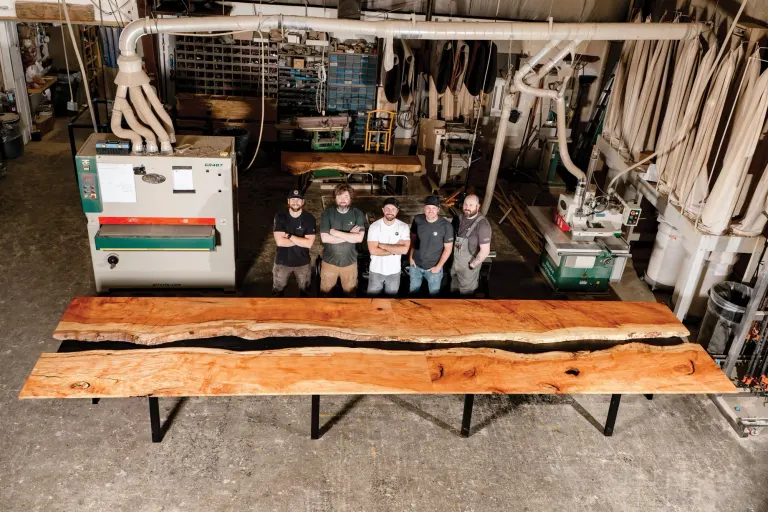
The Grain Designs team in the shop. Photo: Grain Designs
Did You Know?
Grain Designs is the current FACE of Commercial Furniture in the Fargo-Moorhead-West Fargo area!
Grain Designs is the 2026 Official Face of Commercial Furniture, per Faces Fargo.
Editor of Fargo INC! — covering the founders, companies, and ideas shaping business in Fargo-Moorhead. Eleven years in, still no opinions, no politics, all business.