The Math Behind the Missing Calves: 701x's Smart Ear Tags · Fargo INC!
Businesses
The Math Behind the Missing Calves: 701x's Smart Ear Tags
Nearly 2.4 million calves disappear from the U.S. beef supply every year, worth more than $6 billion in lost value. 701x's ecosystem of smart ear tags is built to catch a fraction of that loss and turn it into real return.
In short701x markets smart ear tags priced at $175 (xTpro) and $20 (xTlite) aimed at reducing the ~2.44 million calf deaths the U.S. beef industry loses annually, valued at over $6.2 billion.
3 things to know
1The U.S. beef cow herd stood at 27.6 million head as of January 1, 2026, its lowest since 1961, with the 2025 calf crop the smallest since 1941 at 32.9 million head.
2USDA recorded a 5.9% national calf death rate in 2024, up from 3.6% in the 2007–08 mortality census, indicating the problem has worsened over time.
3701x's xTpro tag offers GPS, health alerts, and estrus detection; the xTlite calf tag pairs with it. A 100-cow setup costs ~$3,550, recoverable by saving roughly 1.4 calves.
Generated by Claude · grounded in this articleNever used on sponsored content
Photos provided by 701x
The Math Behind the Missing Calves: 701x Turns Death Loss into Dollars
Somewhere between the maternity pen and the packing plant, nearly 2.4 million calves disappear from the U.S. beef supply every single year. Not misplaced on a ledger. Dead, lost to dystocia, scours, pneumonia, predators, and the hundred other issues that happen when a 1,200-pound cow calves alone in a pasture nobody's watching at 3 a.m.
It's a problem that's always existed in cattle ranching. But it's never mattered this much.
As of January 1, 2026, the U.S. cattle herd fell to 86.2 million head, the smallest national inventory in 75 years[1]. The beef cow herd specifically dropped to 27.6 million head, its lowest point since 1961[2]. And the 2025 calf crop, the industry's raw material for the next two years of beef production, came in at just 32.9 million head, down 520,900 head from 2024 and the smallest calf crop since 1941[3]. Herd rebuilding, when it eventually starts, takes years to show up as market-ready cattle. In the meantime, ranchers are fighting over a shrinking pool of calves with historically few tools to grow that pool faster.
That's what makes death loss such an urgent, and solvable, piece of the puzzle.
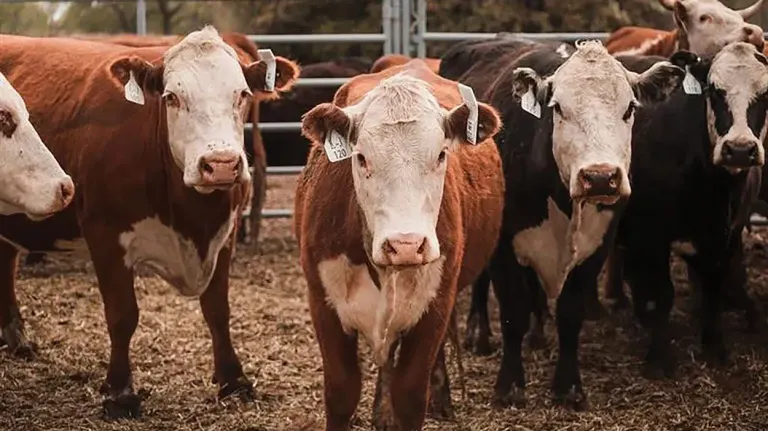
Getting a tag on early is how a calf gets tracked from the start.
USDA's National Animal Health Monitoring System has tracked calf mortality for decades, and the numbers tell a consistent story in two acts.
Act one: birth to weaning. USDA's most current annual accounting puts this figure higher than older estimates suggest. USDA's National Agricultural Statistics Service reports that 1,975,200 calves died in the United States in 2024 out of a 33,529,500-head calf crop, a national calf death rate of 5.9 percent, following a 6.1 percent rate the year before[4]. That's a meaningfully higher rate than the 3.6 percent birth-to-weaning loss recorded in USDA's last full-scale mortality census in 2007–08[5], a sign the problem has gotten worse, not better, in the years since. Applied to the 2025 calf crop of 32.9 million head, a 5.9 percent death rate means roughly 1.94 million calves lost before they ever reach the weaning pen.
Act two: weaning to the packer. USDA-NAHMS reports average feedlot death rates of 1.4 percent for small feedlots and 1.6 percent for large feedlots, and independent data out of Kansas shows the monthly feedlot death rate for steers more than doubled between 1992 and 2017, climbing from 0.70 percent to 1.74 percent[6]. Applying a conservative 1.6 percent rate to the roughly 30.96 million calves that survive to weaning adds another 495,000 head lost on the way to slaughter.
Add the two together, and the beef industry loses close to 2.44 million calves a year, before they ever generate a dollar of revenue.
At today's prices, that's not a rounding error. Feeder cattle are averaging $364 per hundredweight for 750–800 pound calves in 2026, putting the market value of a 700-pound steer at roughly $2,550 a head[7]. Multiply that against 2.44 million lost calves, and the beef industry is watching more than $6.2 billion in potential value die in the pasture and the feedlot every single year, money that never reaches a rancher's bank account, never shows up as beef on a shelf, and never helps close the supply gap the entire industry is fighting right now.
Death loss isn't the only leak in the system. USDA's most recent cow-calf management study found that 93.5 percent of cows and 83 percent of heifers produced a calf in a given year[8], meaning roughly 6.5 percent of cows and 17 percent of heifers came up open (not pregnant) at the end of the breeding season. Applied to today's 27.6 million-head beef cow herd, that's nearly 1.8 million cows nationally that ate, drank, and occupied pasture for a full year without producing a single calf.
Cut that open rate in half, from 6.5 percent down to 3.25 percent, and roughly 897,000 more cows become pregnant nationwide. That's enough additional calves to nearly erase last year's entire 520,900-head calf crop decline in a single breeding season. In an industry starved for supply, that's not a marginal improvement. That's a meaningful step back toward herd rebuilding, without waiting years for it to happen naturally.
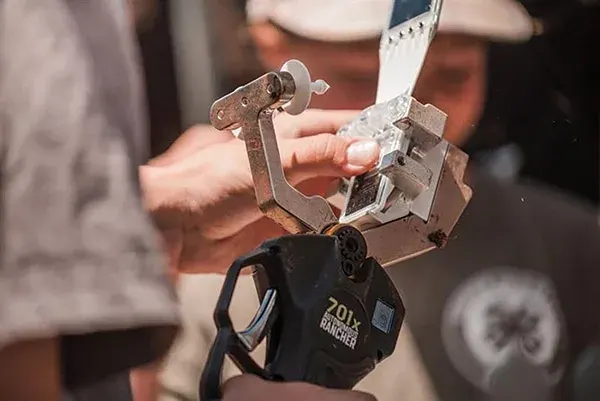
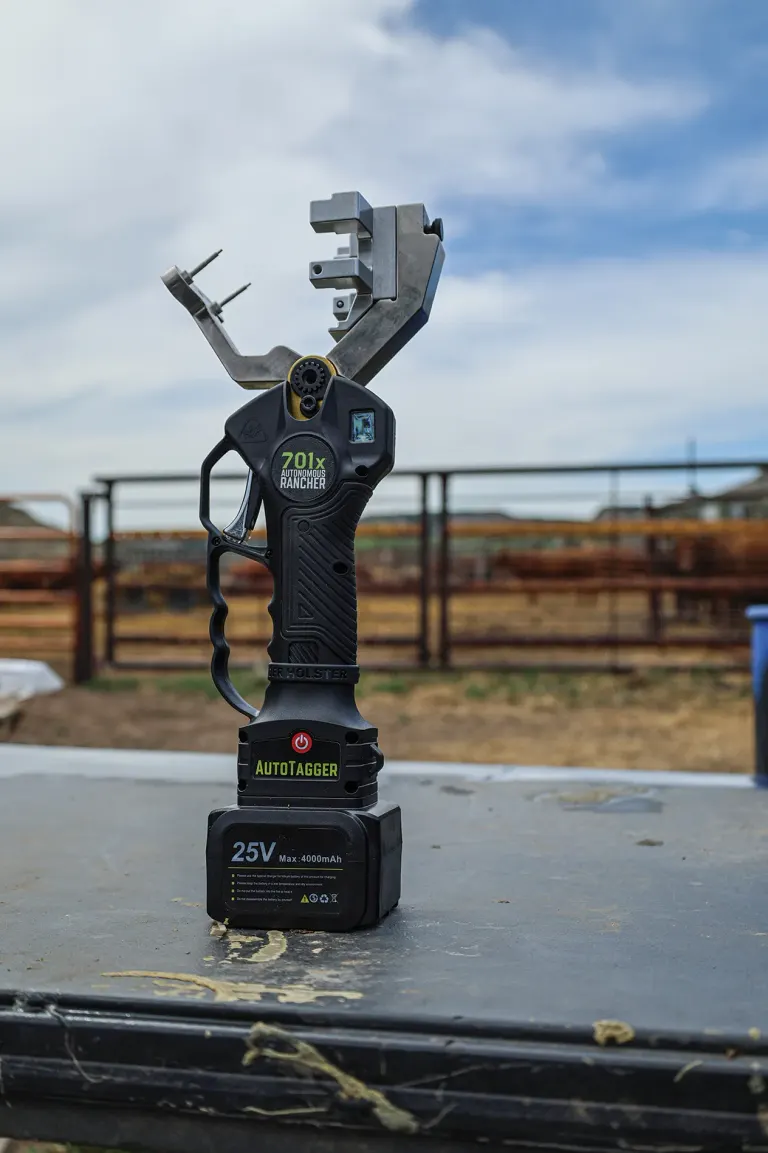
The tagging tools are part of the 701x system, not just the tags.
The 701x Solution
This is precisely the gap 701x's ecosystem of smart ear tags is built to close. The xTpro tag, a satellite-connected, GPS-enabled ear tag built for cows and bulls, delivers location, health alerts, estrus and bull-mounting detection, and calving alerts, priced at $175 per tag9
The xTlite tag, a lightweight wireless tag designed for calves, runs $20 per tag and pairs with nearby xTpro tags to track calf location, health alerts, nursing behavior, and send missing-calf alerts[9]. 701x recommends one xTpro tag for roughly every ten xTlite tags in a herd.
Run the math on a typical 100-cow operation, and the return on investment writes itself in many different ways.
The tags pay for themselves with one saved calf. Tagging 10 xTpro units and 90 xTlite units costs roughly $3,550. At today's ~$2,550 average calf value, catching just 1.4 calves that would otherwise have been lost, one missed dystocia alert flagged in time, one wandering newborn found before dark, recovers the entire year's tag investment for the whole herd.
You don't need to beat the industry's death loss rate, just chip away at it. Each $20 xTlite tag only needs to save 1 calf out of every 128 it protects to pay for itself, against a national calf death rate of 5.9 percent, nearly 7.5 times the rate a tag needs to hit to break even. 701x doesn't need to solve calf mortality completely to deliver a return; it just needs to catch a fraction of what's already happening on autopilot.
The ecosystem compounds, it doesn't just save calves, it makes more of them. Beyond loss prevention, xTpro's estrus detection and bull-mounting analytics are aimed squarely at the open-cow problem. USDA's most recent data puts the industry-average open rate at 11.75 percent, a blend of 6.5 percent for cows and 17 percent for heifers. If a 100-cow operation cuts that average open rate in half, from 11.75 percent down to 5.875 percent, that's roughly 6 additional calves born per year, worth $15,000 or more in added weaned-calf revenue, against a one-time tag investment of $3,550. That's better than a 4x return in year one alone.
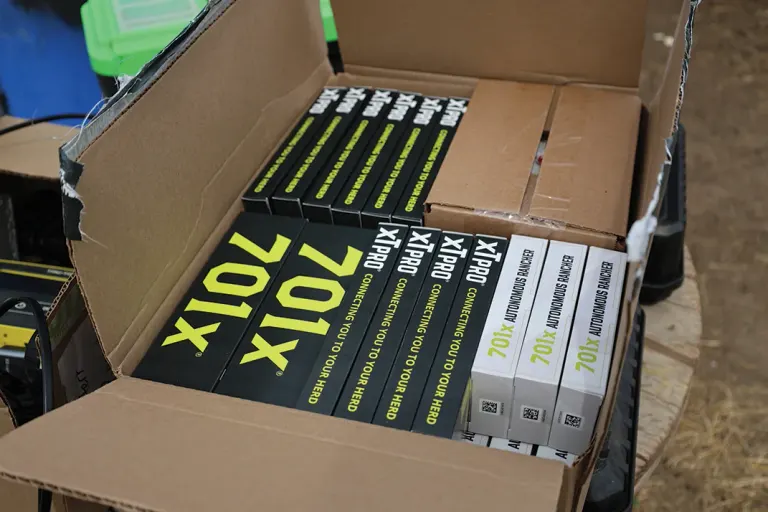
xTpro tags and other 701x products, boxed up and ready to go.
Sources: Drovers, AGDAILY, University of Florida IFAS, USDA NASS, USDA APHIS, Frontiers in Veterinary Science, Livestock Farm USA, University of Florida IFAS Extension, 701x Marketplace (hyperlinked inline above)
Note: Head counts, dollar totals, and ROI examples are original calculations applying cited USDA/industry rates to current herd and calf-crop figures, not standalone USDA statistics.
FAQ Section
Q: How many calves die in the U.S. beef industry each year? A: Roughly 2.44 million calves are lost annually between birth and slaughter, combining birth-to-weaning death loss and feedlot death loss.
Q: What does 701x's smart ear tag system do? A: The xTpro tag tracks location, health alerts, and estrus and bull-mounting detection for cows and bulls, while the lighter xTlite tag tracks calves and sends missing-calf alerts.
Q: How much do 701x's ear tags cost? A: The xTpro tag is $175 per tag, and the xTlite tag is $20 per tag, with 701x recommending one xTpro for roughly every ten xTlite tags in a herd.
Editor of Fargo INC! — covering the founders, companies, and ideas shaping business in Fargo-Moorhead. Eleven years in, still no opinions, no politics, all business.