Building an Office in Fargo: A Contractor’s Advice · Fargo INC!
Businesses
The Contractor’s Perspective
Grafstrom Construction’s Hans Grafstrom answers the questions business owners should ask before they build or remodel an office, from budgets and bids to timelines and communication.
In shortHans Grafstrom, owner of Fargo-based Grafstrom Construction, outlines what business owners should understand about budgets, bids, timelines, and communication before starting an office build or remodel.
3 things to know
1Total project cost extends beyond the construction contract to include land, design, permits, financing, furniture, equipment, technology, signage, and moving costs.
2The cheapest time to change something is while it is still a line on paper; changes become increasingly expensive once framing, electrical, plumbing, and finishes are underway.
3When comparing bids, owners should review scope, exclusions, allowances, alternates, schedule, and assumptions to confirm the numbers represent the same thing before making price comparisons.
Generated by Claude · grounded in this articleNever used on sponsored content
You may only build one office in your lifetime. You may only remodel once in your lifetime. Nobody expects you to be an expert in either capacity. However, a base level of understanding can go a long way in keeping you headache-free during your next office project.
What are the biggest things you wish clients understood before starting a build?
A construction project does not have to be intimidating. There are a lot of moving pieces, which is why it helps to have people around the table who deal with those moving pieces every day. From the owner’s side, the most helpful things are a clear idea of what the building needs to accomplish, a realistic budget and schedule, and a willingness to make decisions as the project develops. A successful project is not one where nothing unexpected happens. It is one where the team communicates, solves problems, and keeps moving.
And building should be fun. Most owners are building because something positive is happening: they are growing, adding capabilities, or investing in the future of their business. It is worth stepping back occasionally and appreciating that.
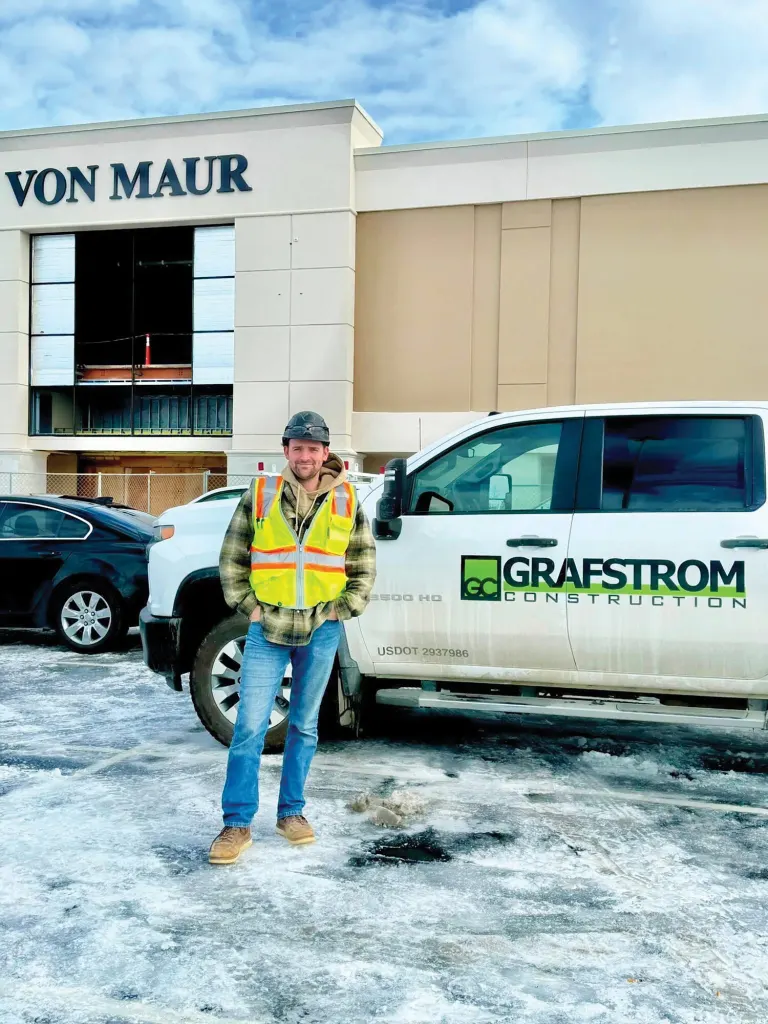
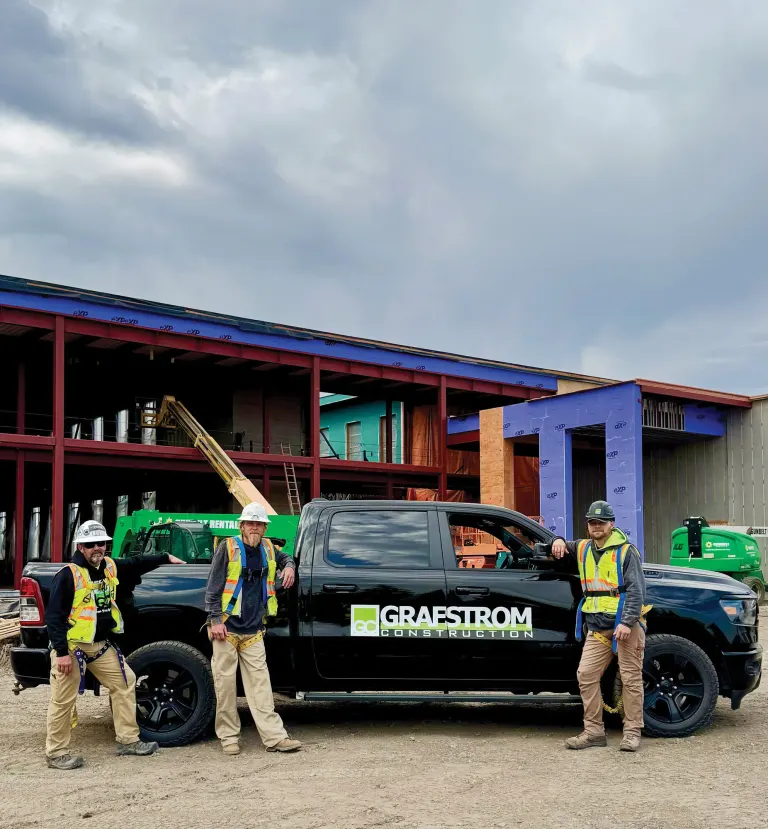
Out on a job site with the Grafstrom Construction truck
Before someone contacts a contractor, what should they have figured out, and what should they still be open to discussing?
You do not need to have the building figured out before calling a contractor. Know your business needs. What you are trying to accomplish, roughly how much space you need, your timing, and what level of investment makes sense. The owner does not need to be the construction expert, but they do need to be the expert on their operation because there are a lot of decisions only the end user can answer. I also like owners to establish a couple of clear guardrails. What budget do we need to work toward, and what delivery date actually matters? Give the team clear targets, then stay open to different ways of getting there.
At what point should someone bring a contractor into the process? What problems can you help prevent by getting involved early?
A contractor’s opinion can be useful during many parts of preconstruction. If you have someone you trust to walk a prospective space and gut-check feasibility, review building systems or materials, or identify cost and constructability concerns, that can be valuable. The cheapest time to change something is while it is still a line on paper. At the same time, be cautious about using the contractor as your designer. The relationship is usually to tell them what you want to accomplish, and they will help figure out how to build it practically and cost-effectively. On anything beyond a simple finishes update, good drawings can be money well spent. Complete information helps expose constraints early and gives trades the information they need to provide complete bids. Architects can also provide different levels of service during construction, including submittal review, contract administration, and payment review, which may be especially valuable for an owner with limited construction experience or limited time.
What should someone investigate before buying land or choosing a property for a project? Are there issues that can make a seemingly good deal expensive to build on?
The purchase price is only one part of the cost of a site. Zoning, utilities, access, soils, grading, stormwater, special assessments, easements, parking requirements, and off-site improvements can all materially change the economics. A good piece of land is not necessarily the cheapest one; it is the property that lets you accomplish what you need at a reasonable total cost. There is usually a solution to a site constraint, but the question is whether that solution still makes economic sense. The stuff you want is relatively easy to spot and budget for. It’s the stuff you need that tends to surprise you.
When someone tells you their budget, what expenses are they most likely overlooking? How should they plan for unexpected costs?
I like to separate construction cost from total project cost. Owners may also have land, design and engineering, permits, financing, furniture, equipment, technology, signage, moving costs, and other expenses outside the construction contract. I also encourage owners to carry some financial cushion of their own, separate from any construction contingency. “While we’re at it, we might as well...” has eaten up its fair share of budgets. Once you can physically walk through a space, you may see something differently than you did on the drawings. If a change is going to make the building work better for the next 20 years, it is nice to have planned enough flexibility to make it rather than wishing you had after move-in.
When comparing bids, how can clients tell whether they’re comparing the same scope of work? What questions should they ask about a lower-priced bid?
Price absolutely matters, but make sure the numbers represent the same thing. The devil is often in the details. Review scope, exclusions, allowances, alternates, schedule, and assumptions, and ask questions where the bids differ. A lower bid is not automatically incomplete, and a higher bid is not automatically better. Your best defense is making sure you, or someone representing you, has a true understanding of the project scope and can identify where the bids may not align. You don’t need to be a construction expert, but someone on your side should understand what you’re expecting to receive and be able to confirm that expectation is reflected in the bids.
And don’t be afraid to ask the “stupid question.” Sometimes it uncovers an equally stupid oversight. Projects have a lot of moving pieces, and occasionally something obvious gets missed. The goal is to understand what you’re buying and make an informed comparison.
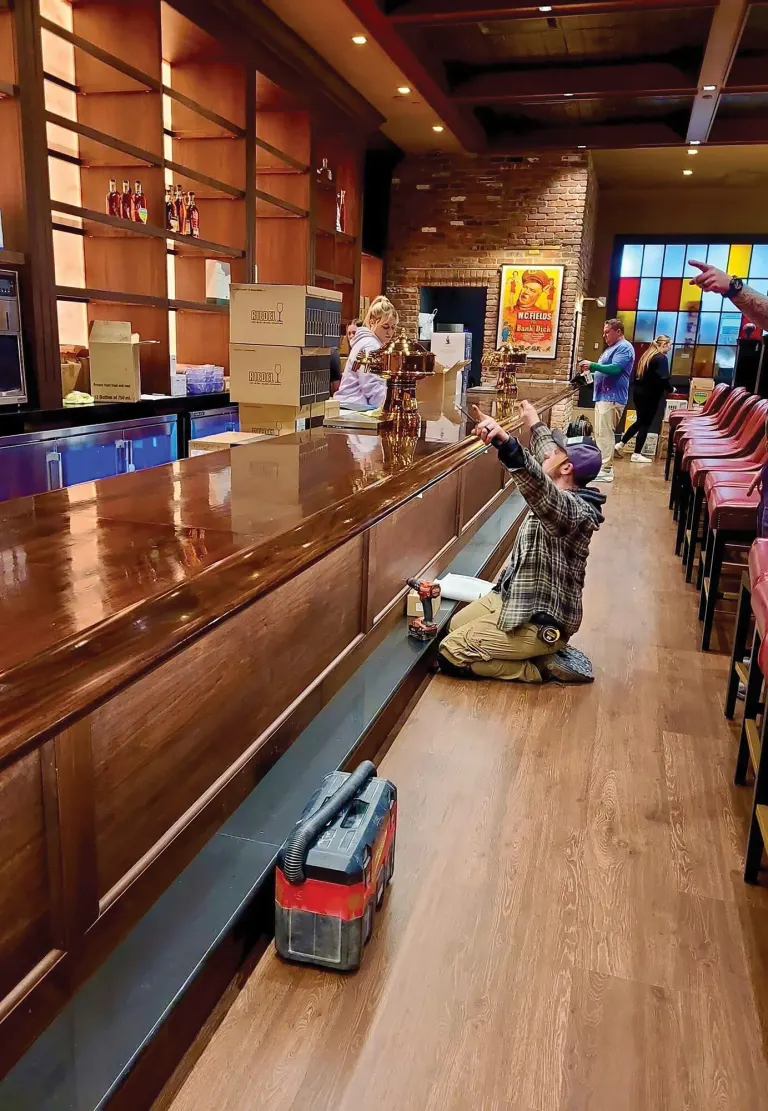
Finishing touches on a bar before opening day
What should clients understand about allowances, exclusions, and change orders before signing a construction contract?
None of those things are inherently bad. Allowances are useful when a selection is not final, exclusions clarify the boundary of the scope, and change orders document legitimate changes in scope, conditions, or owner direction. The important thing is transparency. If something changes, the owner should understand what changed, why, what it costs, and whether it affects the schedule. The goal is not to pretend a project will never change; it is to avoid surprises.
Which decisions should be finalized before construction begins? What seemingly small changes can become expensive once work is under way?
The more decisions that can reasonably be made before construction, the better, but I do not think owners should expect perfection. The cost of changing your mind generally increases as the work progresses. Moving a wall on a drawing is easy; moving it after framing, electrical, plumbing, and finishes are underway is a different matter. There will also be decisions that only the end user can make, so be ready to provide direction. If you know you will be a bottleneck, empower someone internally or externally to make routine decisions for the project.
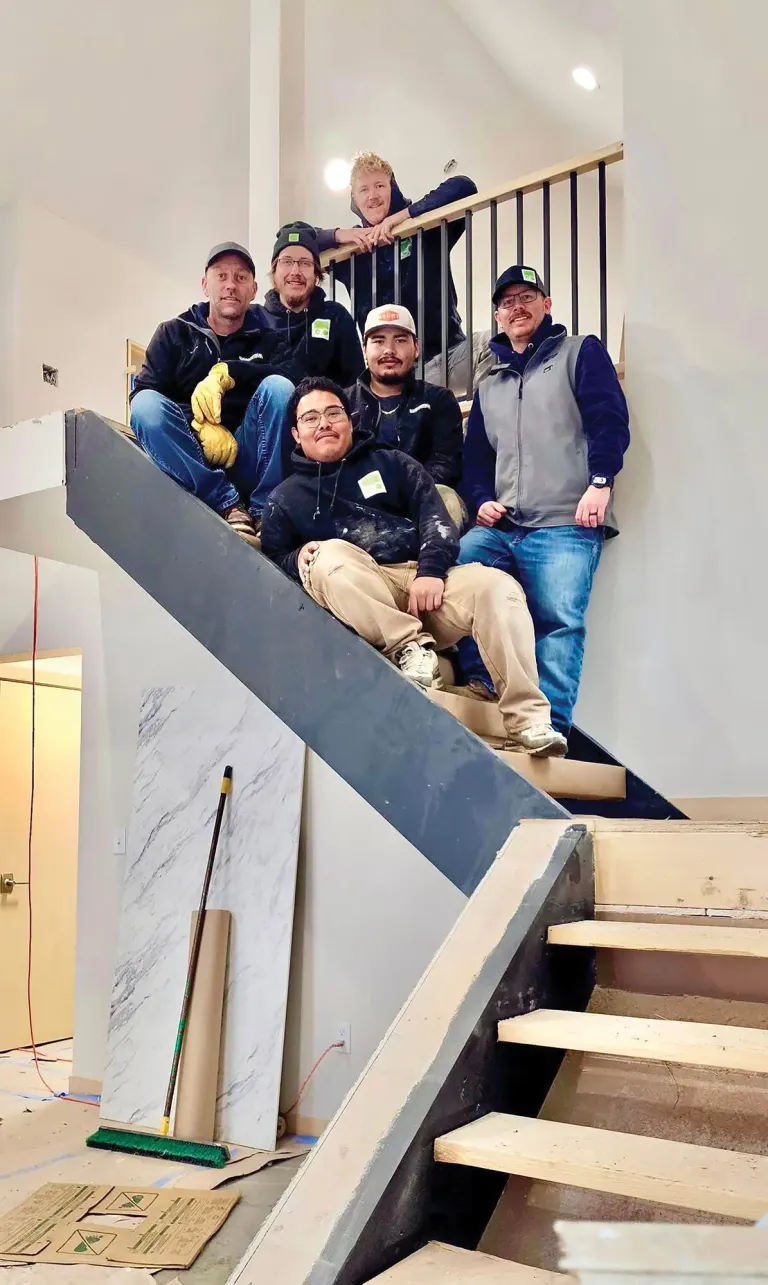
The crew taking a break on the stairs
What do clients misunderstand about construction timelines? How far ahead should they start planning around a desired move-in or opening date?
The construction schedule is only one piece of the overall project schedule. Site selection, feasibility, financing, design, approvals, permitting, and procurement can all happen before the first crew arrives. I prefer to start with the date the owner needs to be operating and work backward from there. One thing that can be easy to underestimate is how long it takes to get from “we’re doing this” to having something installed. A decision may still need to be priced, detailed in shop drawings, reviewed and approved, fabricated, delivered, and finally installed. Each of those steps needs its time, and trying to compress them at the end can be difficult or expensive. Starting early gives the team more options and more room to work through that process.
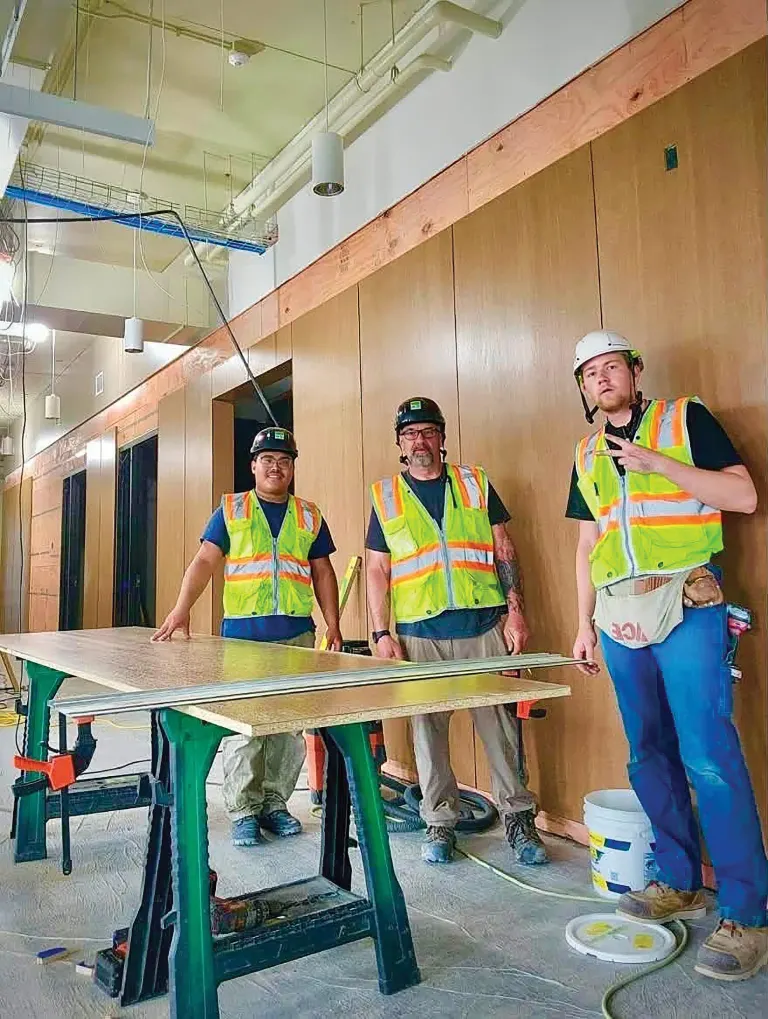
On-site crew during interior build-out
How can clients help keep a project moving smoothly? What does good communication between an owner and contractor look like?
Good communication is timely, candid, and focused on solving the issue in front of you. Construction is a ball-in-court game with submittals, shop drawings, selections, and questions constantly moving between the owner, contractor, architect, engineers, and trades. When the ball comes into your court, getting it moving again quickly helps protect the schedule. There are also plenty of decisions that can only be made by the end user, so be prepared to provide that direction. If you know decision-making could become a bottleneck, designate someone internally or externally who understands the project and has enough authority to keep things moving.
Contractors owe the owner that same sense of urgency. Owners should put some guardrails on the process and hold the team to them. Be clear about the budget we need to hit and the delivery date that matters. Projects can naturally expand into the time available; a trade may squeeze in another project, a crew may get pared down, or a little too much time can develop between trades. Sometimes a little push is appropriate. There is a difference between holding your contractor accountable to the schedule and trying to run the schedule yourself.
About Hans Grafstrom
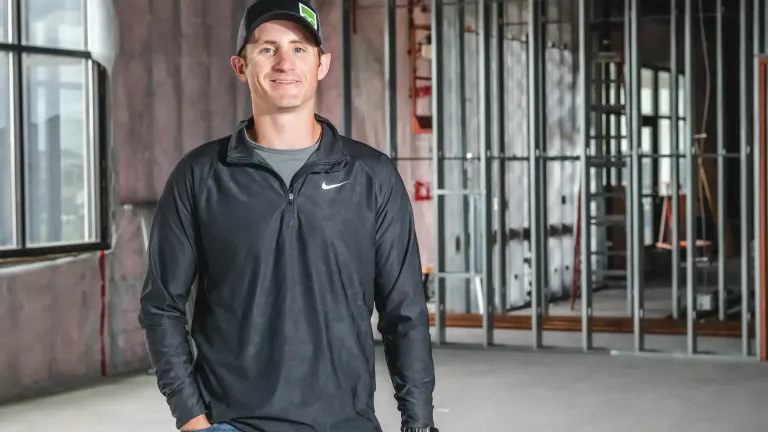
Grafstrom, owner and CEO of Fargo-based Grafstrom Construction, started the company in 2013 as a one-person handyman operation. Today, its commercial capabilities include framing, drywall, cabinetry, architectural woodwork, doors and hardware, demolition and general contracting.
Editor of Fargo INC! — covering the founders, companies, and ideas shaping business in Fargo-Moorhead. Eleven years in, still no opinions, no politics, all business.