10 Questions with Nick Beste of Full Service Foods · Fargo INC!
People
10 Questions with John Machacek: Nick Beste of Full Service Foods
From Mighty Spark to Village Salsa to a Hillsboro co-packer, Nick Beste talks scaling food brands, buying businesses and what he would tell his younger self.
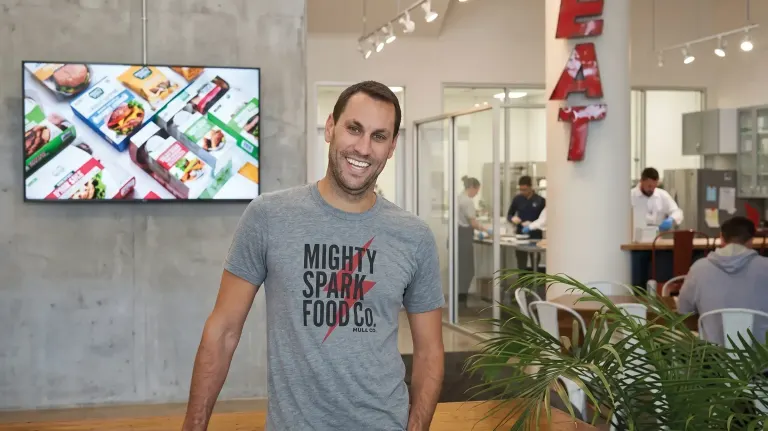
In shortNick Beste, owner of Full Service Foods in Hillsboro and Village Salsa, discusses co-packing sauces and dips for small brands, scaling Mighty Spark via private equity, and acquiring businesses across food and construction sectors.
3 things to know
1Full Service Foods is a co-packer specializing in sauces, dips, and dressings, positioned to serve small-to-mid-size brands that large food plants cannot accommodate.
2Beste acquired Village Salsa, a 40-plus-year-old Red River Valley brand, and has since expanded it from North Dakota and western Minnesota to markets as far as Pittsburgh and Florida.
3Beste advises food CPG startups to prioritize gross margins, focus on in-store product velocity, and remain ruthlessly selective about outside services and distractions.
Generated by Claude · grounded in this articleNever used on sponsored content
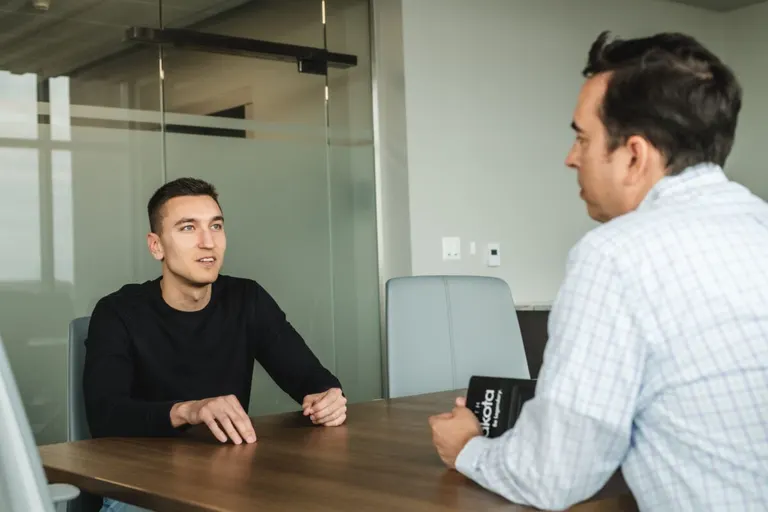
John Machacek, Chief Innovation Officer for the Greater Fargo Moorhead Economic Development Corporation, has worked with countless startups throughout our community over the years. He knows their ups, and their downs, but most of all, he knows the questions to ask them. Here are John Machacek’s 10 questions for Nick Beste of Full Service Foods.
1. The elevator pitch
Will you please tell me your elevator pitch for Full Service Foods?
Full Service Foods is a food co-packer that specializes in sauces, dips, and dressings. We’re unique in that we help develop products for customers but also are extremely nimble and flexible with our minimum order quantities and lead times. We’re built to take care of the small to mid-size players that the large food plants can’t accommodate.
2. Who the customers are
Would you describe what some target customers may be for partnering with Full Service Foods, such as their size, stage, or type of food products?
We work with regional restaurant groups, grocery chains and brands, as well as food manufacturers. It’s everything from a restaurant chain that maybe has a couple restaurants, or even one very popular restaurant, all the way up to, you know, some of the largest regional grocery chains that are out there. Many of our customers would be restaurants, grocery stores, and brands that you’re very familiar with. Many of our customers are Pride of Dakota companies, so it’s fun to work together with them to spread their brands across the region.
What we’re really good at is, let’s say somebody started a brand and they’ve been, you know, operating at the farmer’s market or they’ve been selling it in stores themselves for a while. Now they’re kind of at that point where it’s beginning to be too much for them to make or do on their own. That’s where we really come in and help them out, to kind of take that next step. And then, similarly for restaurants and grocery chains, maybe they can make the ranch dressing for a couple of restaurants, but as soon as they start to get a little bigger and they want consistency and whatnot, that’s where we can really help them.
Sauces, dips, dressings, salsas, kind of anything somewhat liquefied is what we’re really good at. We do a lot of pasta sauce and salsas. We actually do a decent amount of drink mixes, salad dressings, cheese dips, things of that nature. Also, we do retail packaging for things you can buy on the shelf, but we also do a lot of bulk packaging. Such as, if you are a restaurant or a grocery store, you may want something in a bulk 5-gallon container. We’re big enough that we have economies of scale to reduce people’s costs, but nimble enough that we can still allow customers to have tolerable minimum order quantities and lead times.
For the reader, a co-packer is a third-party company that produces and/or packages products for other businesses. Did your experience utilizing a co-packer with your prior food CPG business Mighty Spark influence your decision to invest in Full Service Foods in Hillsboro, to become a co-packer yourself? And also for the reader, by the way, CPG refers to consumer packaged goods.
100%. Yeah, definitely. To have your own production facility where everything is dedicated and devoted to just your product and brand tends to be inefficient unless you’re at a really big scale. So, for small to mid-sized businesses to effectively operate something like that, it’s very difficult. It’s better and more cost-effective to spread that out across multiple brands via a co-packer.
Also, along those lines would be food safety. As soon as you kind of start getting a little bigger of a brand, food safety is a very important deal, and that’s where a plant like ours, where we have dedicated food safety resources, can really help you take the next step.
4. The team was the rocket fuel
Since I mentioned your CPG company Mighty Spark, I want to ask about that as well. From working with some CPG startups, I understand the next step from selling regionally to more nationally can be a big jump, as it often requires the resources and connections in order to sustainably scale. And many probably never make it to the point where they can be acquired like you did with Mighty Spark, so congrats on that. Was that partnership with a private equity group the rocket fuel you needed to get Mighty Spark to that next scaling stage?
Yes, it definitely helped, but I would say what it really helped with was it helped us recruit and attract an incredible team. So really to me, the team was the rocket fuel. Like, we had some awesome team members who had built some very impressive brands before, one of the primary ones being Angie’s Boom Chicka Pop, the popcorn brand. They successfully scaled and grew that business. We were able to attract, I think, eight of those team members after Angie’s sold their business. That was a huge boost for our business.
5. Advice for food startups
Between what you’ve learned from Mighty Spark and now operating a co-packing facility, do you have any particular advice or words of caution for up and coming food CPG startups?
The first is that gross margins are so important. Making sure that you really understand your costs and your margins is really critical. That’s number one. Number two is that “velocity is king.” What I mean by that is it’s easy to get the product into a grocery store, but it has to sell once you’re in the grocery store. And that’s velocity. And that’s really what should be 99% of a startup CPG’s focus, is ensuring that the product on the shelf sells extremely well.
They should be putting all their effort and energy into that. Then a third thing I would say is, and maybe this sounds bad, but you have to be ruthlessly focused. I’ve noticed that people who are starting out, and I being one of them, get pitched a lot. Every person you meet, they know somebody, or they know of someone who can offer you some sort of service that’s going to help you or this and that. You must be very selective because, number one, you can waste a lot of money on it, but number two, you can waste a lot of time. You have to stay really focused and be really skeptical of those various things being thrown at you. You can get distracted real quick.
6. Why buy Full Service Foods
Another company I wanted to bring up was your ownership of Village Foods, or Village Salsa by brand. Was that company already connected to Full Service Foods, or did it just make sense to buy into that company with what Full Service Foods does, or maybe you came into Village first, then Full Service Foods?
I had Village first, and we made that product in its own facility. At one point the company was talking with Full Service Foods to discuss making new products, as it makes a wider variety of products. So, it just made a lot of sense to then buy Full Service Foods and put them together, for a couple reasons.
One, obviously, now we can make the salsa at Full Service Foods, but also, we have now launched a bunch of new products with Village, and we have a bunch more products in the pipeline that we’re going to be launching that we wouldn’t have otherwise been able to do.
7. Village Salsa nostalgia
By the way, this makes me harken back to my younger days of devouring Village Salsa and tortilla chips while watching sports or music videos at home. I’m guessing many others in this part of the country have similar memories with the brand. I know when I communicated with Brady, the editor of this magazine, about this interview, he commented with, I quote, “I have eaten so much of that salsa in my lifetime.” Have you run into that kind of nostalgia and love for the product since becoming part of the company?
The history of the Village Salsa brand is interesting as it has been around for over 40 years. It’s the number one selling salsa in the Midwest. I think it’s really cool to think about this Red River Valley brand that started in Grand Forks. It was only kind of in that region for a very long time. The former owner is an awesome guy and ran it for a very long time. He really focused his time on making the product and the quality and ensuring it’s great, which then gave us the foundation to be able to go to other stores and use that reputation of quality and the sales to help open up other markets. It was initially sold only in North Dakota and parts of western Minnesota for many years and now it’s sold as far east as Pittsburgh, and as far south as Florida. We’ve helped to bring this Red River Valley brand more nationwide.
And for many years it was just the two salsa products, Mild and Hot, but now with the capabilities of Full Service Foods, we’ve launched guacamole and Pico de Gallo, and they’re doing incredible! We’ll be rolling out some more products here coming up soon too. So it’s pretty cool to think about where this brand can go in the future. I’m really excited about it.
8. Buying into construction
Aside from acquiring Full Service Foods and Village Salsa, which are in the food space, I’m aware from a prior conversation that you’ve also bought into a business, or businesses, in the construction industry. What can you tell me about that strategy?
Yeah, so I got into the aggregate supply business. We provide aggregate products like rocks, sand, and gravel to contractors and landscapers in the region. That’s going really well. Part of my reason for that was trying to diversify a bit away from food, you know, and just have something different in my portfolio. I also like that I don’t think technology is really going to impact this industry. I was looking for something that was pretty safe and long-term reliable, and not really going anywhere with AI and everything else going on in the world. In addition, I was able to partner with a great regional company, RJ Zavoral & Sons. They’re an awesome group that I have admired for a long time, so I was really eager to partner with them. So when the opportunity came up, it was a perfect fit.
Right now, I’m actively looking at a couple of other sort of construction-related businesses in the region to acquire them. I’m looking at another food business as well. Then also some other non-related businesses. So yeah, I’m definitely looking for other things to either invest in or buy. I’m very interested in that.
9. Advice for a younger Nick
What kind of hindsight advice would you give yourself if you could go back in time to a younger Nick?
In hindsight, I wish that I hadn’t worried so much and just enjoyed the journey. It probably would have helped me if I had been able to try to relax along the way and smell the roses. Outside of that, I would have focused on bringing on a great team as fast as humanly possible. In the early days, we didn’t have the resources to hire so I neglected it, but I wish that I had spent more time trying to figure out a way.
10. How the community can help
What can we do as a community to help you and your businesses succeed?
The community is great and there are many awesome people driving the startup community forward. It’d be helpful to continue seeing new opportunities for finding great talent that wants to be a part of growing newer businesses. I’d love to also see more opportunities for finding opportunities to acquire or invest in businesses in the region.
About John: John Machacek has been helping local startups with the Greater Fargo Moorhead Economic Development Corporation for over a decade. Before joining the GFMEDC team, John’s career path has varied in areas such as banking, accounting, and management in the nonprofit, food and retail sectors.
Chief Innovation Officer for the Greater Fargo Moorhead EDC and the voice behind Fargo INC!'s recurring 10 Questions column — where he sits down with the region's founders to unpack how they actually built what they built.