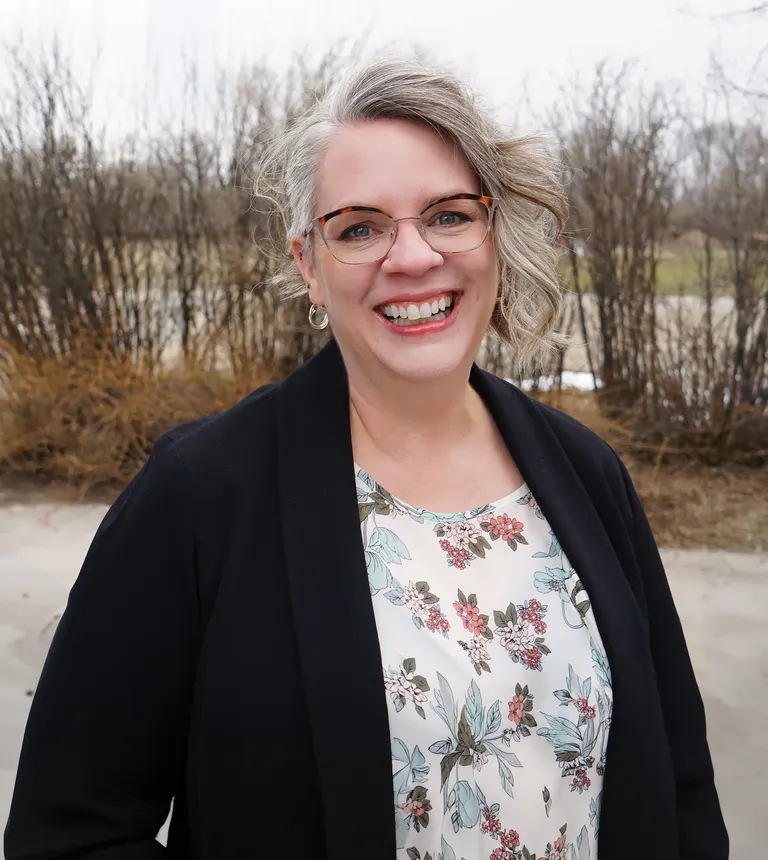
In shortKelly Yanke Deltener, founder of Podshot, describes her AI-powered mobile app that helps podcast listeners capture moments and turn them into transcripts, summaries, and organized notes.
3 things to know
1Podshot lets listeners capture meaningful moments while listening, then converts them into transcripts, summaries, and organized notes via AI.
2Deltener also developed two related products: Quote-Extractor.com for pulling quotes from long-form content, and RankFlicksAI for tracking product visibility in traditional and AI search.
3Deltener credits roughly two and a half years of exploring concepts, learning about AI, and returning to her own frustration as a podcast listener before Podshot came together.
Generated by Claude · grounded in this articleNever used on sponsored content
John Machacek, Chief Innovation Officer for the Greater Fargo Moorhead Economic Development Corporation, has worked with countless startups throughout our community over the years. He knows their ups, and their downs, but most of all, he knows the questions to ask them. Here are John Machacek’s 10 questions for Kelly Yanke Deltener, founder & product strategist at Podshot.
1. Will you please tell me your elevator pitch to describe your startup, Podshot?
Podshot is an AI-powered mobile app that helps people actually learn from podcasts. It lets listeners capture meaningful moments as they listen, then turns those moments into transcripts, summaries, and organized notes they can come back to later.
2. What led you to work on developing this product?
I’ve always been a podcast connoisseur, and Podshot came from my own frustration as a listener. I would hear something meaningful in a podcast, but it would usually happen when I was driving, walking, biking, or out in the garden. Sometimes I could write a note, take a screenshot, or try to capture the timestamp, but it always felt clunky. I kept thinking, “Why isn’t there a better tool for this?”
I looked for solutions, and while there are a few apps on the market, I did not like how they worked. They did not feel user-friendly or designed from the listener’s point of view.
Eventually, I realized this is exactly what product development is about: solving a real problem for a real user. I felt like that was a challenge I could take on. In a funny way, it became my supervillain origin story. I was so frustrated with how the problem was being solved that I decided to build something better myself.
3. Thinking about what you talked about at StartupBREW Fargo in April, about building products for other people, did that help give you the confidence to take the leap and build something yourself?
Oh yes, 100%. I think a lot of entrepreneurs know they have that drive and want to create something, but they sometimes wait for lightning to strike. That is not really how it works.
For me, the shift happened after I started my consulting company, focused on product management, product strategy, and operational strategy. I remember having coffee with friends at Babb’s, and there was a local magazine on the table with five or six local founders on the cover. I realized I had done work for three of them, and significant work for two of them.
I felt proud, but also a little jealous. Not because I needed my face on the cover, but because I had this moment of, “Wait, why don’t I have something of my own in the market?” I had helped other people build products and launch ideas, but I had not done that for myself yet.
It still took time. It was probably two and a half years of trying to force something to happen before the right idea came together. I explored different concepts, learned more about AI, and kept coming back to my own frustration as a podcast listener.
That is when Podshot started to make sense. It was not lightning striking out of nowhere. It was experience, frustration, learning, and persistence coming together at the right time.
4. With your experience in project management, product management, tech, and consulting, how much of your knowledge came from formal instruction versus being self-taught or learning from mentors and colleagues?
It has definitely been a mix, but a lot of my technical and product knowledge came from hands-on experience, mentors, and the people I worked closely with. My technical background did not come from a university path. It came from being in the work, asking questions, learning from technical people, and building that understanding over time.
My husband and his brother were a big part of that foundation early in my career. I joke that it feels like a cheat code because I can talk through a technical question with my husband at dinner, and if I cannot get the answer from him, I call his brother.
I also worked at CoreLink, which was a Blue Cross/Noridian subsidiary. That gave me a stronger foundation in formal project management and PMO structure. Later, Garrett Moon and Justin Walsh at CoSchedule took a chance on me and brought me back into the startup world. I learned so much from them about operations, product thinking, and building inside a fast-moving company.
All of those experiences helped give me the confidence to go out on my own. Consulting also opened my world up. You are not limited to local clients. You can work with a startup in California, do good work, and suddenly have clients in California, Texas, and beyond.
A lot of those clients were working with AI, so I had to learn quickly and get good fast. That pushed me in the best way.
5. With your entrepreneurial mindset, it makes sense that you gravitated toward smaller companies and startup environments. What’s your perspective on that assumption?
What I love about smaller companies and startups is the access and openness. At CoSchedule, I could walk into a room with the CEO, president, department leaders, and team members and say, “I have three wild ideas,” and there was space for that. It was encouraged.
In a more corporate environment, experimentation can get boxed in. But there is real value there too. You often have more stability, clearer planning cycles, stronger resources, and more predictable outcomes. In the startup world, you are usually working hard just to create that predictability.
For people early in their product, project, or tech careers, I think both paths can be valuable. A traditional company can help you learn structure and good systems. A startup can teach you how to move quickly, wear different hats, and get comfortable with ambiguity.
One thing I appreciate about Fargo’s startup community is how much it has evolved. When I started in tech in the late ’90s, failure was often just seen as failure. Now, it is more often seen as experience. That shift has been huge.
6. In thinking about learning opportunities, I’m reminded of the comment you shared with me when we discussed having this interview. You mentioned reading my March interview with Shannon and Adam of Starbird Lounge, especially the question about surprises and key learning lessons. Since you brought it up, I’ll ask you the same question: what have been some of your biggest surprises or lessons?
One of the biggest surprises has been realizing how building one thing naturally leads to new ideas.
While we were developing Podshot, we created functionality that helped us pull meaningful quotes and moments from podcast content. At first, we thought, “This is great. We can use this to market Podshot.” Then we quickly thought, “Wait, why couldn’t we let other people do this too?” That opened the door to another product idea.
The same thing happened when we launched the Podshot website. We started paying attention to how we were ranking in AI search and traditional search. Then we started asking, “Could we build something simple that helps non-technical founders understand how their product is showing up?” That sparked another idea.
So one big lesson is that building creates momentum. Once you are in the work, you start seeing problems and opportunities everywhere. Not every idea will work, and that is okay. But it creates this little creative lab, or “nerdery,” where you can experiment, test, learn, and keep going.
Another surprise has been how much I’ve learned from working with people in different parts of the world. It pushes you to think beyond your own assumptions, and it has made me a better product thinker.
7. Yeah, I was going to ask something about that, knowing you have partners and collaborators in other parts of the world. How has that experience been, especially in terms of the different perspectives from being pushed beyond your own assumptions?
I think a lot of entrepreneurs have a spark, and I recognize that in myself, too. I am always curious and always want to learn more. Through consulting, I have been fortunate to meet people in different parts of the world who have that same energy.
Before 2020, I had only worked with people outside my immediate area a few times. But as the world became more virtual, I realized collaboration is less about whether someone is close enough to meet for coffee and more about whether they are the right person to think, build, and solve problems with.
When you find those people, the conversations are different. You challenge each other, get excited, reflect, and push the work forward. Sometimes that means adjusting to different time zones or getting up at 3:00 a.m. for a conversation, but it is worth it.
The biggest benefit is perspective. People from different countries, cultures, and backgrounds often see problems differently than you do. They may notice something you would miss or approach a challenge in a way you would not have considered. That kind of perspective cannot really be taught in a class.
8. When you spoke at StartupBREW, I remember you mentioning a couple of other tech products you are working on. Will you give a quick elevator pitch for those, too?
Yes. Quote-Extractor.com helps podcasters, creators, and marketers pull strong quotes from long-form content like podcasts or YouTube transcripts. The idea is to make it easier to find moments that are insightful, funny, emotional, or shareable, and then turn those into social media content quickly.
RankFlicksAI helps SaaS founders and businesses understand how their product or website is showing up in both traditional search and AI search. Search is changing quickly. It is no longer just about where you rank on Google. It is also about whether AI platforms understand your company, category, and value proposition.
A lot of these ideas came from building Podshot and asking, “Wait, could this solve a problem for other people too?” That has been one of the most exciting parts of the process.
9. If you could go back in time to visit with a past version of Kelly, what kind of hindsight advice would you give yourself?
I would tell myself to stop waiting for the perfect idea, the perfect timing, or the perfect level of confidence.
For a long time, I think I was waiting for everything to line up before I gave myself permission to build something of my own. But the truth is, you build confidence by doing the thing. You start, learn, get uncomfortable, make mistakes, and then the confidence starts to come.
I would also tell myself that the experience I was gaining while helping other people build their products was not separate from my own journey. It was preparing me. Every project, every client, every hard conversation, and every messy product decision was teaching me something I would eventually use.
And honestly, I would tell myself to trust my instincts sooner. I have always been good at seeing patterns, spotting problems, and understanding what users need. I just needed to believe those skills were enough to start.
10. Lastly, what can we do as a community to help you and Podshot succeed, along with Quote-Extractor.com and RankFlicksAI?
The biggest thing is to try the products, share feedback, and help us get them in front of the right people.
For Podshot, that means joining the waitlist, testing the app when it becomes available, and telling us how it fits into the way you actually listen to podcasts.
For Quote-Extractor, we would love to connect with podcasters, content creators, agencies, and marketers who are trying to turn long-form content into social posts.
For RankFlicksAI, we are especially interested in talking with SaaS founders, startup teams, and marketers who are trying to understand how search is changing with AI.
More than anything, community support matters. Share the products, make introductions, test things, give honest feedback, and tell us what does not work. That kind of support is incredibly valuable when you are building something new.
Chief Innovation Officer for the Greater Fargo Moorhead EDC and the voice behind Fargo INC!'s recurring 10 Questions column — where he sits down with the region's founders to unpack how they actually built what they built.