10 Questions with John Machacek: Mustafa Fahkri, Founder, · Fargo INC!
People
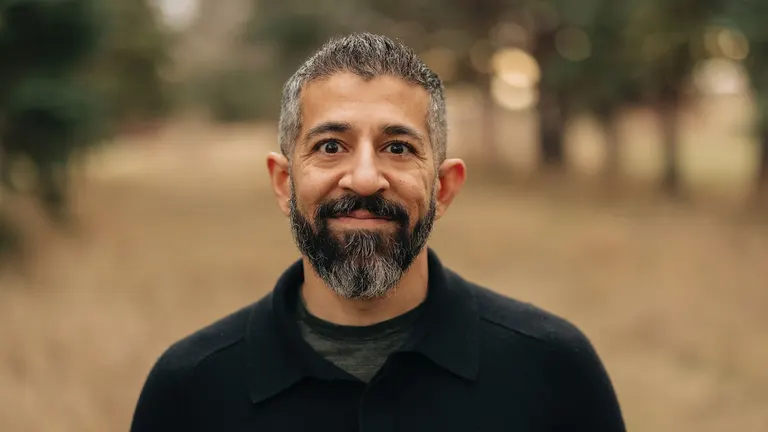
10 Questions with John Machacek: Mustafa Fakhri, Founder, Dirt Dive
Most people fertilize their soil. Dirt Dive founder Mustafa Fakhri is doing something almost nobody else is, using microscopic protozoa to fix it from the inside out. John Machacek gets the full story.
In shortMost people fertilize their soil. Dirt Dive founder Mustafa Fakhri is doing something almost nobody else is, using microscopic protozoa to fix it from the inside out. John Machacek gets the full story.
3 things to know
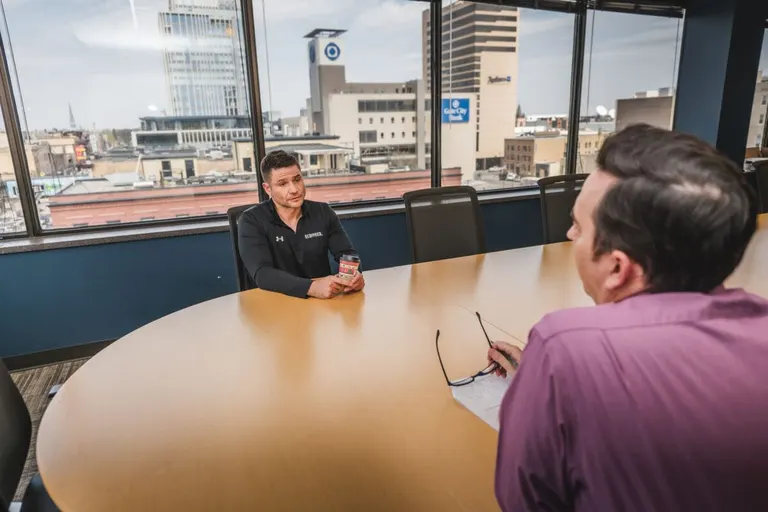
1John Machacek, Chief Innovation Officer for the Greater Fargo Moorhead Economic Development Corporation, has worked with countless startups throughout our community over the years.
2He knows their ups and their downs, but most of all, he knows the questions to ask them.
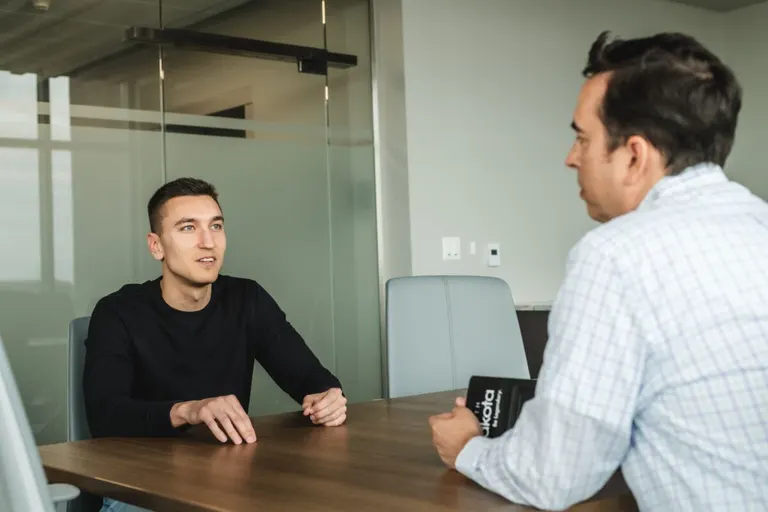
3Here are John Machacek's 10 questions for Mustafa Fakhri, Founder, Dirt Dive.
Auto-summary · grounded in this articleNever used on sponsored content
01. Will you please tell me your elevator pitch on how you describe your startup, Dirt Dive?
We bring dirt to life. Most people prop up plant health with synthetic fertilizer. A few add organics like biochar and compost. And a very small number add microbes to their dirt. At Dirt Dive, we picked out key microbes that act as levers in nitrogen cycling and ecosystem function. Not bacteria, not fungi, but protozoa. They're the third key piece of the microbiome.
They eat more bad bacteria than good ones, and pee out excess nitrogen in a form that plants love.
Essentially, they strengthen the microbiome and provide nitrogen to plants. This means healthier plants, fewer chemicals, and less disease.
02. So, what led you to work on developing this product for plant soil health?
I always loved tiny things — bugs, dirt, microbes. My parents bought me a microscope at 13, and I'd spend hours after school looking at pond water. It was like watching TV, drama unfolding in a single drop with colorful characters, swimming around and sometimes eating each other.
Then I studied protozoa in soil in undergrad, and amoebae in cockroaches in grad school. People always asked me why it mattered. At that point, I was driven by pure fascination — I got to study amoebae and bugs at the same time.
After that, I worked in biopharma for five years as an R&D scientist. Learned a lot about business and what it takes to move science to application at a swift pace. After that, I sketched out what I wanted to do next. I laid out a dozen paths before picking one.
Kind of obvious once I saw it, but I had to lay out the options to get it.
Protozoa make up a huge chunk of biodiversity, but only a small group of people study them.
And there's an even smaller number, essentially 0, of commercialized applications. I had watched the research grow on the huge impact they have on plants. But nobody was translating this to application. So, I found myself at the perfect intersection of what I knew best and what would have an impact.
03. You were in the gener8tor North Dakota accelerator in 2025. What was your experience like going through this and working on your game plan for Dirt Dive?
Loved it. I actually got my application in at the end of the window. I was in South Korea at a protozoa conference when Ben Stanley of gener8tor texted me. He saw my company pop up in North Dakota's database and said he wanted to chat. Got some great feedback, and he encouraged me to apply. The deadline was two days away, but I applied and got in.
04. I know for sure you had some pivots during your time at gener8tor, which is super common for startups, because I recall that when I heard your final presentation in December, I was like "wow, he really narrowed it down" compared to when we met early on in the mentor swarms. Will you share a little about some pivots made?
Initially, I was thinking about the agriculture space. I would start with a diagnostic service and then develop the solution later. After talking to farmers and agronomists, though, I quickly learned they wanted the solution right away. So the demand was already there.
Even farmers were irritated at having to use so much fertilizer.
The challenge of dosing herbicide to kill the weeds but not the crop.
The direct mentorship from Alyssa and Ben was fantastic. There was a big emphasis on talking to lots of people — don't be afraid to reach out, chat, and ask questions. In the 12-week program, accountability to mentors and the cohort was a huge part. It helps you stay focused, speed things up, and explore perspectives quickly. All this helps you move forward and not get stuck or caught in rabbit holes.
Shifting from a science brain to a business brain, this was a key thing I sought out and got.
05. For the reader, Mustafa showed me a packet of the product, which not only seems great for a direct-to-consumer product as that will hardly take up any space, but I can see what you're saying about how the scaling requirements for this will be much lower than needing to manufacture large quantities for agriculture. So, if hypothetically I'm a consumer, and I go somewhere like Baker Garden & Gift to buy some packets, when I get home to my plants, how easy are the next steps?
In the packet, the protozoa are in a dormant state, embedded on gel cubes. You open the packet, pop the cubes out onto the soil of your plant, and add water. They sense the water and come to life. The protozoa swim. They spread through the soil, eat bad bacteria, and release nitrogen as they go. This improves the microbiome, which makes your plant more robust, nourished, and able to fight disease.
They also multiply, so you really are creating an ecosystem with its own dynamics.
The protozoa are natural and safe to touch, but you won't need to. Your hands won't even get dirty.
06. So, speaking of my hypothetical of buying packets for my plants, and just making up an example like Baker in Fargo, what sales channels are you using for people to buy your product, and to learn about your product?
Currently going direct-to-consumer through our website, dirtdiving.com. One day we may be in plant stores too, but nothing concrete on that yet. We launch in July.
The main reason we're starting with direct-to-consumer is to control the sales experience. Start-to-finish, we want the process to be easy, delightful, and fun. This includes giving you the materials and info to succeed. And making things more visible, since it's an exciting world in the dirt, but most people don't get to see it. For example, we include photos of protozoa from your exact batch in the welcome kit.
07. From today and from prior conversations, I can tell you get pretty excited about protozoa, soil health, and nature itself. What is exciting you right now as you continue to work on your startup?
Getting people away from tech and towards nature. In other words, giving people a break from screens, AI, and algorithms. Giving them a chance to enjoy and feel awe at nature again.
Finding awe in the simple things excites me. Some people like to travel or look at the stars. I like those too, but what really fills me is zooming in the other direction. Seeing the lively world at the micro level... worlds in worlds.
There's an irony in watching clips of nature on your phone while sitting in the park. Or adding synthetic chemicals to your plant to make it green and healthy. Dirt Dive works so well because awe drives me.
It's the impact that earns us the right to exist.
Protozoa allow us to marvel at amazing creatures, while also directly improving the foundation of life. So, I'm excited to make something that lets people enjoy nature by actually bringing nature into their home, not just pretending to.
08. From looking at your LinkedIn, I can see you went to college in both Florida and Arkansas, worked in Pennsylvania, and then came to the Fargo area in 2021 to work at Aldevron for a while. Will you please tell me about that path, including what made you decide to stay in Fargo after you left Aldevron?
I went to Florida for biology, then Arkansas for more biology. Late nights in the lab with cockroaches and amoebae were great, but I missed being around people. So I went to Florida for a grad degree in science education. After graduating, I applied for teaching jobs as well as scientist jobs.
That was a fork — teaching or industry. It was a bit of an accident that I got into biopharma. But I enjoyed the teamwork, being useful, and solving molecular puzzles in the lab all day.
I came to Fargo for cool science, specifically DNA and RNA at Aldevron. But I stayed for the people. I made more friends in two months here than in two years in Pennsylvania.
The startup ecosystem made the good life sustainable.
It allowed me to stay in Fargo, to keep doing the coolest science with the coolest people.
09. As we near the end of the interview, I want to ask, if you could go back in time to chat with Mustafa in the past, what kind of hindsight advice would you give yourself?
Learn to shift from "Aww that's cool" to "Who's problem can you solve?
One of them makes you more integrated in the world, while the other can make you turn in too much.
10. What can we do as a community to help you and Dirt Dive succeed?
Visit the website and join the Protozoa Club to stay updated. And try our protozoa on your plants. They're cute, fun, and effective.
Chief Innovation Officer for the Greater Fargo Moorhead EDC and the voice behind Fargo INC!'s recurring 10 Questions column — where he sits down with the region's founders to unpack how they actually built what they built.