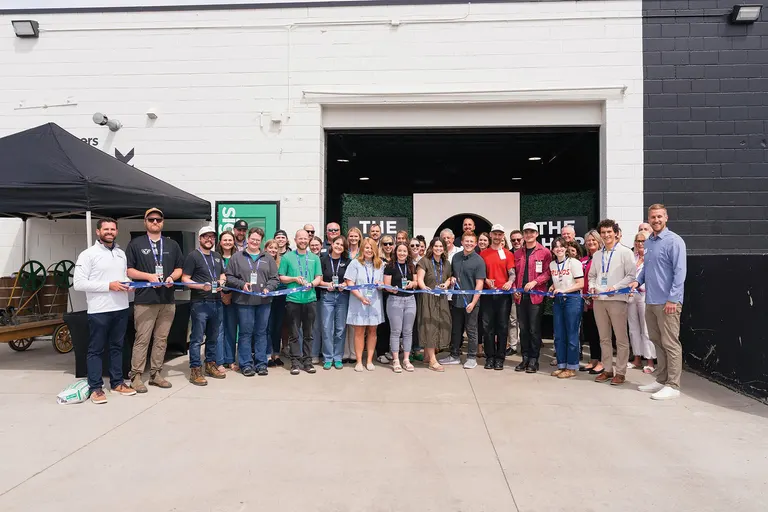
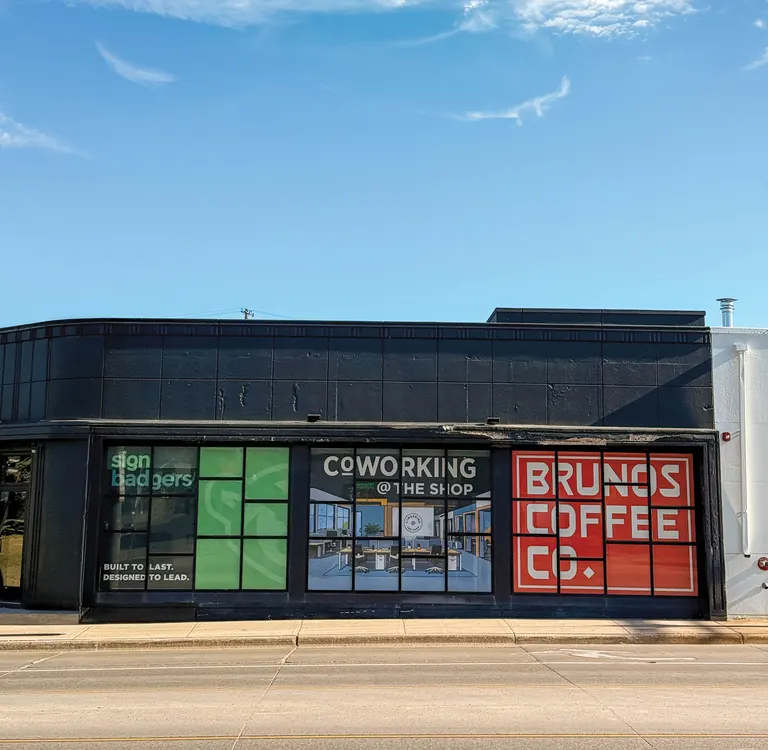
Inside a Fargo building with more than 80 years of history, three businesses, Sign Badgers, Bruno's Coffee, and The Shop, are betting that community happens on purpose, not by accident.
In shortThree businesses—Sign Badgers, Bruno's Coffee, and The Shop coworking space—have converged inside an 80-year-old Fargo building once used by Dakota Tractor Company and the American Red Cross.
3 things to know
1The Shop is a coworking space built around natural professional collisions, offering desks, conference rooms, memberships, day passes, and free on-site parking near downtown Fargo.
2Bruno's Coffee plans both a café and an on-site roasting wholesale program targeting offices, hotels, and restaurants in Fargo and regional markets.
3Sign Badgers, active for 10-11 years, makes custom event badges from wood, leather, and acrylic for clients including Google, Amazon, Marriott, and Rolls-Royce.
Generated by Claude · grounded in this articleNever used on sponsored content
On the edge of downtown Fargo, inside a building with more than 80 years of stories in its walls, something new is taking shape.
It is part coworking space, part coffee shop, part production hub, part gathering place. It is home to Sign Badgers, a national custom signage and event badge company. It is home to Bruno's, a new coffee concept built around roasting, hospitality, and community. It is also home to The Shop, a coworking space designed for entrepreneurs, freelancers, small business owners, and anyone else looking for more than a desk and Wi-Fi.
But to understand what this place is trying to become, you have to understand what it has already been.
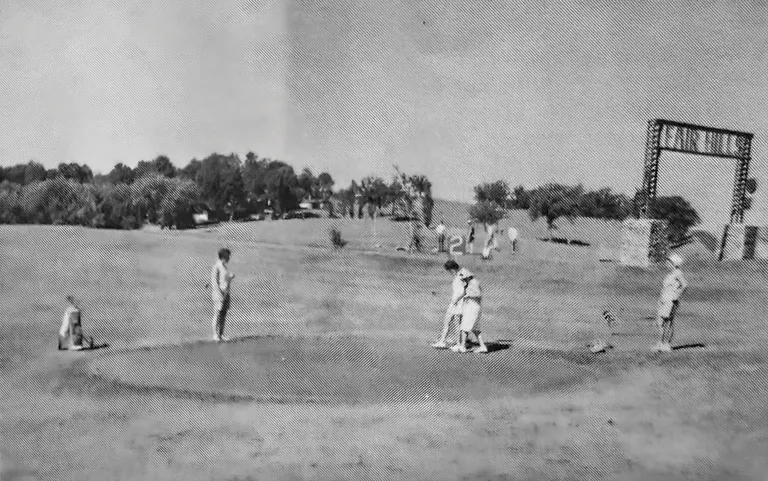
The building was once home to Dakota Tractor Company. When the company moved in during the early 1940s, the United States had just entered World War II. The business quickly shifted from making tractor parts to contributing to the war effort.
Years later, after a devastating 1957 tornado hit North Fargo, the vacant building became a place of service again. The American Red Cross moved in and used the space to distribute clothes, shoes, supplies, and support to families whose homes had been affected.
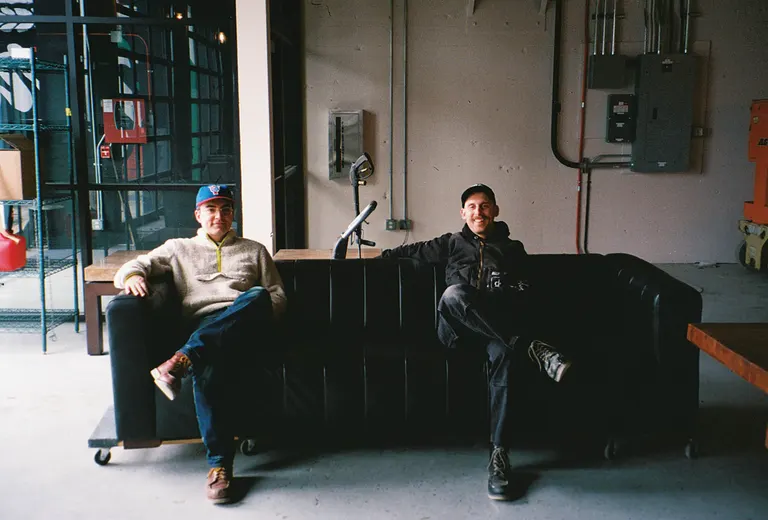
For Dawson Schefter, owner of The Shop, Story + Fields, and Sign Badgers, and who purchased the building, that history matters.
"This building has kind of been here to serve the community since its inception," he said.
The Shop
The Shop is not meant to be another place where people silently rent desks and pass each other in the hallway. Dawson has seen plenty of those. Earlier in his career, he spent years traveling the country, working on campaigns and causes, often operating out of a backpack and moving between coffee shops, client offices, coworking spaces, and temporary meeting rooms.
He saw WeWorks and coworking models around the country. He also saw what Fargo had and what it was missing.
"Fargo has a couple, but they're not maybe as much of a community," he said. "It's like a desk, and that's it."
The Shop is meant to feel different.
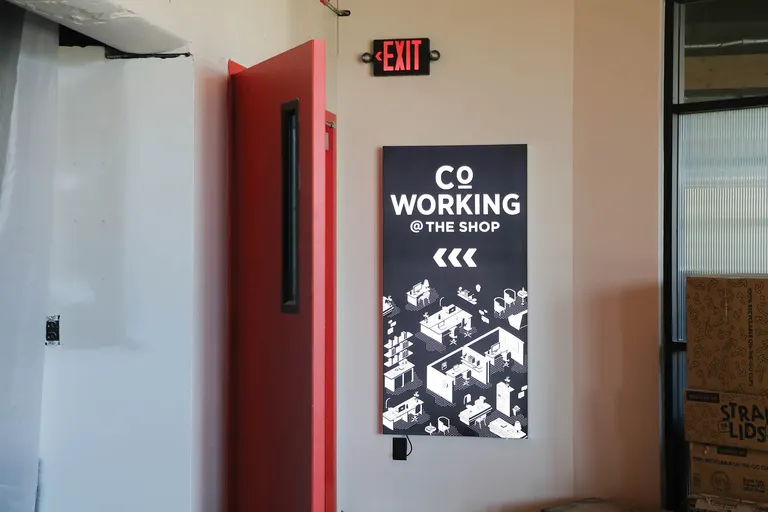
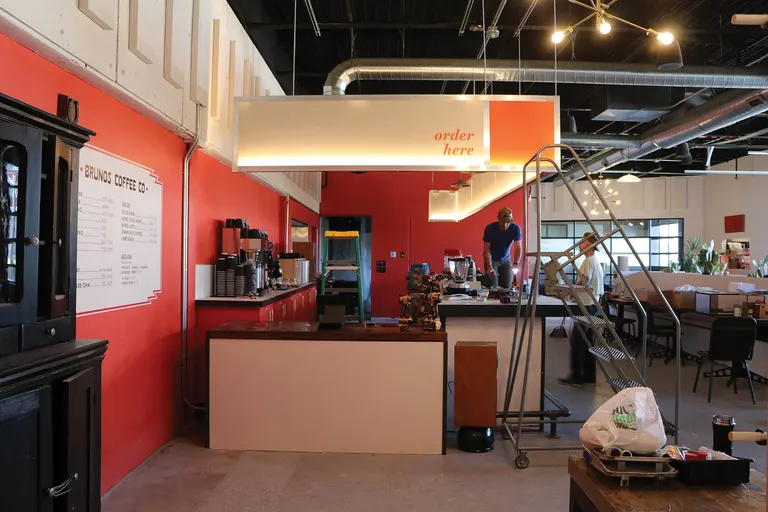
It has desks, conference rooms, breakout spaces, virtual meeting technology, day passes, memberships, and free on-site parking. It sits close to downtown without the hassle that often comes with being downtown. Members get free black coffee and 10% off additional coffee shop items. Nonmembers can rent conference rooms by the hour.
But the pitch is bigger than amenities.
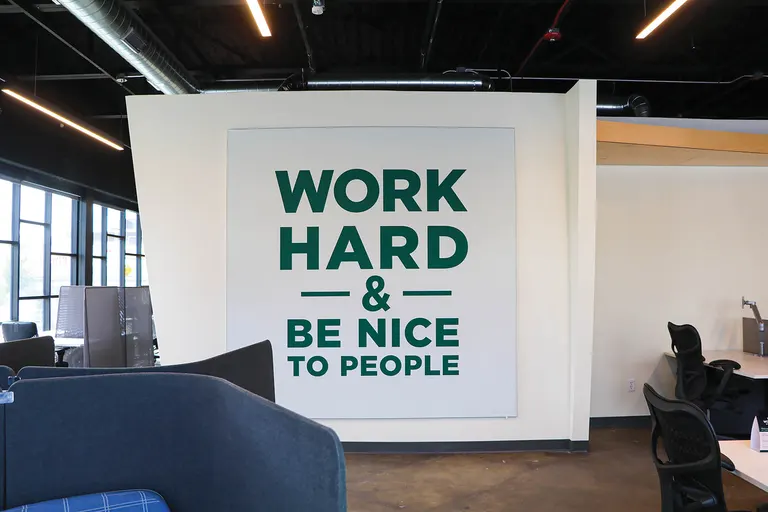
The Shop is built around collision. Not the loud, forced-networking kind. The natural kind that happens when a cabinet maker, a compliance-focused accountant, a designer, a startup founder, and a client all end up under the same roof.
"Those two would probably never meet if not for creating a space like this," Dawson said.
For a solo entrepreneur or small business owner, the value of a place like this is not only having somewhere to work. It is being able to say, "Come meet me in my space." It is the credibility of a polished conference room. It is the comfort of offering a client a good cup of coffee. It is the chance to meet someone who knows someone, needs something, builds something, or opens a door you would not have found on your own.
Dawson believes that kind of environment can become "jet fuel" for entrepreneurs.
And he wanted the name to reflect that.
Why "The Shop"?
Dawson grew up on a farm near Langdon, ND, only a few miles from the Canadian border. For many families across the Dakotas, "the shop" is more than a building.
It is where work happens. It is where equipment gets fixed, ideas get tested, birthday parties are hosted, businesses are built, risks are taken, and families gather when there is nowhere better to be.
"The shop for a lot of families in the Dakotas is where you sort of build everything," Dawson said. "You build your life, you build your reputation, you build your business."
That meaning is personal for him.
His family farm recently came to the end of a 107-year run across four generations. The decision to stop farming was difficult, shaped by hard economic realities and the responsibility of protecting the other businesses and people depending on him. But Dawson wanted to keep part of that story alive.
So, inside The Shop sits a restored John Deere tractor that belonged to Dawson's great-grandfather. It was restored about 15 years ago by his father and uncle. Before coming to Fargo, it spent much of its life on the farm. Last fall, the tractor harvested the final acre of wheat on the family's land, an acre tied back to the first ground his great-grandfather farmed.
Now, it has a new retirement home.
The tractor is now a reminder of the kind of risk North Dakotans have been taking for generations.
"Let's all aspire to take the risk," he said.
Sign Badgers Gets Room to Grow
The move also gives Sign Badgers a new stage.
The company, which has been around for more than a decade, creates signage, branded pieces, engraved products, and custom event badges. Its sister brand, Event Badgers, launched in 2019 and ships custom badges around the country.
These are not the standard tear-resistant paper name tags or plastic sleeves handed out at conferences. Event Badgers makes them from wood, leather, acrylic, and other materials, creating pieces designed to elevate the experience of an event before someone even walks into the room.
That work has reached some major names. The company has worked with brands and organizations including Google, Twitter, Marriott, Johnson & Johnson, Pinterest, Amazon, and Rolls-Royce.
"A lot of times, those bigger companies have the budget to do something cool," VP of Operations Amanda Riley said. "They kind of lead the trend in what's new in the event world."
And the requests can get creative.
Some badges are interactive. Some are designed so attendees collect stickers as they move through an event. Some light up. Some connect with other badges to form a larger design, turning a name tag into a group activity. One favorite project was a race medal shaped like a shoe, with a lanyard laced through it.
The new building gives the team more visibility and more breathing room. In the previous space, operations were tighter. Now, they have separate production areas, a shipping area, consultation space, finishing tables, carts to move work around, and room for more equipment.
One of the most immediate changes came in print capacity.
"We used to have one, and now we have three printers," Amanda said.
The move has also made the business more visible. With big windows and a more prominent location, people have been walking in thinking Sign Badgers is brand new.
It is not.
"We've been around for 10 to 11 years," Amanda said. "People are noticing that a little bit more."
"We're spread out," she said. "It's been really nice, and we have room to grow too. That's honestly a little more space than we need, but we'll fill it."
Coffee as the Front Door
For Dawson, the coffee shop was not an add-on. It was essential.
"I wouldn't have done it if I couldn't get Lane Meyer, Aaron Dudgeon, and Nancy Olson to take the leap with me," he said.
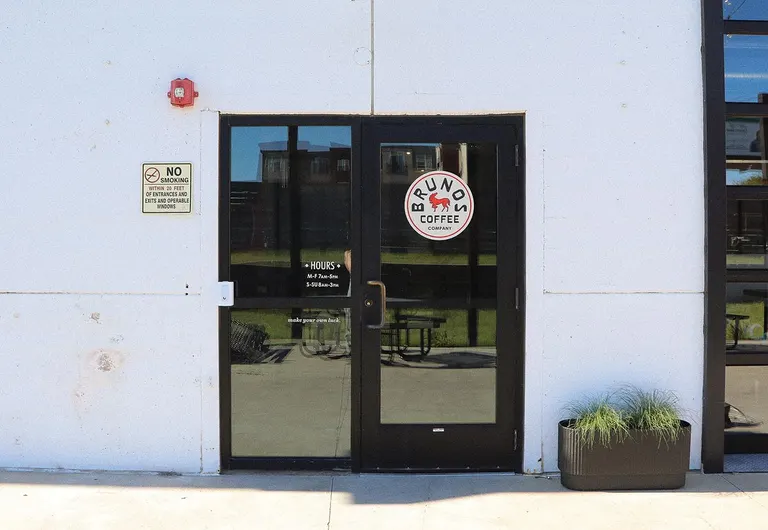
That leap became Bruno's Coffee Company.
The coffee shop gives The Shop what Dawson calls a "soft entry point." Someone may not know if they need a coworking membership. They may not know anyone inside. They may not be ready to rent a conference room. But everyone understands walking in for coffee.
From there, the building starts doing what it was designed to do.
A person comes in for a latte and sees the coworking space. A member brings a client for a meeting and grabs coffee first. Someone attending an event gets introduced to the space. A local business owner stops by for beans and ends up learning about the conference rooms.
Coffee creates the first reason to walk through the door.
But Bruno's is not trying to be only a café.
With roasting equipment on site, the team has room to build a wholesale coffee program for offices, hotels, restaurants, cafés, and other businesses that want high-quality coffee without roasting it themselves. The location makes that possible in a way other spaces did not.
"The benefit of this space versus any spaces we had looked at downtown is we have the ability to roast on site," Lane Meyer's fiancée Emma McIntyre said.
That opens the door to a larger vision.
They want to serve the person who wants a straightforward cup of black coffee and the person chasing experimental single-origin coffees. They want the menu to be approachable without being boring. They want to meet people where they are and then invite them a little further into what coffee can be.
The goal is not to intimidate anyone with specialty coffee. It is to build a bridge.
"Grab people with very good everyday drinking coffee," co-owner Lane Meyer said, "and then hopefully that opens their palate and their mind to something different."
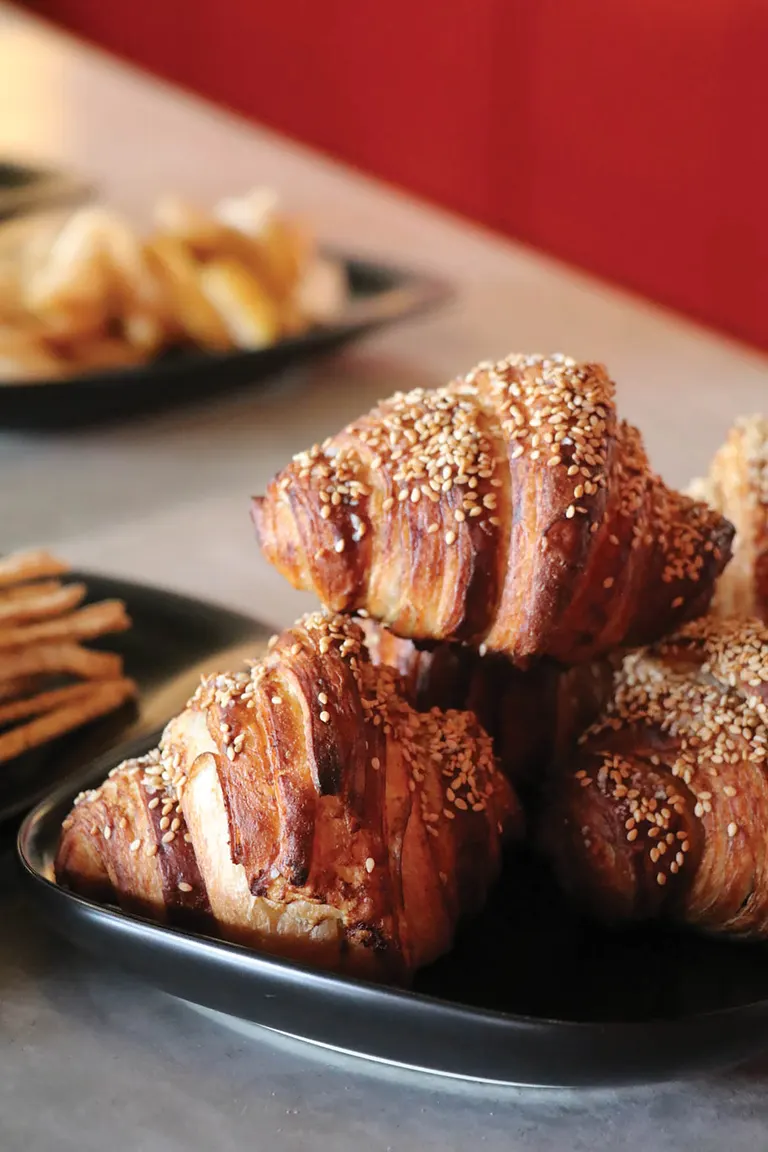
Behind the bar, the team is working with coffees from places like Burundi, Kenya, Guatemala, Papua New Guinea, Mexico, and Ethiopia. Lane is focused on sourcing, roasting, menu development, cold brew, blends, and relationships. Co-owner Aaron Dudgeon is focused more on front-of-house operations and the customer experience.
Their starting lineup includes a darker roast blend and a light-to-medium roast blend, giving customers options depending on what they already like.
The wholesale side will start locally, then likely expand regionally. Fargo has a strong coffee scene, but Bruno's sees opportunity in nearby markets like Grand Forks, Detroit Lakes, Fergus Falls, Bismarck, Sioux Falls, and beyond.
Still, the early focus is close to home.
"I really want to go down Seventh and give all these manufacturing, fabricators, and industrial places coffee," Lane said. "Everyone deserves delicious coffee every day."
And the wholesale program will not just be about dropping off bags of beans. The team wants to help partners dial in coffee, understand equipment, train staff, and serve the product well.
"We want to try to translate that same level of hospitality into wholesale service as well," Aaron said.
Hospitality Before Everything
Nancy Olson, who is leading the food side of Bruno's, truly believes this.
"Service is giving you what you pay for," she said. "Hospitality is taking care of you."
That idea shows up in small ways. Remembering a regular's order. Knowing a customer's kid is graduating. Keeping a special spoon in the back for a child who always wanted the same one. Anticipating what someone needs before they have to ask.
Aaron described it as "solving problems for people before they know they have them."
That philosophy is shaping Bruno's from the beginning. The team wants people to walk in, order, sit down, and feel like everything was easy. They want the product to be excellent, but they also want the experience to feel considered.
"It's so simple," Nancy said. "But it often gets overlooked."
The same thinking applies to the broader building. A member should feel welcomed. A wholesale partner should feel supported after the sale.
That attention to detail is part of what drew Nancy to the project.
She said the opportunity gave her a full kitchen, a blank menu, and a chance to work with people who care deeply about doing things the right way.
"They want to take care of other humans," she said.
Built With Help
For Lane and Aaron, opening Bruno's has also meant learning a new side of business.
They had worked in coffee and hospitality before, but this was different. Business loans, contractors, electrical, HVAC, equipment, build-out decisions, traffic data, market research, sourcing, branding, wholesale planning, it was a lot to hold at once.
The biggest lesson?
"Take the help," Lane said.
They leaned on the support system they had built over the years. People offered advice, helped think through decisions, shared expertise, and pushed toward the same goal.
That sense of community around the business mirrors the community they want to build inside it.
They also worked with Jordan Nelson on branding, including hand-drawn visual elements, colors, fonts, packaging concepts, stickers, labels, and the larger visual identity. The result is a brand that feels intentional from the coffee bags to the walls.
"I think a lot of coffee companies restrict themselves to the café," Aaron said. "I don't think a lot of places think of themselves as a brand."
Bruno's wants to be more than a place that sells coffee. They want to host events, listen to the community, create reasons for people to gather, and introduce customers to new experiences, whether that is a tasting, a class, a vinyl swap, a food event, or something they have not imagined yet.
Community does not happen just because a place exists. It happens because someone actively creates the conditions for people to connect.
Editor of Fargo INC! — covering the founders, companies, and ideas shaping business in Fargo-Moorhead. Eleven years in, still no opinions, no politics, all business.