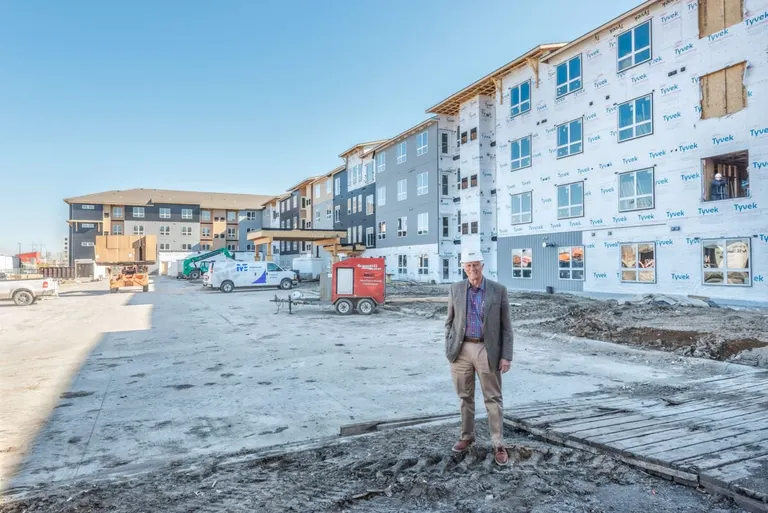
If Jim Roers didn’t exist, the Fargo-Moorhead region would look much different. For over 48 years, Jim and his business, ROERS, has been involved in constructing and developing a large portion of the city and they’re still going strong.
Jim’s career started in 1976. According to roers.com, during that time, the company was little more than a pull-behind trailer construction company. However, over time, they continued to grow, and eventually, in 1988, they got into real estate development.
“We started doing commercial development so we had enough work for employees to do to keep them working year-round. We would do commercial jobs, and then I would always have a project of my own sitting on the ground waiting to be erected when we ran out of work,” Jim said. “So, in 1988, I put up my very first warehouse building—that kind of was the beginning of development for me. That was so much fun that I did six different projects over time on that same site. When you put employees on unemployment after they finish seasonal work, they get very antsy and they start looking for their first job in the spring. And if you’re not ready to go, you lose them.”
From there, Jim continued doing what he has always done—build for need. According to Jim, the 80s and early 90s were all about “light industrial.” In 1995, things swung towards office warehouse buildings. In the late 90s, things went towards retail. And, since about 2010, things have swung towards multifamily, which has become a major focus for Roers in the state of North Dakota.
“It doesn’t pay to build something that doesn’t lease,” Jim said. “Look at our office spaces. Office spaces have absolutely been destroyed as a result of COVID. Everybody’s working from home. We’re looking to repurpose some of our office space right now. Multifamily is the most profitable right now. It’s not as profitable as retail used to be, but its the safest market out there.”
In order to stay on top of trends, Jim has always watched vacancy rates and “followed the money.”
A Big Need For Housing
According to a 2023 report by the Fargo-Moorhead Metropolitan Council of Governments, nearly 16,000 housing units are needed in the next 10 years to sustain the city’s growth.
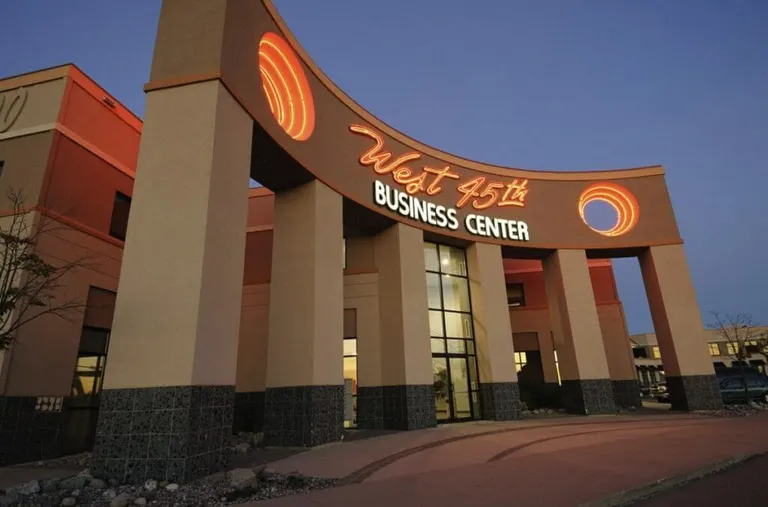
“Over the last 45 years, I’ve seen cycles go up and down a half a dozen times,” Jim said. “If you go from 42nd to 45th, in that vicinity, that was an office park that everyone was clamoring to get into. If you drive through there now, you’ll see a lot of dark windows. But, when it came up, there were a lot of big box users coming to town. There were call centers, and data processing centers, but all of those things are being done from home now. Technology and COVID have tipped the world upside down and it’s going to take 10 to 20 years for us to regroup and repackage our inventory. Right now, you can’t build new office space and make it work… We’ve got an oversupply of all of this inventory for retail and office. So, new buildings are going to be at a standstill. Even though there could be a demand, you can’t build because today’s building costs and revenue streams don’t match up.”