In shortEvery year, TEDxFargo brings together people who are asking bigger questions about work, community, creativity, technology, and purpose.
3 things to know
1Every year, TEDxFargo brings together people who are asking bigger questions about work, community, creativity, technology, and purpose.
2The 2026 speaker lineup continues that tradition with voices from a wide range of backgrounds, each bringing a different perspective on how ideas become action.
3Some are leaders, builders, educators, or advocates.
Auto-summary · grounded in this articleNever used on sponsored content
Every year, TEDxFargo brings together people who are asking bigger questions about work, community, creativity, technology, and purpose.
The 2026 speaker lineup continues that tradition with voices from a wide range of backgrounds, each bringing a different perspective on how ideas become action. Some are artists. Some are entrepreneurs. Some are leaders, builders, educators, or advocates. But what connects them is a shared willingness to think deeply, challenge assumptions, and invite others into a new way of seeing the world.
In the pages ahead, we’re introducing you to some of the people who will take the TEDxFargo stage in 2026.
TEDxFargo Speaker: Theresa Ashby, PhD
Finding Your Highest Self
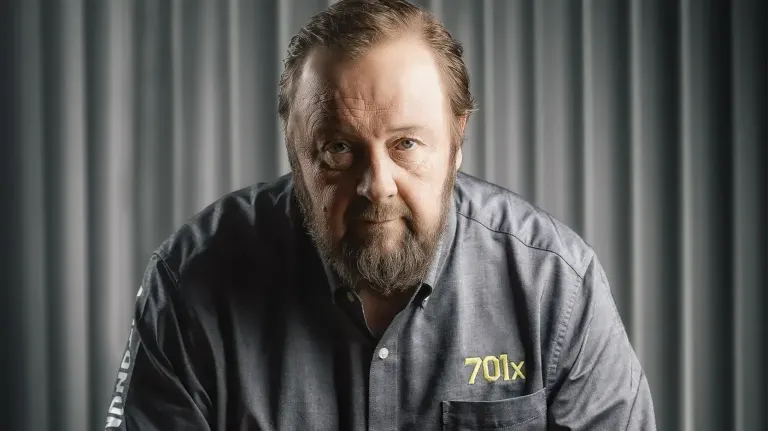
For much of her career, Dr. Theresa Ashby understood business through the language of execution.
Build the plan. Drive the numbers. Hit the targets. Measure the results. Move faster.
And she was good at it.
Ashby has spent decades in leadership, consulting, speaking, and advising, building a reputation as a business scaling expert. Her background includes high-level corporate leadership, business strategy, digital transformation, and helping entrepreneurs turn their ideas into scalable products, platforms, and systems. She is the author of Better Implementation Now! Eight Ways Great Strategies Fail and How to Fix Them and Exposing the eLearning Mystery: Secrets to Digitizing Your Business. She is also listed by NAWBO as its Institute Board Treasurer and a business scaling expert.
In other words, Ashby knows the spreadsheet side of business. She knows the systems. She knows the pressure. She knows the version of leadership that says success is something you push toward with enough strategy, intensity, and force.
But that is not the version of leadership she is bringing to the TEDxFargo stage.
Her talk, she said, is about collective consciousness, and more specifically, how women can “reconnect, recommit, and reimagine how we change the world together.”
“Our business models that we’ve been running our businesses off of are outdated,” she said. “Not outdated in the sense of AI that has forced us to look at things, but more in line with these philosophical viewpoints of separateness.”
Ashby believes the next era of business will require leaders to move away from separateness and toward wholeness. Toward relationships. Toward community. Toward philanthropy. Toward a deeper kind of self-awareness. Toward what she describes as spirituality—not religion, but the essence of who a person is.
“Gone are the days of being the egoic leader,” she said. “The world is in turmoil, and the more we come at it from an egoic mind, the more we forget to be inclusive of others.”
For Ashby, this is not soft thinking. It is not a retreat from business discipline. It is a challenge to look at where that discipline begins.
Too often, she said, leaders build from the outside in. They create a business, define products and services, push for growth, and then try to align their people around the machine they have built.
Ashby is suggesting the opposite.
Start with the self. Understand what is driving you. Understand your nervous system, your emotions, your blind spots, your values, and your purpose. Then build from there.
“When you bridge the inner self,” she said, “the outer results will be far greater.”
That sentence could almost serve as the thesis of her current work.
It also represents a major personal shift.
Ashby said her own turning point came after a mission trip to Chad, Africa. She had gone, in her words, with the subconscious expectation of helping—of doing good, of serving, of being useful.
“I went and I was going to be the hero,” she said. “When I got there, I wasn’t the hero. Everybody else was the hero.”
The experience shook her. She witnessed suffering, death, instability, and a level of human resilience that forced her to reexamine the way she had been moving through the world.
“It was my awakening,” she said. “I’ve really been holding up the world thinking my purpose was to help others, but really I had to help myself before I could see how I was able to help others.”
What followed was not a quick reinvention. It was a healing journey.
Ashby worked with a psychologist experienced in post-traumatic stress disorder. She brought in a spiritual coach. She surrounded herself with women and friends who could “hold space” for her as she processed what she had experienced and began to rebuild from the inside out.
“I’m still on the journey,” she said. “It’s not over. What I realize is it’s not a destination anymore. I think I lived my life in such a destination. Now it’s really just about feeling what I need, hearing what I need, doing what I need, just being—and then, of course, taking action.”
Ashby is not telling business owners to abandon action. She is telling them to examine the place their action comes from.
There is a difference between execution born from fear and execution born from alignment. There is a difference between scaling a business because the market says you should and scaling a business because the work is rooted in a clear purpose. There is a difference between chasing numbers and building something that reflects the truest version of the people behind it.
For business owners, that can be uncomfortable.
Ashby knows it is easier to talk about alignment than to live it. It is easier to say a business should be heart-driven than to risk changing an offer, a service, a customer base, or a strategy that is producing revenue. But she believes many companies are quietly carrying the cost of building around the wrong center.
“If I go beyond the numbers and I go beyond the spreadsheets and I take the time to really sit back and say, ‘What is it that I really want to do in my business?’ we will find that you created a program or a service that was driven by financials instead of by what is heart-driven,” she said.
That does not mean money is irrelevant. It means money cannot be the only compass.
For Ashby, the work begins with questions. Who do I really want to serve? What do I actually want to build? What values are showing up in the way I lead? What blind spots are showing up in the way my business operates? What part of me is driving this decision—fear, ego, scarcity, purpose, love?
She believes a business will reveal all of it.
“Our businesses completely reveal our values and our blind spots,” she said. “Your healed self and your wounded self play out in your business.”
That is a demanding view of leadership. It asks leaders to stop treating business as a separate compartment from the rest of life. It asks them to see the workplace as one of the clearest mirrors they have.
It also asks them to think differently about impact.
Ashby’s idea of collective consciousness is rooted in the belief that individual healing does not stay individual. When one person becomes more grounded, more aware, more compassionate, and less driven by ego, the environment around that person changes.
“When one of us rises, the environment completely shifts,” she said. “When one of us heals ourself, it creates all of this space for others to heal. And when we start to use our voice, then what we’re doing is we’re giving everybody else permission to speak.”
TEDxFargo Speaker: Jen Burgard
The Strength of Being Weak
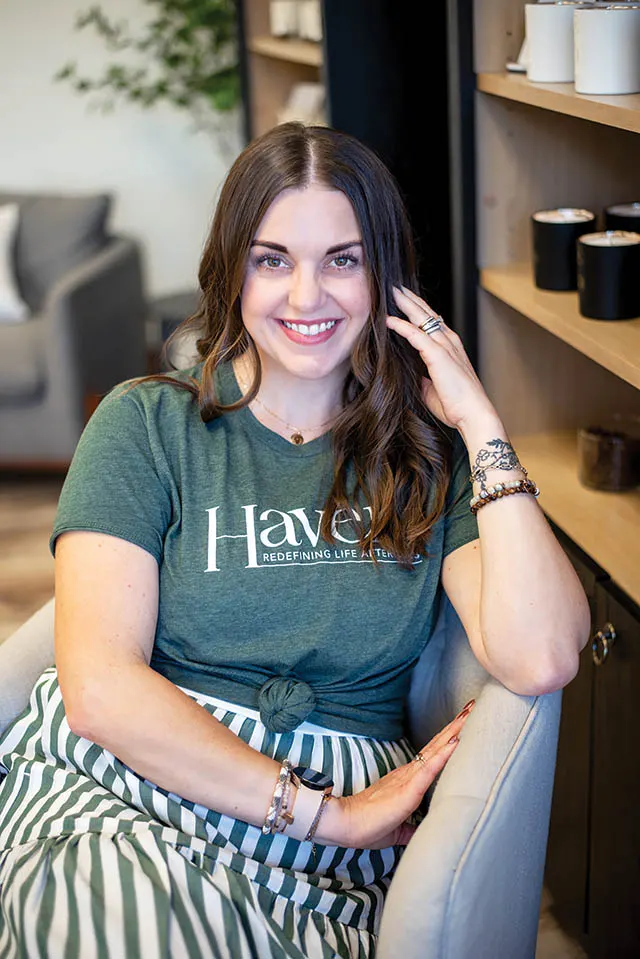
Jen Burgard did not set out to become a public voice on grief.
She did not set out to build an organization around loss. She did not set out to speak from a TEDxFargo stage. She did not set out to become the person other people point to and say, “You’re so strong.”
In fact, those words have always sat strangely with her.
“I don’t feel strong,” Burgard said. “Sometimes I would prefer people not say that.”
She understands why people do. They mean it kindly. They mean it as encouragement. They mean it as admiration for what she has survived and what she has built.
But strength, as Burgard has come to understand it, can become its own kind of performance.
It can put people on a pedestal when what they really need is someone willing to sit beside them. It can turn survival into something that has to look inspiring before it is considered valuable. It can make grief feel like something a person is supposed to overcome neatly, publicly, and productively.
That is the idea Burgard plans to challenge at TEDxFargo.
“I think as a society we value strength and grit and hustle,” Burgard said. “Work harder, achieve these goals, set your mind to it. But I think there is a version of that that’s unfair to the general person.”
Burgard knows that tension intimately.
After the death of her son, Henry, grief became more than an abstract concept. It became part of the architecture of her life. Like many parents who experience pregnancy or infant loss, she was discharged from the hospital without a baby in her arms, but with a memory box—hand and foot molds, footprints, wisps of hair, cards, notes, and the few physical reminders that would have to stand in for a lifetime. In a piece she later wrote, Burgard described it as “a box of everything you will ever have to remember your child instead of a baby in your arms.”
That kind of loss changes the way a person moves through the world.
For Burgard, grief made her quieter, softer, and more aware of mortality—her own, and the mortality of everyone she loves. It narrowed her circle, but deepened the connections that remained.
“When grief happened to me, my circle every time got smaller,” she said. “My circle got smaller, but my connections with the people that were still in that circle grew.”
In time, that grief became part of her work.
Burgard helped build what was then known as Hopeful Heart Project, a nonprofit serving families experiencing pregnancy and infant loss. The work was intimate and tender. It meant walking alongside people in the most devastating moments of their lives. It meant creating healing gifts. It meant offering support when language often fails. It meant knowing, firsthand, that grief does not end when the flowers die, when the lasagna is gone, or when everyone else quietly goes back to normal.
But Burgard’s story did not become simpler once she found purpose in the work.
It became more complicated.
In the years after Henry’s death, Burgard poured herself into supporting other families experiencing pregnancy and infant loss. She helped build what was then known as Hopeful Heart Project, a nonprofit rooted in tenderness, memory-making, and the belief that no family should have to walk through loss alone.
The work was sacred. It was also deeply personal.
And eventually, it brought another kind of grief.
A close friendship and working relationship with Kayla, someone Burgard had trusted deeply inside that grief-support world, began to unravel after painful questions surfaced around Kayla’s own story of loss. Burgard has written publicly about that chapter, including the confusion, loyalty, doubt, and heartbreak that came with trying to understand what was true while also protecting a mission that mattered to grieving families.
For Burgard, the details of that experience are less central now than what it exposed in her: the weakness of not knowing what to believe, the ache of wondering what she missed, and the regret that can follow when love, trust, grief, and leadership collide.
“I have so many regrets,” Burgard said. “Absolutely.”
That is one of the things she wishes people would ask her more directly. Not the polished question. Not the one that lets her give the easy answer. The harder one.
Do you carry guilt and regret?
Her answer is yes.
She carries regret from the day Henry died. Regret from the days after. Regret about work, relationships, decisions, and moments she wishes she could redo. She carries regret about things she missed and things she did not understand at the time.
“And they eat at me,” she said.
That honesty is central to her message. Burgard does not want to stand in front of people and pretend she has mastered grief, motherhood, leadership, forgiveness, or life.
“I’m not over here 100% like, ‘This is the way you do it,’” she said. “That’s not how it works.”
The world often wants stories like hers to resolve cleanly. A mother loses a child. She starts an organization. She helps others. She becomes strong. She inspires people.
But Burgard is more interested in the parts that do not fit that arc. The parts where someone makes the best decision they can with the information they have, and later wonders if they should have known more.
“There is strength and beauty and value in simply just surviving,” Burgard said. “In simply just getting up every single day and just getting stuff done.”
That belief has changed the way she thinks about support.
When someone is grieving, Burgard’s advice is to not ignore it.
Especially in the Midwest, she said, people have a habit of sending a meal and moving on. The gesture is kind. But grief does not end when the meal train ends.
Instead of asking, “What can I do?” Burgard encourages people to offer something specific.
Drop off coffee. Do the laundry. Watch the kids. Send a message that says you are thinking about them and the person they lost. If they say no, try again later.
“Just do the thing,” she said.
And if someone has died, say their name.
“They haven’t forgotten that their person died,” Burgard said. “They’re terrified that everyone else has.”
Before Henry died, Burgard understood the fear of saying the wrong thing. The loss of a child made her uncomfortable too. She knows why people freeze. They do not want to hurt someone. They do not want to make grief worse. They do not want to end up on a list of things people should never say.
That is why Burgard does not like focusing only on what not to say.
“I think we scare people out of saying anything,” she said.
Instead, she wants people to practice showing up.
Say, “I’m here with you.”
Say, “I can’t fix this.”
Say, “I’ll sit with you in it.”
Then actually sit.
The people who helped Burgard most were not the ones who tried to explain away the pain. They were the ones who stayed. They watched movies. They prayed, when prayer fit the moment. They sat on the couch. They allowed the silence to be awkward. They allowed grief to exist without rushing to make it useful.
“Sit with them in the uncomfortable,” Burgard said. “Get weak with them.”
Burgard knows that is difficult. To truly imagine someone else’s loss, even briefly, can feel almost unbearable. But she believes people are more capable of it than they think.
“You can go back to putting that armor back up,” she said. “You shouldn’t have to walk around holding that all day either. But give that person five minutes.”
Burgard sees it in ordinary connection, too. She has never loved small talk. It drains her. She would rather know what someone actually cares about, what they are thinking, what they are carrying.
“When I meet someone, I love to just get to know who they are and what they’re thinking and what they actually care about,” she said. “That’s connecting with humans.”
It is also why she thinks so many attempts at connection fail. Traditional icebreakers, forced introductions, “fun facts”—to Burgard, those often do the opposite of what they are meant to do. They make people self-conscious instead of connected.
Through her work, she has seen the value of shared experience. Haven events often include an activity—floral workshops, creative projects, something people can do with their hands—because connection often comes more naturally when people are making something, laughing at themselves, and being imperfect together.
“Let yourself be bad at something in front of someone else and you’ll all laugh together,” she said.
Burgard’s own relationship with trust has changed, too. She once trusted blindly. Now, trust is earned slowly.
After everything she has lived through, she has had to learn how to let people in again, one small step at a time. New people entered her life gradually. Some taught her things. Some opened her eyes. She did not have to give them full access to her heart all at once.
She could check in with the people who had remained in her smaller circle. She could ask whether a feeling was intuition or trauma. She could admit she did not have it all figured out.
That, too, is weakness.
And that, too, is strength.
When asked what gives her purpose today, Burgard paused. The answer was not as automatic as it might have been years ago.
At one time, she may have said the organization was her purpose. Helping families was her purpose.
Now, she sees it differently.
“I think my purpose is inspiring change,” she said.
That change begins close to home. Burgard wants to give her children and her family a different life experience than the one she had. Not necessarily better, she said, but different. She wants her community to be more open to growth. She wants people to be willing to look at grief, loss, weakness, and regret without turning away.
That is one of the reasons she said yes to TEDxFargo, even though the stage itself is outside her comfort zone.
“I think I have something to share that makes sense and that matters and is worth exploring,” she said.
havenmidwest.org /havenmidwest @haven_midwest
TEDxFargo Speaker: Kenny Lee
Finding Common Ground in the Field
Kenny Lee did not grow up around agriculture. He did not come from a farming family. He did not spend childhood summers in a tractor.
His path to agriculture started with a question.
What industry needed help?
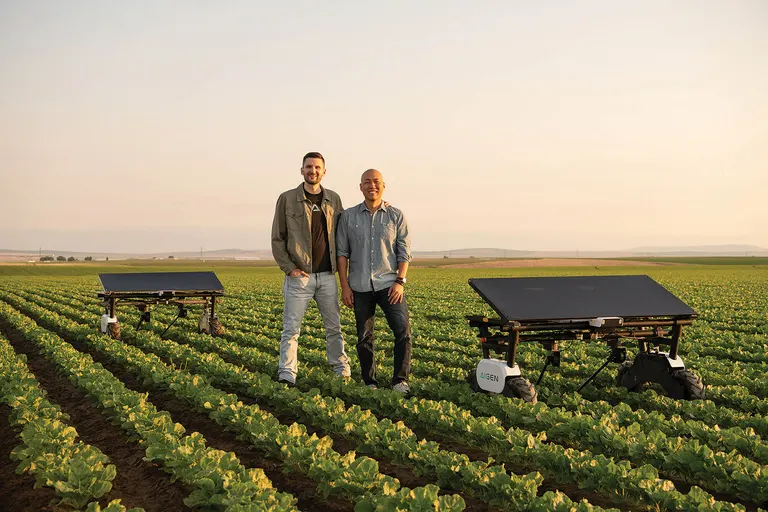
For Lee, the answer eventually led him far from the tech corridors he knew well and into fields, farm shops, combines, and conversations across middle America. Which, ultimately, led him to build solar-powered robots designed to remove weeds without fuel, heavy tillage, or chemical spraying.
But if you ask Lee what he may speak about at TEDxFargo, the answer is not simply robotics. Or artificial intelligence. Or startup life.
It is about common ground.
“I’m not from the ag industry,” Lee said. “I didn’t grow up in ag. I switched over to a completely new industry that I had no idea about when I was in my early 40s.”
Lee is also an immigrant who moved to the United States from South Korea when he was 6 years old. He grew up in Brooklyn, spent time in Durham, NC, and later lived in Guam. Along the way, he learned how to move between worlds—racially, culturally, geographically, and professionally.
As a child in Brooklyn, many of his closest friends were Black and Puerto Rican. Later, he found himself in blue-collar communities shaped by police, firefighters, Jewish families, and working-class neighborhoods. In middle school, he remembers being the only Asian kid among roughly 400 students, moving between white and Black friend groups in a school where racial divisions were impossible to ignore.
“I sort of rode the line in between that, because I belonged to neither group,” Lee said.
Then, in high school in Guam, he had Asian peers who looked more like him. That, too, felt unfamiliar.
Those early experiences shaped him. They taught him how to listen without needing to belong completely. They taught him how to build trust quickly. They taught him that identity can be complicated, but connection does not always have to be.
Today, he still uses those lessons.
“One day I’m just hanging out with a farmer and his combine,” Lee said. “The next day I’m in the tech world at Nvidia and Amazon.”
He can move between those spaces because, in many ways, he has been doing it his entire life. And while Lee does not pretend America’s tensions are imaginary—he has experienced racism, and he knows how heated conversations around immigration, race, and politics can become—his work in agriculture has reinforced a different truth.
People are more complicated than stereotypes.
Extreme opinions are always loud, but they're not the country. Most people are somewhere in the middle, just trying to do what's best for their families and their communities.
What he has seen instead, particularly in the states and communities where agriculture is central, is a shared desire to build something better.
“At the heart of it all,” he said, “everybody wants what’s best for the country. They may have different paths and opinions on how you actually get there, but at the end of the day, there’s this common thread.”
That belief has become part of his work.
Lee did not enter agriculture by assuming he had the answer. In fact, he began by admitting the opposite.
After returning to school in his 40s for an Executive MBA at MIT Sloan, he became interested in systems thinking, particularly through the lens of sustainability. What struck him was the delay built into it. Human beings are not naturally wired to respond to consequences that unfold over decades.
“You have to think about a span of decades,” Lee said. “You’re really thinking about how it impacts your kids or your kids’ kids, not about your life tomorrow. And that’s hard.”
The more he studied, the clearer it became that there was no single fix.
Electric vehicles alone would not get us there. Solar wouldn't either. Neither would more efficient homes. No single industry could move the needle by itself.
“Every single industry needs to contribute,” Lee said.
So he started looking for an industry that met two criteria. It had to be underfunded, and it had to be difficult—not just technologically, but socially and culturally.
He landed on agriculture.
“I knew nothing about agriculture,” Lee said. “One thing I knew when you used that word to me was farming, so I was going to start farming.”
He enrolled in a hands-on farming practicum, where he was given a plot of land and worked through the basics of water management, fertilization rates, seeding, weeding, harvesting, and selling produce at a farmers market.
“I use farming loosely,” he said. “Farmers are going to say, ‘No, you hardly farmed.’”
But the experience gave him enough familiarity to begin conversations without sounding like a software salesman parachuting into an industry he did not understand.
From there, Lee spent a season traveling through roughly eight or nine states, including Washington, Idaho, Oregon, California, Tennessee, Georgia, Louisiana, Mississippi, Illinois, Iowa, and North Dakota. He talked with as many farmers as he could, asking what they actually needed.
He did not lead with technology. He did not lead with a pitch deck. He did not lead with a robot.
He led with the problem.
“I know nothing about farming,” he would tell them.
Then he would ask a version of this question: If you had a friend who was a nerdy tech kid and could build robots or software or something else, what would you want them to build? What problem would you want them to solve?
Again and again, the answer came back to weed control.
“That kept on coming up,” he said. “I didn’t know that it was going to be a weed-control solution.”
At first, he looked at companies already working in agricultural robotics and novel weed-control technologies. But he noticed a gap. Some solutions were built for specialty crops in places like California. Others were expensive laser weeders that could cost more than $1 million.
That might work for some operations. It would not work for many of the farmers he had been meeting across the Midwest.
That gap became the opening for Aigen, the ag-tech robotics company Lee co-founded with Richard Wurden, a former Tesla engineer.
The mission was not only to build technology for agriculture. It was to build technology aligned with the realities of farmers and the conservation priorities Lee cared about from the beginning.
His company’s robots, Aigen Element, do something diesel and herbicide cannot. They work continuously, powered by the sun, removing herbicide-resistant weeds one plant at a time. Less tillage. Less spraying. Healthier soil underneath.
“I wanted to make sure that these priorities align in the solution that we built,” he said. “The robot had to earn its own energy to get the job done.”
A person from outside agriculture entered the industry not by trying to disrupt it from a distance, but by learning from the people already inside it. A startup founder working with robotics and AI found his strongest insight not in a lab, but in conversations with farmers. An immigrant who has lived between cultures found, in farm country, not alienation but connection.
“I always like to root for the underdogs,” he said.
And when he looks at agriculture, that is what he sees. He sees an industry that feeds people, supports communities, carries generational knowledge, and yet is often misunderstood by the very people building the future.
“Spending so much time on the coast and in high tech, those areas really do not understand agriculture, food, and farming,” Lee said.
That misunderstanding goes both ways sometimes. Technology can feel abstract. Agriculture can feel distant. Sustainability can feel political. Rural America can be flattened into caricature. Immigrants can be, too.
Lee’s life and work challenge those simplifications.
He has seen division. He has lived across it. But he has also seen what happens when people stop talking in categories and start talking about problems they can solve
aigen.io
@Aigenio
/aigeninc
@aigen-inc
TEDxFargo Speaker: Ryan Mauk
To Walk Amongst the Giants
By the time most people see a wall cloud, they are already looking for shelter. Ryan Mauk sees something else first.
He sees motion. Structure. Pressure. Shape. A living system pulling itself together in real time. He sees danger, yes, but also presence. A kind of scale that makes a person feel very small, and, strangely, very alive.
That feeling has followed him since childhood.
“I have been fascinated by tornadoes since I was like five years old,” Mauk said. “I have memories of being in daycare and there’d be tornado warnings and the teachers are trying to pull me inside, and I’m out the door like, ‘No, I want to see.’”
That curiosity eventually became storm chasing. Then filmmaking. Then an online cinematic series called The Rear Flank, where Mauk documents severe weather with the eye of a storyteller rather than a highlight-reel hunter.
But the real story is not just that Mauk runs toward tornadoes.
It is that, in many ways, he has been doing that his whole life.
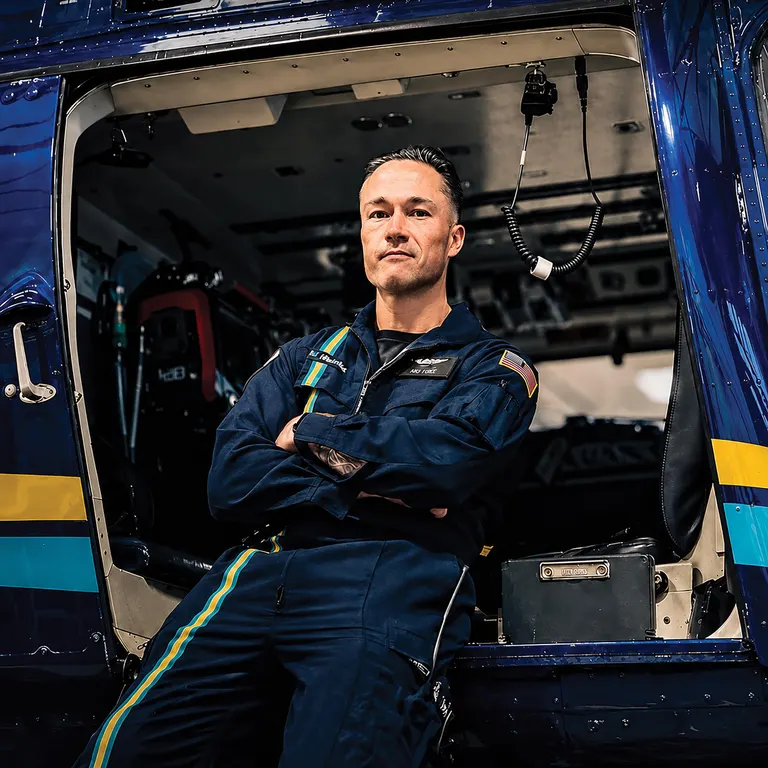
Today, Mauk is a Flight RN in Fargo, a filmmaker, a father, and one of the region’s most distinct storm chasers. His professional life puts him inside high-stress situations where seconds matter. His creative life puts him underneath rotating supercells, waiting to see whether the sky will organize itself into something beautiful, violent, or both.
His upcoming TEDx talk is tentatively titled “To Walk Amongst the Giants,” a phrase he uses to describe what it feels like to stand in the presence of the atmosphere’s most powerful moments. It is also a metaphor for the rest of his life: fear, chaos, failure, reinvention, and the decision to keep moving anyway.
“When you witness something like that up close,” Mauk said, “it almost seems like there’s a palpable presence there. Almost like an alien landing.”
“Every time I’m out there and I see something like that,” he said, “it’s just another walk amongst the Giants.”
The First Chase
Mauk’s first storm chase happened on foot.
He was about 16, hanging around Clara Barton Elementary School in South Fargo with a friend named Ted, when he looked up and noticed something happening in the clouds. The storm had a lower, shelf-like feature. Scud clouds were rising into it. The air was moving in a way that made sense to him, even then.
“That’s a wall cloud,” he remembers thinking. “That’s going to throw down a tornado.”
They ran to grab a camcorder—the old kind with a VHS tape—and headed toward Lindenwood Park. From the concrete baseball bleachers, they watched a funnel begin to form as the storm moved southeast toward Minnesota.
They filmed it.
Then, years later, the tape disappeared.
Mauk has searched for it. At one point, he found a VHS labeled “severe storms 96” in his own handwriting. But the footage was gone, likely taped over.
“That was my first chase ever,” he said. “And it was on foot.”
The first successful chase he planned—the first time he studied the setup, weighed the forecast, drove toward the target, and actually saw what he hoped to see—came much later, on Father’s Day in 2015 near Bison, SD.
That day changed the hobby into something more serious.
“From that point on is when it really, really took off for me,” he said. “That was like, ‘Oh my God, this is it. I’m in love. I have to go do this again.’”
Mauk had already been interested in cameras by then. His path into filmmaking started through music. He wanted a music video, could not get one made the way he wanted, bought a camera, and taught himself.
“I made some awful music videos and learned the hard way,” he said.
That learning curve became useful. Storm chasing, after all, is not studio work. There is no controlled set. No repeat take. No guarantee that the subject will appear. Mauk might drive hundreds of miles, study a dozen variables, prepare a concept, and end the day with nothing but wind, rain, and a long ride home.
He likes it anyway.
“I bring out a cinema camera, and I have a rough plot idea,” he said. “Nature will provide the props or they won’t.”
Not Another Tornado Video
There is no shortage of storm-chasing footage online.
Much of it looks the same with a shaky camera, roaring wind, someone yelling offscreen, a tornado in the distance, maybe debris crossing the road. It can be thrilling. It can also flatten the experience into a single moment.
Mauk wanted something else.
He wanted atmosphere. Build-up. Chase strategy. Silence. Music. The loneliness of a road grid. The tension of waiting. The emotional arc of the day.
“I always wanted to find out specifically what’s my niche,” he said.
That niche became The Rear Flank.
The series took shape in 2021 during a chase near Selden, KS. Mauk and his chase partners had been weighing whether to stay in South Dakota or drop south toward Kansas. The better target looked farther away, so they went. That day, Mauk decided to make something different. He launched his drone, thought through the story, and built the episode around more than the tornado itself.
“That was episode one,” he said. “And then from there there’s episode two and three. I’m like, okay, this is my format.”
As of the interview, Mauk said the series was 25 episodes deep.
In all of them, he does not want to be only a person who documents storms. He wants to translate the feeling of being near them.
That includes beauty, but it also includes discomfort. Storm chasers live with a paradox of wanting to see tornadoes, but also not wanting anyone to get hurt. The ideal storm, Mauk said, drops a photogenic tornado over open country and damages nothing. Many tornadoes do occur in rural areas. Some, however, destroy homes, take lives, and alter families forever.
The longer Mauk has chased, the more complicated that reality has become.
“Sometimes it’s exhilarating, and sometimes it’s frustrating, and sometimes it’s sad,” he said. “As much as I and other storm chasers, we want to see these things happen, we don’t want them to hurt anybody or their property.”
That tension has deepened his respect for storms. It has also pulled him closer.
“There’s sort of a way-to-witness element to it,” he said. “It’s made me respect it more on a really spiritual level, and at the same time, I’m even more drawn to it.”
A Nonlinear Path
Mauk’s life did not start with a straight line toward flight nursing, filmmaking, or anything close to a polished public platform.
When he talks about his early years, he does not romanticize them.
He dropped out of high school. He got his GED. He worked construction. He did not see a clear future.
“I didn’t have any direction,” he said.
For a while, he assumed he had already hit the roadblock that would define him.
Then someone pushed him.
A woman he knew worked part-time at Minnesota State Community and Technical College, now commonly known as M State. She told him, plainly, that he had a GED and could apply. He did not need to remain stuck. He did not need to work in construction forever.
“How about nursing?” she asked.
At first, Mauk was not sure that door was open to him.
“I don’t know,” he remembered thinking. “Is there really a shot?”
There was.
It was not easy. He had to catch up on classes he had missed in high school. He had to take prerequisites that other students already had behind them. The process was slower than it might have been for someone on a cleaner academic path.
But he kept going.
He earned his LPN and went to work at MeritCare, before its merger into what is now Sanford Health. The job did not pay as much as an RN role, but it gave him immediate practice. He was using what he had learned. He was becoming someone different through repetition, responsibility, and time.
He planned to go back for his RN right away, but life changed. He became a father, and school went on hold for years. Eventually, he returned and finished.
Flight nursing had always been the dream.
“I’d see the helicopters flying over,” he said. “That realm of medicine is the only reason I’ve wanted to do this.”
Fear, Properly Understood
Mauk spends a lot of time thinking about fear.
Not in the shallow way people talk about “overcoming” it, as if courage means becoming numb. In his world, fear has practical value. A tornado deserves fear. So does flying into an emergency. So does taking on responsibility for another human life.
Healthy fear keeps a person honest.
But there is another kind of fear—the kind that blocks movement before anything has even happened.
That kind interests him most.
“What is fear at the human visceral level?” he said. “When you really strip it all down?”
In Mauk’s view, fear sits underneath many of the emotions that stall people out like anger, jealousy, low self-worth, resentment, and hesitation. A person might think they are jealous of someone else’s house, job, marriage, or money. But keep asking why, he said, and the answer often gets down to fear.
Fear of not having enough. Fear of failing. Fear of starting. Fear of not being the kind of person who can do the thing.
Mauk knows that version well. He felt it when he looked at nursing school from the outside. He felt it when he built his filmmaking style in a crowded storm-chasing space. He still feels it when he picks up a new camera that is powerful enough to intimidate him.
“You just got to jump off the plane, man,” he said. “You just got to go. Just do it. Yeah, this is going to be scary, and this might suck. Here we go. We’ll figure it out as we go down.”
That does not mean ignoring risk. Mauk is careful to say that risks should be weighed. Storm chasing requires preparation, forecasting, road awareness, communication, and respect for the atmosphere. Flight nursing demands even more discipline.
But at some point, preparation ends and action begins.
The more often a person acts, Mauk said, the more fear erodes.
“You come out the other side of a very hard, daunting thing that seems absolutely impossible, you’re going to be carved out of wood,” he said. “You get through something hard—well, then fear kind of erodes. The next big thing, well, I can do that. I did this, and that sucked. That was hard. That almost killed me. But I did it.”
ryanmaukstormchaser.com
/ChuckMizz
@ryanmaukstormchaser
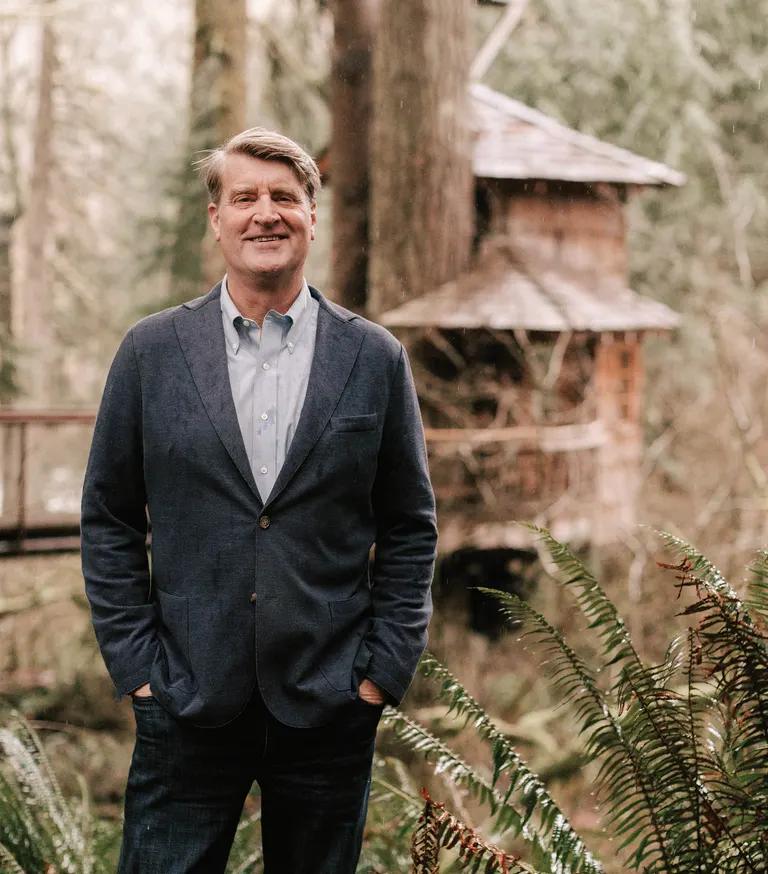
TEDxFargo Speaker: Pete Nelson
Pete Nelson closes his eyes when he talks about treehouses. Because, for Nelson, the first step in building a treehouse has always happened somewhere behind the eyes.
He sees the trees first. He sees their spacing, their lean, their height, their stubbornness, and their invitation. He sees where the first bolt might go. He sees the beam stretching from one trunk to another—not too far, not too forced. He sees the porch, the window, the little room suspended in the arms of nature. Before there is a drawing, before there is a permit, before there is a crew, a crane, a client, or a budget, there is a kind of meditation.
“I’m speaking with you, my eyes are closed and I’m in some trees,” Nelson said during the interview.
That is where his work begins—in the strange and beautiful place where fantasy starts becoming real.
For most people, treehouses live in memory. They belong to childhood, to scrap lumber, to summer afternoons, to the small thrill of having a place that is yours and no one else’s. Nelson has spent his adult life arguing that this is not where treehouses have to remain.
For nearly four decades, he has built his career around the idea that treehouses are viable architecture. Places with heat, electricity, air conditioning, permits, structural calculations, and purpose.
But also, importantly, magic.
“The idea that I’d like to present at TEDx,” Nelson said, “is treehouses are in fact a viable form of architecture.”
That message is at the heart of what he plans to share at TEDxFargo. Nelson is best known as the founder of Nelson Treehouse and the host of Animal Planet’s Treehouse Masters, the show that helped bring his work to a national audience. But these days, he thinks of himself less as a businessman and more as an ambassador.
He wants to give people permission to dream and create. Permission to take seriously the kind of idea most adults have trained themselves to dismiss.
“I’m attempting to give permission to people,” Nelson said. “To think seriously about creating something like this.”
A Sovereign Little Country
Nelson’s first treehouse was not grand. It was not expensive. It was not built for television. It was a small triangle wedged into the stems of a maple tree in New Jersey, built with his father when Nelson was around seven years old.
Looking back, he estimates it was maybe eight or 10 feet off the ground. The sides of the triangle may have been only three feet by three feet by three feet. But to a seven-year-old, that was enough.
“When you’re seven, that’s big,” he said.
It had a roof. It had walls. It had the feeling of privacy. More than anything, it gave him a sense of ownership.
“I’ve got two sisters, an older and a younger sister, and this was my place,” Nelson said. “My sovereign little country up there in the trees.”
That feeling—the child’s first taste of independence—is still central to how he talks about treehouses. He compares it to the forts kids build out of couch pillows. The materials barely matter. What matters is the sensation of stepping into a world you made yourself.
But like many childhood obsessions, treehouses eventually faded.
By 13 or 14, Nelson still remembers being fascinated by them. Then came other things. Girls. A driver’s license. Freedom of a different kind. The treehouse disappeared into the background.
“I couldn’t care less about treehouses,” he said.
The obsession returned when he was 25.
Nelson was living in Colorado in 1987 when a high school friend mailed him a book by David Stiles, an architect and author known for his illustrated books on treehouses, huts, and forts. Nelson and that friend had once fantasized about building a treehouse in a particular tree during high school. They never built it. But the dream stayed somewhere in the system.
When the book arrived, it hit him hard.
“It was just a book of drawings, black and white drawings, how to build a treehouse for kids,” Nelson said. “And it was so stylistic and wonderful, and it hit me like a ton of bricks.”
At the time, Nelson was looking at his life and wondering what to do with it. He had what he describes as a wonderful education and supportive parents who told him he could do anything he wanted. When that book showed up, the answer suddenly seemed obvious.
“I had a very strong hit that I should become the treehouse guy,” he said.
It would take decades for the rest of the world to see him that way.
“How to get to that point? It literally took 30 years,” Nelson said.
Nelson was not chasing a proven market. There was no clear road map for becoming “the treehouse guy.” There was no obvious industry waiting for him. There was a dream, some carpentry skill, persistence, and a belief that treehouses could be more than people assumed.
He kept building. He kept learning. He kept talking about treehouses seriously.
Then Animal Planet came along.
When Treehouse Masters premiered, the idea Nelson had been carrying for years suddenly reached millions of people.
“All of a sudden, the song that I’d been singing from the treetops was heard by many,” he said. “And damn, we’re building treehouses like you can’t believe.”
The show turned Nelson into the most recognizable treehouse builder in America. But it also gave mainstream audiences a new frame for what a treehouse could be.
These were not rickety platforms nailed into backyard trees. They were cabins, studios, retreats, guest houses, and dream spaces. They had windows and decks and rope bridges and fireplaces. They were whimsical, yes, but they were also engineered.
“In my experience, we have found a way to do this responsibly,” he said. “Trees respond extraordinarily well to the hardware that we put into them to support these structures. There’s engineering around it. Structural engineering that works. So the math works.”
And if the math works, building departments can understand it. Permits can be pulled. Drawings can be stamped. Dreams can move through the same systems as any other piece of architecture.
That does not mean the process is simple.
Treehouse building, Nelson said, requires a willingness to deal with the unromantic parts like setbacks, critical areas, slopes, shorelines, departments, rules, inspections, drawings, calculations, and paperwork.
For someone building professionally, there is no way around that.
“For a long time, I was in the camp of forgiveness rather than permission,” Nelson said. “That’s terrible advice if you’re going to go into the business of building treehouses.”
“If you do it, do it right,” he said. “Do it with integrity. Do it with your full heart and dot all the i’s and cross all the t’s.”
The Bolts, the Trees, and the Collaboration
One of Nelson’s favorite things about the treehouse world is that it is, as he puts it, “open source.”
There are no patents controlling the basic idea. Builders have their own approaches, their own hardware, their own variations, but the core knowledge is shared widely.
At the center of modern treehouse building is a piece of hardware called a treehouse attachment bolt. It allows a structure to be supported by a living tree while giving that tree room to grow and move.
“The bolts that we’re using to support treehouses allow for trees to grow and trees to move in the wind,” Nelson said. “There’s a flexibility element that’s really critical.”
That movement is part of the challenge. It is also part of the beauty.
A house on the ground can begin with a blank sheet of paper. A treehouse cannot. The trees are already there. They dictate the terms. They stand where they stand. The builder’s job is to listen.
“The beautiful thing about treehouse building is that you’re given, in the ways that the trees are spaced from each other,” Nelson said.
At first, he said, the process can feel overwhelming. You walk into a forest and wonder where to begin. Then certain trees start to reveal themselves.
From there, the design emerges. A beam can stretch 14 feet, but not 30. A bolt needs to land at a certain elevation. A porch wants to face a certain direction. A window belongs in one spot and not another.
Nelson compares it to writing a song. A blank page can be terrifying. But when the trees give you a melody, the work becomes arranging yourself around it.
“You just have to figure out how to fit into those trees,” he said. “It all starts to become this beautiful song that you create with the trees. It’s a collaboration in the end.”
The Business of Dreams
For all the wonder in Nelson’s work, the business itself is not easy.
He laughs about this, but only partly.
“It’s a lousy business building treehouses,” he said. “Let me tell you.”
Then he clarifies. The work is extraordinary. The beauty, fun, and joy are real. But as a business, treehouse building is difficult. Margins are thin. Costs are high. Logistics are complex. Crews have to travel. Payroll comes every two weeks.
“I’ve not ever really been motivated by profit per se,” he said.
That creates tension. The things that turn him on creatively are often the things that cost money rather than make it. He loves the dream. The vision. The flow state. The problem-solving. The magic. Taxes, accounting, and payroll are different matters.
“I’ve been pretty good about delegating those parts of the business to those that are better at that stuff,” he said.
Still, he is proud of the company’s endurance. Nelson has been in the treehouse world for 35 years, and through that time, the company has not missed payroll.
That is not a small thing when you have more than 40 employees, many with families, mortgages, and children to support.
“There’s a lot of natural pressure to keep this thing going,” Nelson said.
The economics of custom treehouses have also changed dramatically. Nelson remembers a time when an $85,000 treehouse was a serious project. Today, that same kind of project might cost hundreds of thousands of dollars.
“What was an $85,000 treehouse in 1996 is now a $485,000 treehouse in 2026,” he said.
Those numbers still stun him. Some of the company’s current projects can reach $600,000 to $800,000 or more. Nelson knows those figures are not accessible to the average person, and he does not throw them around lightly. But at the level his company operates, high-end work is often the only business model that makes sense.
“If I’m going to mobilize and head out to Michigan for a project, an $800,000 treehouse to me is more appealing than an $80,000 treehouse because I’d have to do 10 of them to keep the lights on,” he said.
That does not mean he has lost the boyish part of himself. In some ways, he thinks that part of him is still driving the whole enterprise.
“I’m just kind of stuck in this fantasy world that a 14-year-old might have,” he said.
The difference is that now the fantasy has invoices, employees, engineers, permitting timelines, and clients with very real expectations.
Refuge in the Trees
Nelson does not live full-time in a treehouse.
When asked, he laughs at himself.
“I think like all of us, I have a lot of doubt in my life,” he said. “And am I some kind of fraud because I don’t live in a tree? Maybe.”
He does, however, have access to plenty of them. Between TreeHouse Point near his home and other partnerships, Nelson owns or is connected to a number of treehouse retreats. TreeHouse Point, a bed-and-breakfast near Fall City, Washington, sits about a mile from his house.
When he feels untethered, doubtful, or disconnected, he sometimes goes there. Not necessarily inside the treehouses, but among them.
“I’ll go down to that beautiful raging river where we’ve got seven treehouses that are just extraordinary,” he said.
The place reminds him of what the work does for people. It also reminds him of his own smallness.
“Nature is the great leveler,” Nelson said. “It puts you in your place and reminds you that you’re part of something much bigger, but a tiny, teeny part.”
That feeling is comforting to him. It is also part of what he wants others to experience.
Treehouses, in Nelson’s view, are refuges. They are not escapes from reality so much as returns to a better relationship with it. They offer a way to step out of the noise and into the awareness that life is larger than the human-made systems we spend so much time inside.
That idea feels especially urgent to him now.
Nelson is an optimist by nature, but he has been shaken by the state of the world. He talks openly about feeling naive, about growing up in a loving, privileged New Jersey environment and believing certain social problems were mostly behind us. He thought the end of the Vietnam War might mean the end of war. He believed in the promise of the American melting pot. He loved the idealism of music, the counterculture, and the idea that people might keep moving forward.
Recent years have challenged that optimism.
“I’m stunned at the state of the world,” he said. “I’m an optimist so I do think that we’ll be okay.”
Treehouses do not solve those problems. Nelson knows that. But he believes nature can steady people. He believes creative work can give people purpose. He believes that falling in love with the natural world is one of the surest ways to make people want to protect it.
The Dream Itself Is Useful
Nelson is realistic enough to know that not everyone can build a treehouse.
Not everyone has land. Not everyone has money. Not everyone has trees. Not everyone has the skills or the time or the temperament to work through permits and engineering.
But to Nelson, that does not make the dream useless.
He compares it to books. He loves books. He buys more than he reads. He keeps shelves full of books he hopes to get to someday. He sees nothing wrong with that. Dreams, too, can sit on the shelf for a while. They can still matter.
“You don’t need the property,” he said. “You don’t ever need to even build the treehouse. But what a great way to occupy your brain sometimes if you want to go off into a fantasy.”
That might sound impractical, but Nelson sees dreaming as part of being alive. A dream can become a project. A project can create bonds. People come together around things that excite them. Friends show up. Family members help. Communities form around the act of making something.
That is one of the reasons Nelson wants people to take their creative impulses seriously.
“We all need to create,” he said.
For him, the treehouse is simply one of the most joyful containers for that need. It combines imagination, craft, engineering, nature, play, and refuge. It asks adults to recover something they once understood instinctively.
nelsontreehouse.com
Search “Nelson Treehouse”
@nelsontreehouse
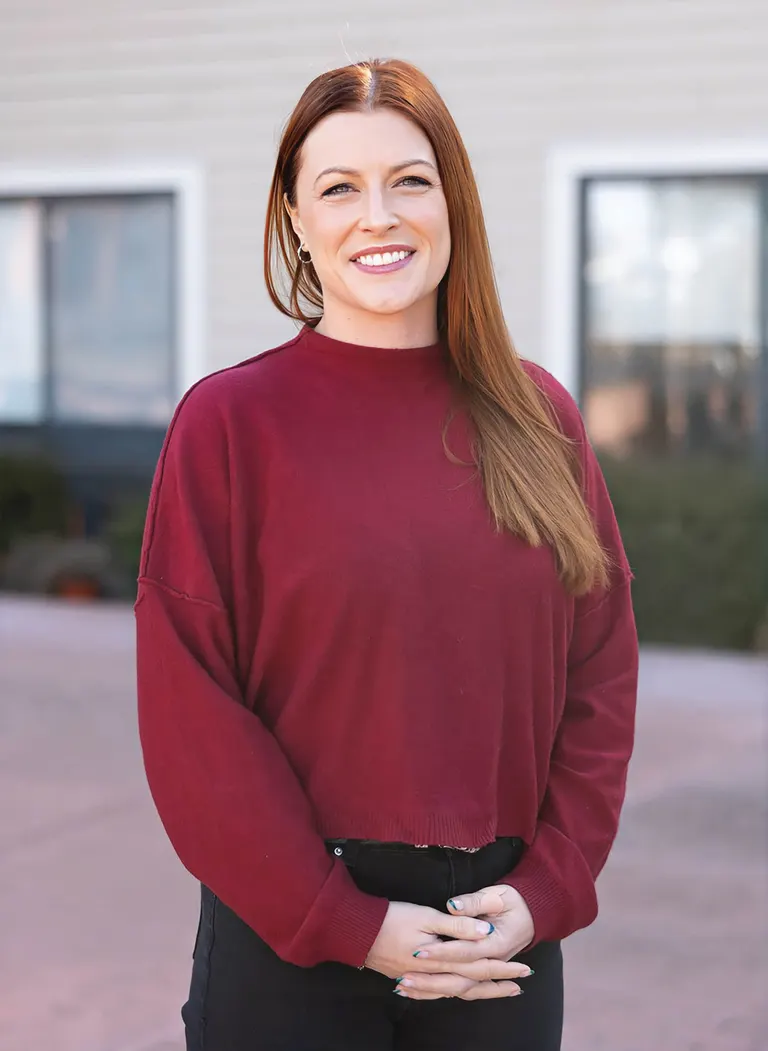
TEDxFargo Speaker: Melissa Kaiser
Knowing What It Costs to Care
Melissa Kaiser still remembers the night she realized she was not okay. She was in Florida, visiting her significant other at the time, when a call came in about a girl who had ended up in California. The facility where the girl was staying was preparing to discharge her, and Kaiser, who had spent years working in anti-human trafficking and child welfare, could not put the phone down.
It was 2 a.m.
She had three phones in front of her. She had her personal phone, her work phone, and the on-call phone. She had a tentative plan in place. The girl was not in immediate danger, at least not in the concrete way that would have justified Kaiser staying awake, pacing, calling, texting, and trying to control every possible outcome from across the country.
But that did not matter.
In Kaiser’s mind, if she stopped working, something terrible would happen.
“I just remember being like, I don’t know how to stop,” she said. “I feel like this girl’s going to die.”
The girl did not die. She eventually got where she needed to go. But Kaiser’s reaction stayed with her. She started sobbing uncontrollably. At that point in her life, she said, she was not someone who cried often. But that night, the weight of the work, the pressure of the job, and the identity she had built around being the person who could fix things all came crashing down.
“I don’t have an identity outside of my job anymore,” she remembers realizing. “My whole identity was my job. And I loved it. I was proud of that. But that’s no way to live.”
That moment has become part of the message Kaiser now carries into trainings, task forces, and soon, onto the TEDx stage in North Dakota.
Her topic is vicarious trauma, the way repeated exposure to other people’s pain can change the people who are trying to help. It is a subject Kaiser understands professionally, but also personally. Her career has placed her in some of the hardest corners of human experience, including child abuse, foster care, human trafficking, child exploitation, and missing child rescue operations.
She has realized caring for people in crisis comes at a cost.
A Career Built on Seeing People
Kaiser grew up in Linton, ND, and spent her adult life in Fargo before moving to Florida about four years ago, right as she was launching. The move started as a leap for a relationship, but when that relationship ended, she found herself with something else: a daughter, a new home, and the momentum to start her own consulting business.
In some ways, her career path began much earlier.
Even as a child, Kaiser said she was drawn to people’s stories, especially the hard ones. She noticed pain in other kids. She noticed when something seemed off. While many people instinctively turn away from suffering, she leaned in.
“I was always just interested in people,” she said. “Their stories. I felt like I could see pain or sadness in kids my age growing up.”
When she was 14, she read A Child Called ‘It’ by Dave Pelzer, a memoir about severe child abuse. She finished it in two days.
“How do I help?” she remembers thinking. “What do I do? How can I be involved with these children or these people and make a difference?”
Her mother suggested social work. Kaiser had never heard the term before.
“The rest is history,” she said.
She went to college for social work and quickly learned that the work was both exactly what she wanted to do and more intimidating than she had imagined. Her first job out of college included facilitating groups for adults and children dealing with addiction. She was young, newly graduated, and often sitting across from people who had lived twice as much life as she had.
At first, she wondered why they would listen to her. Then she realized the work was not about having all the answers. It was about being present.
“I’m there to facilitate and support and listen,” she said. “That’s exactly what I signed up for.”
Over time, she came to understand that one of the most powerful things she could offer was a safe, judgment-free place for people to tell the truth.
“I’m asking them to share very hard or shameful, in their eyes, parts of themselves,” she said. “Something they’ve never told anybody a day in their life. And so I’m like, what makes me worth telling?”
Her answer was authenticity.
The Leap into Anti-Human Trafficking Work
In 2015, North Dakota received a federal human trafficking grant through the Office for Victims of Crime. The goal was to develop a human trafficking task force, and the state had three years to build it.
Kaiser was hired as the first human trafficking navigator in North Dakota at just 25 years old.
The job was massive. She would be helping develop a statewide response. She would train large groups of professionals. She would work directly with victims and survivors of human trafficking. She would help create protocols. She would serve as the first point of contact for suspected trafficking cases.
All of that terrified her, but that’s why she took the opportunity.
“I love a challenge, and I love going toward things that are uncomfortable,” she said.
At the time, human trafficking was still a relatively new conversation in North Dakota. Kaiser saw an opportunity to help shape how the state understood and responded to the issue. The work was hard, but it quickly became clear to her that she had found the center of her professional life.
“It was the absolute best decision I ever made,” she said. “I immediately knew that I had found my passion forever.”
Today, Kaiser works as a consultant around the country, helping communities, agencies, and task forces build stronger anti-trafficking responses. Her work includes developing human trafficking tools, advising teams on best practices for interviewing victims, helping agencies build multidisciplinary approaches, and training professionals on the wellness side of the work.
She has also helped develop resources for organizations such as the International Association of Chiefs of Police and works with the National Child Protection Task Force on missing child rescue operations.
That part of her job allows her to help recover missing children, find safe placements, connect them with programming, and, most importantly, make sure someone sits down with them and asks the questions too many kids never get asked.
What happened?
Are you okay?
What do you need?
Where do you want to be?
What are you running to?
What are you running from?
It is meaningful work. It is also the type of work that can follow a person home.
When the Work Comes Home
Kaiser’s understanding of vicarious trauma deepened after she became a mother.
Her work had always involved exposure to trauma, but having her daughter changed how that exposure landed. Cases involving children no longer stayed contained in the professional part of her mind.
Her brain started scanning for danger everywhere.
“To me, in my brain, she’s never safe,” Kaiser said of her daughter. “I’m super hypervigilant all the time and always picturing worst-case scenarios.”
She knows the thoughts are not always rational. That is part of what makes them so difficult. Her professional experience has given her a detailed understanding of what can happen to children, and once the mind has seen enough worst-case scenarios, it can start looking for them everywhere.
That is one of the realities Kaiser wants people to understand.
Professionals in helping fields do not simply clock in, absorb trauma all day, and then clock out unchanged. Social workers, law enforcement officers, nurses, prosecutors, teachers, child protection workers, advocates, and others routinely encounter people during the worst moments of their lives.
A law enforcement officer may respond to a domestic violence call, a child fatality, and a suicide before lunch. A child protection worker may remove a child from an unsafe home and then be publicly vilified for doing it. A trafficking advocate may hear the details of exploitation over and over again until those stories begin to alter how they see the world.
Nobody really prepares them for that.
“People just don’t understand how much we take on mentally to do this type of work,” Kaiser said.
That mental load is often compounded by public scrutiny. Kaiser points to child protective services as an example. The work is necessary, complicated, and emotionally brutal, yet the public rarely sees positive stories about it.
“How many of you have seen a positive article written about CPS?” she often asks during trainings. “It doesn’t exist.”
The result is a profession full of people doing deeply human work, often in high-pressure environments, often while being criticized by the very communities they are trying to protect.
And because the people drawn to the work tend to care deeply, they are also the ones most vulnerable to being consumed by it.
The Boundary Question
There is one question Kaiser hates getting in trainings, even though she also believes it is one of the best questions.
How do you set boundaries when people’s lives are at stake?
Years ago, while working in foster care, Kaiser had a special bond with a 13-year-old girl who moved in and out of placements. The girl often asked Kaiser to adopt her. She called regularly, usually on weekends.
One Saturday, Kaiser saw the girl’s call come through while she was at her cousin’s wedding.
She thought about answering. She had five minutes. She could have said hello.
Instead, she told herself to set a boundary.
She was with family. She had a life outside of work. She could call back later.
When she did, she could not get answers. The facility would not confirm whether the girl was there. The child’s CPS worker had changed. Kaiser could not get anyone to call her back.
That was about 15 years ago, and she still thinks about it all the time.
“Did this girl think I abandoned her too, like everybody else in her life?” Kaiser said.
This is the impossible emotional math of helping work. Boundaries are necessary. They are healthy. They allow people to stay in the work long enough to keep helping others. But sometimes, setting a boundary still hurts. Sometimes, it leaves a question that never gets answered.
Kaiser does not pretend there is an easy solution. Instead, she argues that helpers need to understand the long game.
A person who is available every second of every day may help in a few individual moments, but over time, that level of availability can destroy their ability to help anyone well.
“When you’re flying, you have to place the mask on yourself before assisting others,” she said. “We’re less helpful” when we do not.
That realization is part of what pulled Kaiser into the wellness side of her work. She began seeing professionals so burned out that the people they served were suffering. Calls went unanswered. Survivors were dismissed. Clients received less care, not because professionals stopped caring, but because they had nothing left.
“We have a responsibility to the people we serve every day to not let that bleed into the care we give people,” Kaiser said. “And it does all the time.”
For Kaiser, that responsibility does not fall only on individual workers. It also falls on agencies and leaders.
If leadership does not understand vicarious trauma, compassion fatigue, burnout, moral injury, and secondary traumatic stress, turnover rises, care suffers, and organizations lose good people.
Getting Back to the Basics
Kaiser’s TEDx message is not only for social workers or police officers. That is important to her.
Yes, she is speaking from the perspective of someone who has worked in anti-human trafficking, child welfare, and missing child rescue operations. But she believes every person can be affected by the pain of others.
Friends absorb the struggles of friends. Parents carry the pain of children. Leaders carry the stress of teams. People doom scroll through tragedy, conflict, grief, and outrage, then wonder why they feel exhausted.
“We can all be impacted by other people’s pain,” Kaiser said.
The antidote, in her view, begins with returning to the basics.
Sleep. Movement. Food. Water. Faith or spirituality, if that is part of your life. Connection. Laughter. Music. Sunlight. A real conversation with someone who loves you. Putting the phone down. Turning off the notifications. Going outside. Touching grass.
Kaiser has turned those ideas into daily practices.
She is disciplined about sleep because, as she puts it, sleep is the body’s natural recovery. She pays attention to diet and exercise. She stays mindful of whether she is actually caring for her body and mind or simply pushing through.
She has also built boundaries around technology. She turned off notifications on her phone because she realized she did not need banners, badges, and constant reminders pulling her back into work.
“I know I have email to check,” she said. “I don’t need constant reminders.”
Her social life has boundaries too. Many of her closest friends are police officers and social workers, but when people in the work gather after hours, the work often follows them there. So Kaiser intentionally spends time with people outside her field.
She plays volleyball with people who may have no idea what she does.
That helps.
So does counseling. Kaiser has gone to counseling for years, sometimes simply to check in and process what she is carrying.
She also uses habit stacking, a strategy that involves attaching a new habit to something already automatic. For Kaiser, that meant drinking an eight-ounce glass of water while her coffee brews. The coffee is automatic. The water becomes easier because it is tied to something already in motion.
The same principle can apply to meditation, stretching, prayer, journaling, or any other small habit that keeps a person grounded.
Kaiser also laughs as much as she can.
“Laughter is really important,” she said. “Find a lot of reasons to smile.”
Why Not You?
While Kaiser’s TEDx message centers on vicarious trauma and self-care, her story also carries a business lesson.
Her career has been shaped by leaps.
At 25, she stepped into a role that scared her and helped build North Dakota’s human trafficking response. Years later, she moved to Florida, started over, and launched her own consulting business without knowing exactly how it would work.
She understands the fear that comes with risk. She has felt imposter syndrome. But her answer to that inner voice is direct.
“Why can’t it be you?” she said. “Why not you?”
Too often, Kaiser believes people talk themselves out of opportunities by assuming they are undeserving before they even begin. Her advice is to question that assumption.
“What makes you so undeserving of that?” she said.
When she moved to Florida, she knew almost no one. She wanted to start her own business, but did not have a perfect plan. What she did have was passion, experience, and a willingness to start.
That, she believes, is often enough.
“You don’t need a perfect plan,” she said. “You need a passion and a starting point.”
When fear shows up, Kaiser recommends walking straight into it and asking, “What is the worst that could happen?” Then answer honestly.
For her, the worst-case scenario was that she might lose some money and return to direct social work. That would not have been ideal, but it also was not catastrophic.
Once she named the fear, it lost some of its power.
“I would have rather known I tried and failed than never try at all,” she said.
Starting a business, she added, was easier than she expected. It required organization, time, and a good CPA, but it was not the impossible undertaking she might have imagined from the outside.
Her practical advice is to stay organized, keep up with paperwork, network constantly, talk about what you are doing, use online platforms, build a website within your budget, and surround yourself with people who can help.
“Enjoy the ride,” she said. “That’s the coolest part, seeing what it can become and who you meet along the way.”
melkaiconsulting.com
/secretsofsw
melkaiconsulting@gmail.com
/in/kaisermel/
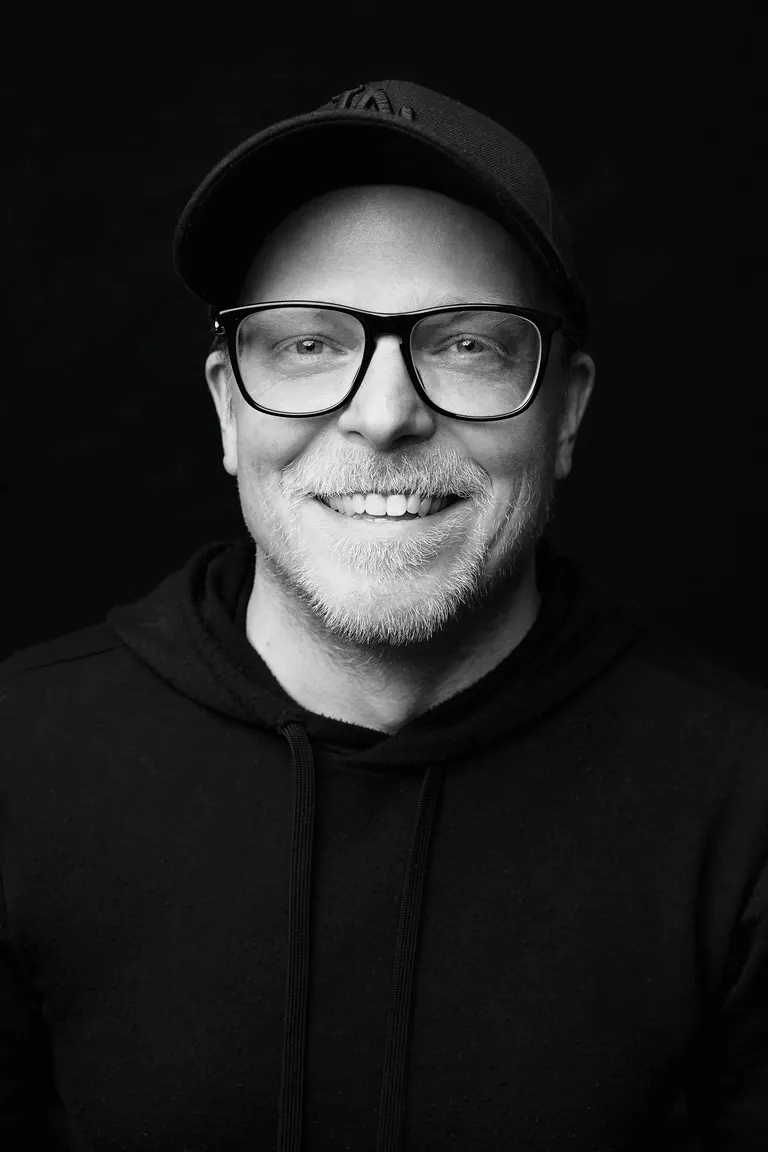
TEDxFargo Speaker: Josh Madson
Turning Portraits into Community
Josh Madson still remembers the email.
He was 25, newly arrived in Los Angeles, broke, unsure, and trying to figure out whether the life he had imagined for himself was already slipping away from him.
He had moved west chasing music, not photography. He had been in a touring band. He thought, like plenty of young people with a guitar and a dream, he might become a rock star.
Instead, he was sitting in his apartment, out of money and out of excuses.
So he made a declaration.
“I was going to be the best photography assistant that LA had ever seen,” Madson said.
However, he didn’t know anyone. He didn’t have an impressive Los Angeles portfolio. He didn’t have a plan with 12 steps and a five-year projection. What he had was a sentence he decided to believe.
The next morning, he typed “Photography LA” into Google.
A photographer’s website came up. The images were beautiful—Halle Berry, Gwen Stefani, and other celebrities. Madson sent a short email that said he was new to LA, he had been assisting for a few years, and he was available if they needed help.
Five minutes later, a response came back.
“What are you doing right now?”
“Truthfully,” Madson said, “I was sitting there in my underwear sending out emails.”
An hour later, he was in the Hollywood Hills for an interview. The photographer looked at his portfolio and told him, essentially, that his work was not what people were doing in Los Angeles, and not in a complimentary way.
Madson listened.
“I actually didn’t really care,” he said. “I was just so happy that I got my foot in the door.”
Two days later, he was on a Sandra Bullock cover shoot.
During downtime, Madson did what came naturally to him. He started cleaning.
The other assistants laughed. In Los Angeles, on a large production, almost everything was rented, and plenty of people were assigned to keep the studio in order. But a producer noticed.
“She was like, ‘Are you new here? I’ve never seen you around,’” Madson said. “She appreciated that I was cleaning up.”
The producer asked if he only worked for that photographer. Madson told her the truth that he was a contractor, and if he didn’t start working for more people, he wasn’t going to be able to pay rent.
About a month later, he was hired to assist Annie Leibovitz on a Vanity Fair shoot with Bruce Willis in the desert.
That was the door.
The years that followed were a blur of long days, famous faces, and relentless work. Madson assisted and worked around some of the most recognized photographers in the world.
He learned quickly that photography, at the highest levels, is not just about pushing a button.
“There’s an incredible amount of production and technical skill that goes into making those happen,” he said.
Madson’s own career eventually grew well beyond assisting. His professional bio includes directing motion campaigns for brands including OPI, Goop, Beautycounter, and Murad; working with Michelle Phan on a book that featured more than 200 of his photos; serving as creative director for ipsy’s early still campaigns; and photographing roughly 30 portraits for Angeleno Magazine’s “Dynamic Women” issue.
He had built what many people would consider the dream. Then the pandemic hit.
The industry shut down, work disappeared, and Madson lost almost everything.
And in the silence that followed, he started to question what his work was actually for.
“I had a great career developing,” he said. “I was directing L’Oréal commercials and Gwyneth Paltrow and Goop and all that kind of stuff. And I had fun. I really enjoy my work. I really enjoy getting to create.”
But there was a dissonance he couldn’t ignore.
“So much of what I do, it’s like selling things for products,” he said. “I don’t necessarily believe in some of that.”
The pandemic did not just interrupt his business. It exposed a deeper tension in it. Madson had spent years using his eye to help brands sell things. He was good at it. He could still enjoy it. But he was beginning to wonder whether being a commercial service provider was enough.
Then he watched the world argue.
Online, in public, everywhere, people seemed further apart than ever. Politics. The pandemic. War. Identity. Fear. Anger. Suspicion. Everyone seemed to be talking, but few people seemed to be seeing each other.
So, he picked up a camera.
That instinct became Community Collage, the nonprofit portrait project that now sits at the center of his work. The concept is to create immersive pop-up portrait studios, photograph everyday people in black and white, give participants free professional portraits, and use the images to create large-scale public murals that reflect the people of a place.
Community Collage describes its mission as bringing people together through transformative photography experiences that celebrate individual identity and collective connection. The project has already expanded across communities, with pop-up shoots and murals built from thousands of portraits. In Mankato, where Madson spent significant time after returning to Minnesota during the pandemic, early Community Collage shoots drew more than 800 individuals and families, according to Madson’s website.
Madson had photographed more than 14,000 people across the United States as of April 2026, with Fargo-Moorhead becoming part of the project in connection with TEDxFargo.
Madson is not interested in photographing people as specimens. He wants the portrait experience to become a moment of recognition. A person steps into the studio. They are lit carefully. They see themselves on a monitor in real time. They choose the image that feels like them. Then, eventually, their face becomes part of something larger as part of a wall, a mural, a shared visual record of a community.
Madson has photographed A-list celebrities, athletes, beauty campaigns, and commercial work across major markets. But when asked about a favorite photograph, the image that came to mind was not a celebrity portrait.
It was a woman holding an American flag.
Madson tells participants to bring whatever helps represent who they are. Some bring instruments. Some bring pets. Some bring books. This woman brought the flag her husband had been buried in.
“She wanted her kids to have that memory and show what he represented,” Madson said.
When the first image appeared on the monitor, already rendered in black and white, she cried.
“It was so meaningful and beautiful to her,” he said.
That is the kind of moment Madson is chasing now.
“Before, I was a commercial service provider,” he said. “Now I get to be an artist.”
It does not mean he has abandoned business. Quite the opposite. Madson talks like an entrepreneur—about relationships, outreach, stakeholders, leads, activations, financial risk, long-term value, and the need to keep moving. He is still a working photographer, director, and artist. Community Collage itself requires partnerships, logistics, funding, community buy-in, and constant communication.
But his definition of success has shifted.
He thinks more now about legacy. About relationships. About whether his work adds value to people’s lives. About whether the business he builds allows him to stay aligned with the person he wants to become.
“How can I add value and create longer-term relationships as a business person?” he said. “That’s at the forefront of my mind.”
Madson believes business is healthiest when it is not built on extraction, but on circulation. On flow. On creating something that benefits more than one party.
“The more I am focused on, ‘How can I create win-wins and add value to people in my life that I really care about?’—even in a business sense—that’s more rewarding,” he said.
He is also realistic about the difficulty of that approach. Mixing friendship and business, for example, can get complicated. Feelings can get hurt. Expectations can go unstated. People can feel taken advantage of.
“I want to be friends with the people I work with,” he said. “But it takes a much higher level of communication.”
Madson was born in Fargo and lived on the Moorhead side of the river until he was about 12. His mother, who already had multiple master’s degrees, later went back to school to become a pastor, and the family moved to the Twin Cities. Madson eventually moved to Los Angeles in his mid-20s.
Coming back has stirred something in him.
The Fargo-Moorhead area, he said, has often marked the beginning or end of major cycles in his life. Years ago, he returned with his former band for a show in Fargo after a long absence. That visit became part of the transition that led him toward Los Angeles and photography.
Now, roughly 20 years later, he is returning again, this time with Community Collage and TEDxFargo.
“It’s really surreal to come back,” he said.
The place has changed. The skyline, the businesses, the creative energy, the ambition—it all feels bigger than the Fargo-Moorhead he remembers from childhood. But something else feels familiar.
“I was just taken back by how genuinely kind most people are,” he said. “It’s a really great place to be from.”
He noticed how people showed up.
During local Community Collage shoots, he saw volunteers and community members step in again and again. He mentioned people like Liz Campbell, Julie Peterson Klein, and Tom Kemmer, one of the owners of Harold’s, who Madson said volunteered repeatedly, helped with rides, and made himself available whenever needed.
“I was just like, ‘Wow, man, people really show up here,’” Madson said.
In Fargo-Moorhead, Community Collage has been positioned as a multi-month portrait project leading to large-scale murals and installations. MSUM hosted a pop-up portrait session in April 2026, describing the project as one where participants receive free portraits and may be featured among thousands of local residents. West Acres hosted another pop-up in May 2026, describing the work as a public art installation celebrating identity, belonging, and community pride, connected to TEDxFargo 2026.
At TEDxFargo, Madson plans to speak about the idea that people access their highest potential through community.
A young man in Los Angeles tells himself a new story, sends one email, and winds up in rooms he never imagined. A commercial photographer loses nearly everything and finds his way back by photographing everyday people. A Fargo-born artist returns home and sees, with fresh eyes, the culture that helped form him.
Madson’s message is not that everyone should move to Los Angeles, start a nonprofit, or become an artist. It is that people often stop themselves before they even begin.
“What is the self-limiting belief that you might have about yourself?” he said. “And why are you letting that stop you from even trying to go after something that matters to you or your dream? You never know where it can take you.”
His life, he said, has not been easy. But it has been fun. It has been rewarding. It has forced him into personal growth again and again.
“Don’t be afraid of going into the unknown or the wilderness, if it’s your dream,” he said. “If it’s something that you’re passionate about, and you believe that that’s your purpose or your path, just trust that God has a plan for you.”