JLG is Re-Designing the Way We Work
By Tracy Nicholson Photo provided by JLG Architects
Over the course of a pandemic and amid an overconsumption of online everything, our society collectively realized the impact of mental health issues on our personal and professional lives. Sure, we spoke softly of mental health concerns with close friends and family, but in the office, this discussion was intentionally muted. Historically, mental health was considered too personal, even for the water cooler. Today, our professional lives have a more personalized perspective, and businesses are recognizing health and happiness as major factors in productivity. Deep down, we’re all complex humans, so why shouldn’t our environments support both our mental and physical health?
It’s Complicated
In the past, we avoided carrying mental health concerns to work due to the stigma that typically tagged along. Today, we look around and see what has been hiding in plain view: a neurodiverse office, including clinical and seasonal depression, anxiety, autism, trauma, PTSD, addiction, chronic disease, and even learning disabilities like dyslexia, ADHD, and dysgraphia—all forcing employees to quietly adapt to an environment that may not be set up for them to thrive.
To entice employees to come back to an office setting, business leaders have had to get real, facing the fact that a workplace filled with offices, one-size-fits-all cubicles, and an on-site gym may not be meeting the diversity of employee needs.
Within two of JLG Architects’ design studios, Workplace and Healthcare, their once distinct worlds have collided. Often, the teams are working together to solve complex human problems, including how to accommodate a full spectrum of evolving needs with limited space. JLG’s Workplace team has been prompted to take cues from the design of mental and behavioral healthcare systems, adapting lessons learned to improve workplace environments.
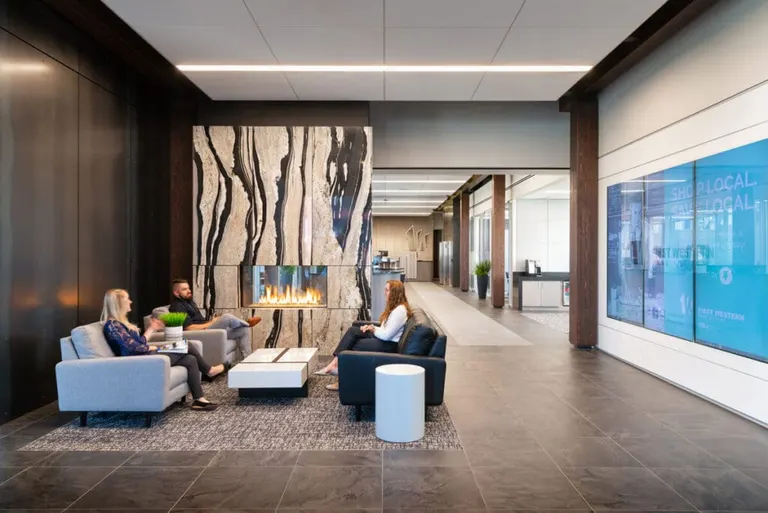
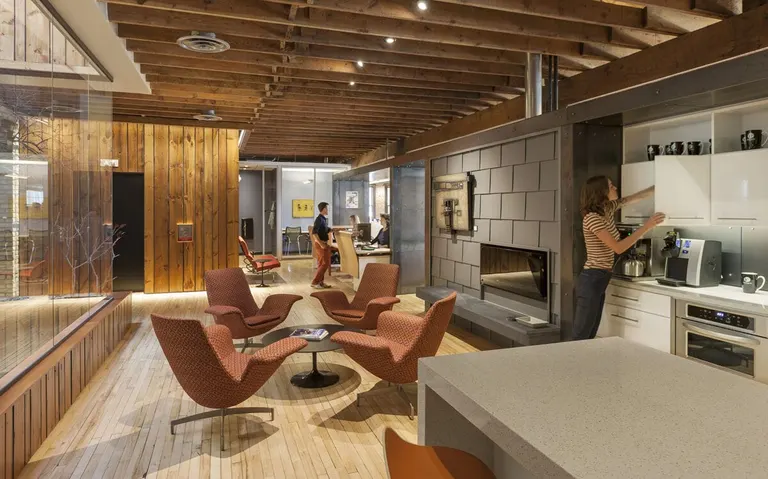
The new modern office requires flexibility to be at the very core of the design, creating workplaces that allow people to work in a variety of settings. Ideally, these settings provide a range of acoustical environments, as some people thrive in a quiet, calm setting while others perform their best in an active and energetic environment. Modern offices invite the users to adjust their settings to best suit their physical comfort level—bright light versus dim light, a warmer area versus a cooler location—and include amenities that are meaningful to the employees.
As hospitals and clinics are creating quiet spaces for employee respite, today’s offices are giving employees quiet spaces to destress, unwind, or address personal challenges that have the potential to derail the day. When all of these elements are thoughtfully integrated into the office environment, employees feel cared for, valued, and seen. Ultimately, creating an office where hypo-sensitive, hyper-sensitive, and neuro-typical individuals can all thrive in a harmonious environment.