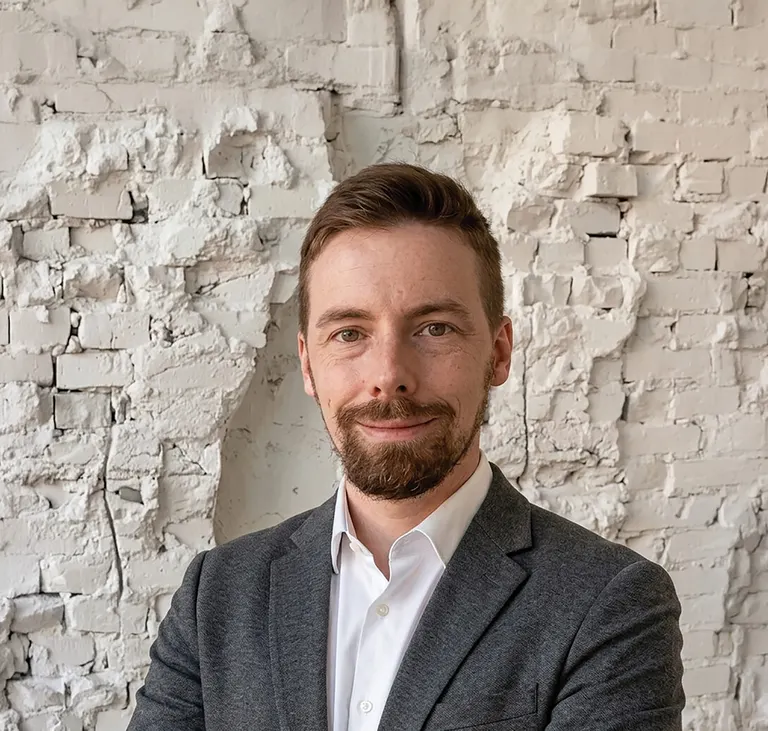
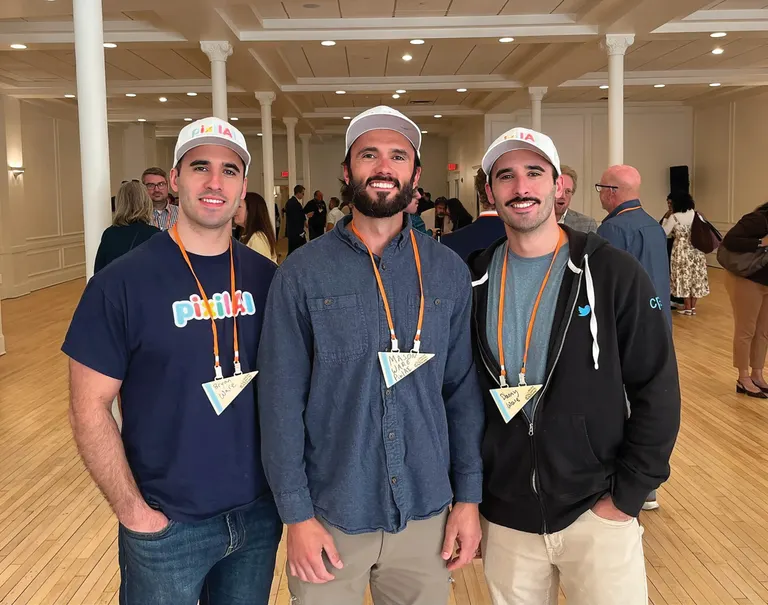
In shortPaul Breuler, founder of BaseState LLC, is building Alder, an operating system for physical infrastructure that turns field data into asset-linked records and preserves expert inspector knowledge before retirement.
3 things to know
1Alder targets utilities, water, telecom, pipeline, and rail, starting with distribution utilities; it captures expert reasoning chains so institutional knowledge survives inspector retirements.
2The City of Troy, AL is BaseState's lead design partner, with a senior director overseeing around 12,000 power utility assets who evaluated five competitors over two years before partnering.
3Breuler says the local Fargo-Moorhead ecosystem has been harder to penetrate than contacts in Singapore, Germany, California, and Alabama, though he prefers local partners.
Generated by Claude · grounded in this articleNever used on sponsored content
John Machacek, Chief Innovation Officer for the Greater Fargo Moorhead Economic Development Corporation, has worked with countless startups throughout our community over the years. He knows their ups, and their downs, but most of all, he knows the questions to ask them. Here are John Machacek’s 10 questions for Paul Breuler, Founder, BaseState LLC.
1. Will you please tell me your elevator pitch to describe your startup BaseState?
BaseState is the company. Alder is the product—the operating system for physical infrastructure, starting with utilities. Think of it as institutional memory for critical infrastructure: we turn field evidence—photos, voice reports, sensor data, drone imagery— into asset-linked records that crews and ops teams can review, route, and act on. And we capture how your best inspectors actually think about those assets, so when they retire after 35 years, that judgment stays in the system. Utility inspections are our first wedge; the same engine ports to water, telecom, pipeline, and rail.
2. With this targeting utility infrastructure and assets, did this focus come about from your past experience working at Thread?
It was something I saw every week at Thread, but the same problems were sitting in front of me at Microsoft too—and at Maktelier, the company I founded before this one—big customers all wrestling with the same thing: what do I actually have, where is it, what condition is it in, and how do I keep that record alive?
At Maktelier, it was 68,000 pallets in a warehouse, tracked with permanent marker, at the end of COVID when nobody could staff forklift drivers. I built the multiagent pathfinding solver—the software that choreographs a fleet of robots without collisions—and my co-founder Aaron Russell, a lead robotics engineer and a licensed PE, integrated it into the hardware. We put those pallets into a floor-to-ceiling automated storage and retrieval system that moved thousands overnight, with 100% location tracking 100% of the time inside the controlled envelope. Same pattern at Thread, same pattern at Microsoft, same pattern now with utilities. Data entry is the thing nobody likes doing. And yet understanding the systems around us—the poles, the conductors, the infrastructure—is tremendously important. The least-favorite task holds up the most important work.
With Alder, I meet crews where their day already is. They plan their work, dispatch missions, go to the field, and capture what they see. Take a picture of a pole—it automatically ties to the asset. Drop a voice note—“I see an issue on the pole at my location, send someone to inspect”—and the system enriches the signal against the asset’s history, generates a work order, finds the nearest qualified crew, and routes the work. No dispatcher in the loop for the routine stuff. The back office sees the same record in real time. Honestly, it feels more like a multiplayer game than paperwork, and that’s intentional
The bigger piece, and the thing I think matters most: most inspection tools record what was found. Alder records how your best people found it—the reasoning chain behind an expert judgment call. When the inspector who’s been reading transmission hardware for 35 years retires, that knowledge doesn’t walk out the door with them. It stays in the Alder Context Engine, available to every crew member who comes after. Utilities are losing irreplaceable expertise to retirement faster than apprenticeship can replace it. That’s the real problem we’re solving.
Distribution is the hardest surface. Transmission is straight lines—fly a corridor, see it from the road. Distribution is everywhere, and most utilities don’t know what they have, where it is, or what condition it’s in until they get a call to fix something. Alder lets that data compound instead of disappearing.
3. As you are still in an early-stage startup, how have things been going traction or progress-wise?
Good, in the ways that matter early. Our lead design partner is the City of Troy, AL—specifically a Senior Director of UAS with oversight of around 12,000 power utility assets, who evaluated five competitors over two years before partnering with us. He’s become an honest-to-God cheerleader for what we’re building. We’ve also got a DSP signed on as a design partner.
The founder-market fit is real. I led the team at Thread that built the DJI drone-box deployments Xcel Energy is running today: a box at the Sherco Solar Site, one mounted in the back of a lineman truck in Amarillo, and one flown over a power line in the Colorado mountains tied to a construction project that kept tripping. That last one cut their review-and-reenergize time from around eight hours to under one.
What I’ve learned is that understanding someone’s problem is step one, but building community is even more important than building product. Your community tells you whether what you’re doing actually resonates. I’ve started with community before product—you don’t need to write a single line of code to get your first customer. You need an idea that resonates, and a solution that makes somebody’s Tuesday better than their Monday. That’s really it, and it’s extremely hard.
I actually had a breakthrough this week on a functional through-line I can walk my Alabama partner through next week—from there we line up paid pilots. We’re also raising a $750K pre-seed round right now to harden the Context Engine, close the first paying cohort, and prove the workflow in a second vertical.
4. With being located here in the Fargo Moorhead metro and with your past work, have you been able to plug into these networks to have conversations around what BaseState can do in this part of the country?
Honestly? The local ecosystem has been a bigger challenge than anywhere else. I’ve got warm contacts in Singapore, Germany, California, Alabama and other places down south who’ve been far more receptive than local connections, despite my local network. I’d love for that to flip. Having local customers would let me sit in someone’s truck, go out in the field, and really understand what their day looks like. That’s what I did at Thread and at my former company—sitting with people who were doing the data entry, understanding the pains.
Nothing replaces it.
The upper Midwest is full of rural electric co-ops and municipal utilities, and the silver tsunami— losing domain expertise to retirement faster than apprenticeship can replace it—hits hardest in exactly those kinds of organizations. That’s who Alder is built for. Not the large IOUs; smaller co-ops and munis with lean teams, distributed assets, and a retirement cliff coming.
I’m also not trying to grow-up-andexplode-fast. I want the first ten customers to love us, which means spending real time making sure they feel it. Community building is already in motion locally. Bigger conversations—with co-ops, municipalities, and local power— are coming soon.
5. Shifting gears a bit; from knowing you and being connected on LinkedIn, I see you post and comment a lot about new tech, software, AI and other things you are tinkering with. How do you go about staying on top of tech advancements?
Mostly by staying involved — reading the news, following certain channels, and having really sharp contacts to bounce ideas off. I talk often with Scott and Hunter at Chipp about different tech angles. Scott has an incredible knack for building community, which I think is going to be the sustaining power for companies like theirs.
On AI specifically, I’ve been at this a long time. In college I worked on AI-driven agent communication and pathing in multiplayer games over physics-simulated networks. At Microsoft I got involved in AI work before OpenAI went public, before most people knew anything about it. I was in the top 20 globally inside Microsoft’s internal dogfooding programs—one of the most prolific beta testers. It’s like a game to me: if you show me something and ask me to fix it, break it, or evolve it, I can’t stop myself.
6. I also notice that some of your posts or comments may include cautionary guidance or critiques from you dissecting the tech. Is that an accurate assessment?
I caution people a lot because I’ve been in the weeds of this stuff for years. In the age of AI, it matters more than ever who you trust with your data. You’re handing a smaller number of companies a much larger slice of your life and your work than ever before, and that should be terrifying. But the growth hasn’t slowed—we keep giving AI intimate access to our lives and our businesses.
Recent high-profile AI security disclosures—prompt-injection attacks and exfiltration vectors demonstrated against production AI assistants—show real threat vectors are out there, and people shrug and keep using the tools. Some know the risks. Some don’t. I think it’s unpopular to ask “are you sure you’re getting what you think you’re getting?”—or to push back on the people selling something. There are a lot of charlatans. That’s probably a whole other interview on AI ethics.
What we’re seeing reminds me of the early SaaS boom in the 2010s; and a conversation with a former coworker stuck with me on selling to consumers vs. selling to business. For consumers, your job is hooking them. Apple does this well—it’s a brand, people are hooked. For business, buyers know what they want and are willing to pay for it. But with AI, everyone wants it, everyone’s using it, and nobody’s paying. The old SaaS playbook was give everything away, get them entrenched. We’re living in that again.
It’s all happening fast. AI is everywhere. It’s been given so much access it’s already a governance nightmare. When companies ask me about adopting AI, one of the first things I ask is: do you even need it? First understand the problem. If your first thought is “I need AI,” you’re already set up for failure. Second, don’t marry any specific AI approach yet. It’s changing too fast. We don’t even know who owns the outputs, because there’s no legal precedent.
7. So, as you talk to people or businesses about their actual needs for AI, would I be correct in saying some of the quickly coded AI out there may be helpful for easier tasks, but it’s not that simple when thinking about more complex or secure processes?
It’s a wild time to be alive—you can build a product overnight. And honestly, most of what’s getting replaced is what I’d call bottom-market work: make my PowerPoint, clean up my spreadsheet, help me organize my email. That’s fine. That’s where off-the-shelf AI shines.
But the work I’m doing with Alder, generic AI can’t do 90% of what I need it to do. It fails miserably, because it’s not trained on it. AI is largely regurgitating what it’s already seen. Half the time it’s wrong, or pointing you in the wrong direction.
That’s exactly why Alder is deliberately manual-first in the places that matter. The AI proposes, it doesn’t decide. Humans drive the review. The system surfaces the 5% of cases that actually matter, ranked by severity and by how your best reviewers have worked similar cases before. We capture the reasoning chain, not just the outcome, so expert judgment survives the retirement of the expert. That’s a fundamentally different design from “AI replaces the human.”
True innovation is still hard. Building community around it is harder. That’s a superpower Scott’s got that I wish I had.
8. As we get close to the end of this interview, I wanted to be sure to ask about your path to Fargo, as I know you’re originally from Ohio. And that not only did you move to Fargo about a decade ago, but you briefly moved back to Ohio, and then made the move back to Fargo. Will you share some comments on how you originally got here and why you have decided to come back?
Here’s the short version of that answer. I had no idea Fargo was even on the list. Microsoft recruited me in college and didn’t tell me where I was going. I had 13 other offers, but Microsoft was the most interesting. I’d always had a passion for Halo and game development, and Microsoft was the epitome of what that could be. I landed in their Accelerated College Hire program. Wasn’t sure I’d like it, but I’d grown up in some pretty rural places, so a smaller city turned out to be my jam.
My wife Lindsay followed me out. She’s a go-getter and when she couldn’t find the job she wanted, she just started showing up to events. She met then GFMEDC President Jim Gartin, who happened to be an Ohio State grad. We started watching football with him and his family. He gave us his tickets to the Midnight Brunch event because he thought we’d benefit more. At the event, Greg Tehven sat me across from Doug Burgum thinking we’d hit it off on tech. Doug ended up chatting more with Lindsay and walking her around the room, which led to a connection with Joe Burgum, which led to helping with the Red River Market back when it was tiny.
That pulled us deeper into the community. I’m a bit of a lone wolf—I like one or two close friends, not a big crew — but there was something about Fargo that made me want to be part of the growth.
A side note too; I got pulled into a Microsoft event to say a few words about the move, and the positive comments I shared to encourage other transplants to get engaged got noticed by leadership and led to getting hired as a premier field engineer. That’s kind of where my career took off.
We moved back to Ohio for a stretch to help care for Lindsay’s grandma, who’d been like a mother to both of us. We tried to make a home of it—community work, a parks & rec initiative Lindsay led, renovating our dream home. Had everything we wanted except community. COVID had just started, and one day we looked at each other and said, if we’re going to be stuck in our house, I’d rather be stuck in my house in Fargo. There was always something going on, always people to talk to. Felt more like family here than where we’d actually grown up.
We moved back. I was slammed with work at the time, and I said let’s make this one for you. We’ve traded off like that our whole relationship; there were years in our twenties where we swapped who was working and who was studying. For the first time in a decade, I’m taking a step back, building BaseState, and Lindsay is focused on her own startup—the Great Plains Children’s Museum, a non-profit. I don’t think this is possible anywhere but Fargo, at least for us.
9. Well, I’m already at my time machine question that I always use for #9. If you could go back in time to visit with a younger Paul, what kind of hindsight advice would you give yourself?
Three things. First, start with community before product. Every time I’ve led with what problems are these people actually living with, it’s worked. Every time I’ve led with look at this cool thing I built, it hasn’t. Second, the boring answer is usually the right one—sit in one more truck, talk to one more inspector, write one more thank-you note. That’s what compounds. And third, the one I’d tattoo on younger me’s forehead: make things you’d miss if they were gone. If nobody would notice it’s gone, don’t build it.
10. Lastly, what can we do as a community to help you and BaseState succeed, and the Great Plains Children’s Museum, too, since you’re so closely connected to that?
For BaseState/Alder — If you work at a rural electric co-op, a municipal utility, a water authority, or any organization that operates physical infrastructure in this region—I’d love thirty minutes. No slides, no pitch, just questions about how your team actually works today. Alder is built for organizations exactly like the ones we have all around us here. I’d rather build with local partners than anywhere else, and warm intros to co-op or muni leadership go a long way.
For Great Plains Children’s Museum, Lindsay and her team are building something that genuinely doesn’t exist in this region yet. If you have kids or grandkids, or just care about this place having a world-class early childhood experience, please go volunteer, donate, show up. Classic Fargo “just build the thing” energy, and it needs community juice to get across the line.
About John
John Machacek has been helping local startups with the Greater Fargo Moorhead Economic Development Corporation for over a decade. Before joining the GFMEDC ream, John’s career path has varied in areas such as banking, accounting, and management in the nonprofit, food & retail sectors.
Editor of Fargo INC! — covering the founders, companies, and ideas shaping business in Fargo-Moorhead. Eleven years in, still no opinions, no politics, all business.