SpaceBeacon Fargo: 10 Questions With Harvinder Kaur · Fargo INC!
People
SpaceBeacon Fargo: 10 Questions With Harvinder Kaur
John Machacek, Chief Innovation Officer for the Greater Fargo Moorhead Economic Development Corporation, has worked with countless startups throughout our community over the years. Here are his 10 questions for Harvinder Kaur, Co-Founder and CEO, SpaceBeacon Inc.
In shortSpaceBeacon Inc., a voice-AI and travel platform supporting 120+ languages, is relocating its headquarters from British Columbia to Fargo, North Dakota, after signing a two-year telecom deal covering 19 African markets.
3 things to know
1SpaceBeacon's Beacon AI voice assistant supports more than 120 languages for travel booking, navigation, and daily coordination, requiring no menus or forms.
2The company has executed a two-year agreement with a telecom operator spanning more than 19 African markets, with launch planned for mid-to-late September.
3Co-Founder and CEO Harvinder Kaur cited North Dakota's family rankings, NDSU's R1 research status, and state financing programs as key factors in choosing Fargo over California.
Generated by Claude · grounded in this articleNever used on sponsored content
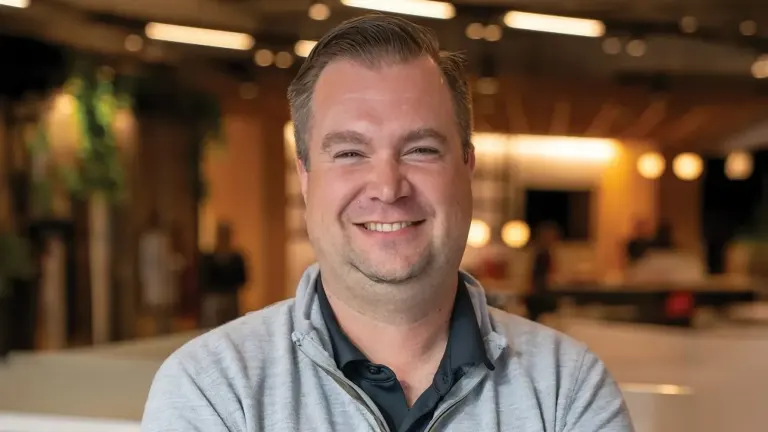
Photo provided by Harvinder Kaur
10 Questions With John Machacek: Harvinder Kaur, SpaceBeacon Inc.
John Machacek, Chief Innovation Officer for the Greater Fargo Moorhead Economic Development Corporation, has worked with countless startups throughout our community over the years. He knows their ups and their downs, but most of all, he knows the questions to ask them. Here are John Machacek's 10 questions for Harvinder Kaur, Co-Founder and CEO, SpaceBeacon Inc.
Q1: Will you please tell me your elevator pitch for SpaceBeacon?
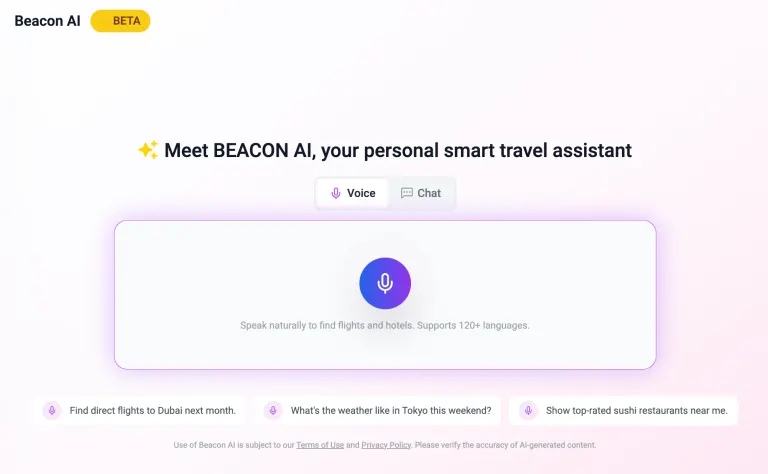
Serving users and partners worldwide, at SpaceBeacon, we make technology accessible for everyone. Technology keeps moving faster than most people can keep up with. Every new app is one more thing to learn, and when you add language or accessibility barriers on top of that, a lot of people simply get left out. So, we took a different approach. We built the underlying infrastructure ourselves- navigation, travel booking, commerce, daily coordination- and then we put the simplest possible layer on top: you just talk to it in your own language. Beacon AI, SpaceBeacon's voice assistant, supports more than 120 languages for booking travel and answering everyday questions.
So, you can plan a trip, book travel, navigate, manage your day, or run your business just by speaking naturally. No menus, no forms, nothing to translate. At our flagship British Columbia company, Preeminent Technologies, we call this category Participation Intelligence. Our mission in one line: technology for everyone, in every language.
Beacon AI lets you search flights and hotels by voice or chat.
Q2: How would you describe your core customers and market for this?
Our mission is to make technology inclusive and accessible for every person. The way we do it is by building the infrastructure ourselves and making the way you use it a natural conversation instead of screens, menus, and forms. More than 80% of the world doesn't speak English as a first language, and much of that population is held back from technology because of it. That's not a niche. That's the market.
We serve two core groups — everyday consumers and small and medium-sized businesses. The common thread is anyone who navigates, transacts, or interacts with digital tools and would rather do it in their own language.
Here's an everyday example. A parent or a student juggling life across platforms: personal appointments on Google, work meetings on Microsoft. Our infrastructure pulls all those events into one place, and the voice layer on top means you never touch a menu. You just talk to your calendar. "I'm running ten minutes late for my doctor's appointment, please let the office know." Navigation works the same way. It runs on our own geo-satellite navigation stack, built from the ground up, and you use it simply by talking. "There's heavy traffic and rain, add ten minutes to my commute." You keep moving without switching apps.
For SMEs, it's the same model — our infrastructure underneath and natural conversation on top, applied to daily operations and customer engagement. From travel to commerce to hospitality and tourism, businesses get visibility on a global platform without the heavy fees the traditional platforms charge. And anyone who wants to start a travel business can operate under SpaceBeacon's accreditation instead of spending years on certifications and licenses, with instant access to global inventory and the ability to sell worldwide from day one.
Q3: On the SpaceBeacon website, I see the travel tab as well as the affiliate and travel partner parts under the Earn tab. Can you explain to me the functionality of what these are?
Travel is really our infrastructure in action. Underneath is a full travel booking platform with global inventory. On top is the voice layer, so a traveler can say, "Help me decide between Japan and Paris," then get real pre-travel planning insight, then search and book completely in their own language, hands-free, on the go. We're also extending this into a premium concierge service, because the most stressful part of travel is when things go wrong. Instead of waiting on hold with an airline after a cancellation, our AI assistant reaches out to you with rebooking options while you're still in the air or at the gate. What normally takes hours or days gets sorted in minutes. That helps travelers, and it helps agents too, because it reduces the last-minute rebookings that cancellations put pressure on both sides.
The Earn tab is where other people build on what we've built. The Affiliate program is for anyone who already has an audience. Travel bloggers and online communities can register in minutes, share links to places their audience is already asking about, and earn a commission on every booking that comes through those links.
The Travel Partner program goes a level deeper. Small and medium-sized hospitality and tourism businesses get visibility on a global platform without the heavy fees the traditional platforms charge. And anyone who wants to start a travel business can operate under SpaceBeacon's accreditation instead of spending years on certifications and licenses, with instant access to global inventory and the ability to sell worldwide from day one.
It gives people real onramps into a nine trillion dollar global travel market, whether they're looking for extra income or a way to get started.
Q4: We may not be able to talk much about the specifics, but I know you had a recent win and traction with a new customer agreement. Are you able to share a bit about that?
Yes. We've fully executed a two-year agreement with one of the largest telecom operators in Africa, with a footprint across more than 19 markets. For us, it's a major commercial validation of the whole model: our infrastructure underneath, and a voice layer on top that subscribers can use from day one with nothing new to learn. When language stops being a barrier, technology changes how people work, communicate, learn, travel, and access opportunity. And through this partnership, there's a path to markets beyond Africa as well.
The playbook matters as much as the deal. Telecom-led distribution puts us in front of millions of existing subscribers through channels our partner already owns, so we reach customers at a fraction of the usual acquisition cost. It's a model we plan to replicate with other regions.
We launch with the partner in mid to late September. From there, the roadmap starts with Spanish-speaking markets in Europe and India, with regional language support in both. The infrastructure stays the same. Only the languages change.
Q5: You mentioned building the foundation for your next phase of growth into physical AI, IoT, and autonomous systems. Will you please elaborate on what that means?
Absolutely. This is where owning the infrastructure really pays off. Take our navigation platform. We built it from the ground up, and we own every layer: the data, the routing engine, the turn-by-turn directions, the tile server. People use that infrastructure through voice. Machines can use it directly.
That's what opens the door to physical AI, IoT, and autonomous systems. Drone innovation in agtech is a key focus area for us, where controlled and fully autonomous systems can run on the same navigation infrastructure that powers someone's daily commute. You don't have to build something new for machines. We built it once, and it can serve a person on the road and a drone over a field.
Closer to home, we'd love to build a pilot with an airport, and Hector International Airport would be great. There, international visitors could explore the area, find places to stay, and arrange ground transportation, all in their own language, exploring local tourism. This pilot could be extended to include an AI flight assistant for airlines to support travelers during rebookings, cancellations, and delays, to reduce stress and enhance productivity with a human in the loop, and I also think there's a good use case where we could partner for healthcare with a real-time intelligent platform in the future roadmap.
Q6: What would that use case be, and by healthcare systems, are you referring to something like Sanford Health or Essentia Health?
Correct, a system like Sanford Health is exactly what we have in mind. On the infrastructure side, it's scheduling and coordination. Patients need a simple way to manage appointments and organize their day, and staff need the same for daily clinical operations and scheduling. Both are already core to what we've built.
The voice layer is what makes it powerful in healthcare. Health systems serve patients from many language backgrounds, and today that usually means requesting translation services and waiting. Multilingual voice is native to our platform, so a patient can manage appointments, get reminders, and find information just by speaking in their own language, while staff manage their day from the same system. We haven't finalized every detail, but the use case is strong, and it's exactly the kind of collaboration we'd love to explore with a partner like Sanford.
Q7: Your decision to look at relocating your business from British Columbia to North Dakota. First of all, why North Dakota?
Thank you for asking this question. We did serious research across the U.S. on where to set up our headquarters that will serve our global markets. California was on the list, for Silicon Valley's capital and talent. But when we weighed the ecosystem, the collaboration opportunities, and the stage we're at professionally and personally, raising a family while scaling a company, North Dakota was the clear fit.
The fundamentals are strong. North Dakota is nationally ranked third for raising a family. NDSU is an R1 research institution whose researchers rank among the top 2% most cited globally. Microsoft has had a large presence in Fargo for more than 20 years, which matters for talent and long-term innovation. And the state and local support for expansion and investment is real.
There's a personal thread too. My connection with NDSU goes back more than two decades, to my grad school days. My family and I visited in July and were genuinely surprised by the growth. That visit sealed it. We met local partners and people across the ecosystem we can work with, and we felt that welcoming, close-knit community the Midwest is known for. Fargo and North Dakota line up with our priorities on every front, and we're excited about the move.
Q8: Do you have any additional comments about the community, the ecosystem and/or your visit that you want to share?
The community is what stayed with me. Seeing young entrepreneurs valued and encouraged to chase their ideas early says a lot about a place. It's family-friendly, kid-friendly, and genuinely welcoming. The community has grown a great deal, but that friendliness hasn't changed since I first came to the U.S. from India and started my journey here.
The state programs also match what growth-stage companies actually need. Programs like LIFT, Innovate ND, and the Angel Match Program provide funding support for both professional and personal priorities alongside equity capital. That matters, because most founders want to hit a major milestone or get to revenue before diluting, so they can raise at a valuation they've earned. The North Dakota Department of Commerce programs de-risk that journey and help entrepreneurs build confidently in the region.
I also want to recognize GFMEDC for connecting entrepreneurs with talent, partners, and programs. That kind of direct support was missing when I looked at Austin and California, which are very crowded spaces. North Dakota makes a beautiful home for growth-stage companies. It takes a lot of stress out of the stage where local support matters most. And for women leaders who want to raise a family while running a business, the support coming directly from the state makes it a great place to do both.
Q9: Let's go in the time machine to visit a younger version of [name as printed]. What hindsight advice would you give yourself?
I'd say that distribution decides scale. Great technology matters, but the right partnership puts you in front of millions of customers overnight. I'd tell my younger self to think about distribution from day one, not after the product is polished. Our board member and Executive advisor helped us lock this down for us.
Since we have accomplished this major milestone around commercial validation and should be at a steady revenue stage, and with the support from North Dakota on financing, I would like to collaborate and get support by bringing in executive board members, advisors, and C-suite executives and grow our team to help move this mission forward. For years I tried to carry too much.
Q10: What can we do as a community to help you and SpaceBeacon succeed?
Firstly, introductions are the most valuable thing this community can offer. We'd welcome connections to Hector International Airport and the region's travel and tourism organizations for a multilingual visitor experience pilot, to health systems like Sanford and Essentia on language access and coordination, and to any enterprise or public-sector leaders thinking about how to transform multilingual communities better.
Second, talent. We're building high-wage AI and engineering roles in North Dakota, and we want students, researchers, and experienced professionals in the region to know SpaceBeacon is a place where they can do globally significant work from Fargo.
And third, be our early users and share your feedback to make things better. Try the platform, speak to it in your language, and tell us what works and what doesn't. Then keep doing what this community already does so well: welcoming founders and their families. That welcome is why we're here, and we intend to give back many times over.
Preeminent Technologies: go-preeminent.com
About John: John Machacek has been helping local startups with the Greater Fargo Moorhead Economic Development Corporation for over a decade. Before joining the GFMEDC team, John's career path has varied in areas such as banking, accounting, and management in the nonprofit, food & retail sectors.