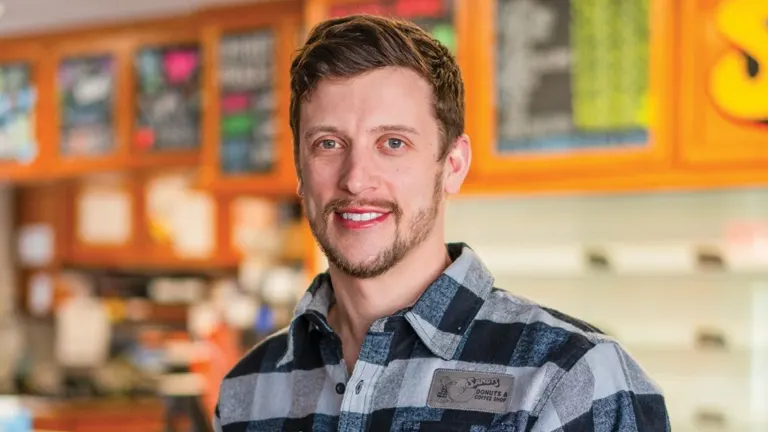
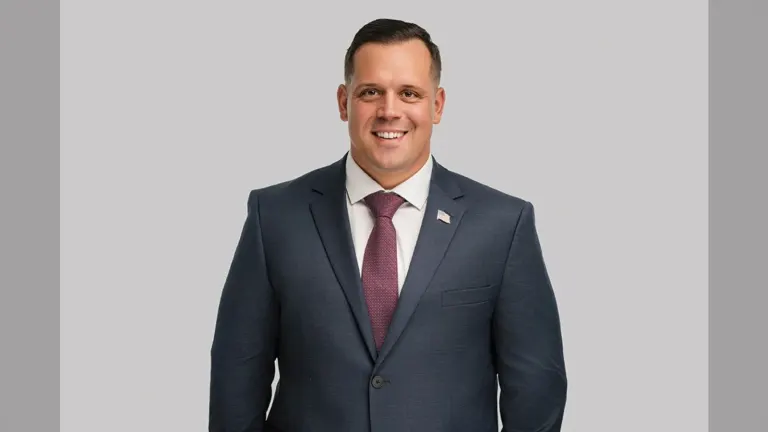
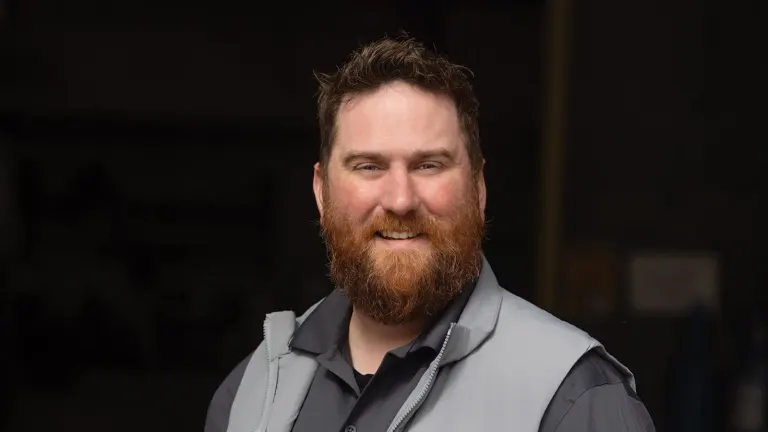
In shortMarine Corps veteran Jeff Ostlund, who served as an infantryman and scout sniper, is now CEO and owner of Sandy's Donuts & Coffee Shop, a family business his grandfather started in 1983.
3 things to know
1Every year, Sandy's partners with the New Life Center to raise awareness and donate a portion of sales to their Passport Program for homeless veterans.
Generated by Claude · grounded in this articleNever used on sponsored content
Branch served: U.S. Marine Corps, 3 years of service
Jeff Ostlund served as an infantryman and scout sniper in the U.S. Marine Corps before returning home to lead the family business his grandfather started in 1983. Today, he is CEO and owner of Sandy’s Donuts & Coffee Shop. We asked him what the Marines taught him, how that training holds up in the chaos of a growing business, and what he wants employers to understand about veterans.
What was your role in the military, and where were you stationed or deployed?
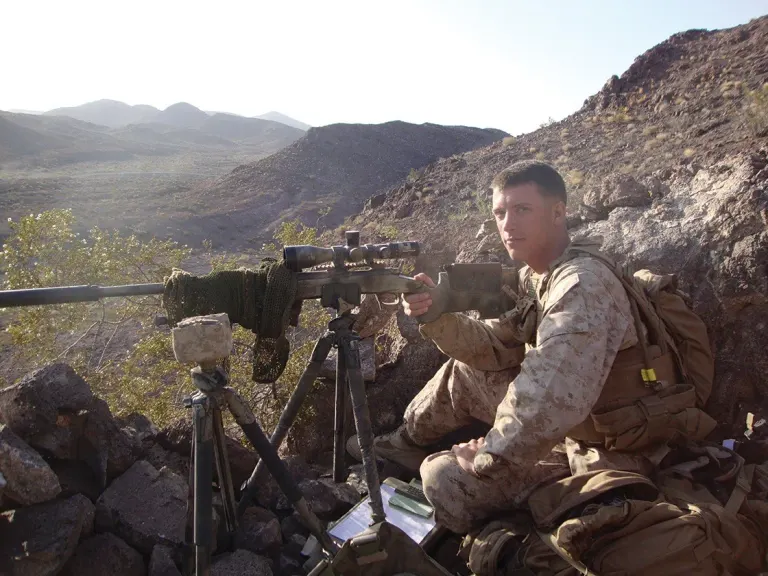
I was an Infantryman and Scout Sniper. I was stationed in Twentynine Palms, CA. I deployed to Nowzad, Afghanistan, and with the 31st Marine Expeditionary Unit to Okinawa, Japan, the Philippines, and Australia.
What originally inspired you to join the military?
What inspired me was the challenge and knowing that our country was at war. Men and women were risking their lives, and I wanted to do what I could to help.
What is one experience from your military service that had a lasting impact on who you are today?
One experience that has had a lasting impact on me is how hard I had to push myself physically and mentally to make it into Scout Sniper Platoon. Everyone could ring the bell and give up, and most did. This experience showed me how far I could go and still helps me push my limits today.
Jeff in his position as a scout sniper. Photo provided by Jeff Ostlund.
How did you transition from military service into your current career?
Transitioning out of the military came with its challenges. I was ready to move on, but outside of attending college, I wasn’t sure what direction I wanted to take or what my purpose would be. After working a couple of unique jobs during my first year of school, I eventually returned to the family business and transferred to NDSU to pursue a degree in business management. That decision changed everything. During that time, I discovered my passion for business.
My first several years at Sandy’s were demanding. I stepped into whatever role was needed: Production Manager, Fleet and Maintenance Manager, and countless others. I didn’t enjoy every job, but each one gave me invaluable experience and a better understanding of how the business operates. Those years built the foundation for my current role as owner and CEO. In this role, I finally found my purpose: to lead and grow Sandy’s and to make a positive impact on our community.
Which skills or habits from the military have been most valuable in your professional life?
The most critical skill has been adaptability under pressure. In my position, I sometimes have to make big decisions quickly, and the wrong choice could have a major negative impact on the business. Rather than letting the stress of these situations stop me, I often thrive in the chaos.
How has your military background influenced the way you approach leadership, teamwork, decision-making, or problem-solving?
My military background has shaped how I approach teamwork and how I understand the importance of surrounding myself with the right people. Everyone has their own skills and attributes, as well as things they are not as good at or don’t like doing. Trying to do everything yourself will lead to burnout and eventually failure.
What has been one of the biggest challenges in your business or career, and how did your military experience help you work through it?
One of the biggest challenges in my career at Sandy’s has been leading the business through rapid growth. As we grew, we quickly learned that many of our processes and procedures needed updating to keep up with demand. My military experience helped me handle the pressure and make wise decisions during the chaos. This included hiring the right people to create and implement those processes.
What professional accomplishment are you most proud of?
I am most proud of the growth we have experienced, how our team has adapted and overcome challenges, and how this growth has given us the opportunity to make an even greater impact on our community.
Is there a particular moment when you realized your military experience gave you a different perspective or advantage in the workplace?
I realized this advantage during a particularly high-stress situation. At the time, I wasn’t sure what to do, but instead of letting the situation get me down, it motivated me. I saw the challenge, and I couldn’t wait to tackle it head-on.
What do you wish employers, colleagues, or community members better understood about veterans in the workforce?
I wish people understood that veterans aren’t broken. They are incredibly resilient, adaptable professionals. In the military, you learn to solve complex problems under pressure. Employers shouldn’t worry if a vet’s resume doesn’t fit a civilian template perfectly. If you give a veteran a clear mission, they will adapt, take accountability, and thrive.
Do you currently support veterans, active-duty service members, military families, or veteran-focused organizations? If so, how?
Every year, we partner with the New Life Center to help raise awareness and donate a portion of sales to their Passport Program for homeless veterans. We also donate donuts and support many other local events benefiting the military, first responders, and veterans.
Are there programs, mentors, organizations, or resources that helped you during your transition into civilian employment or business ownership?
When I first exited the military, I honestly didn’t know how many incredible programs were out there. But once I started looking, doors started opening. Joining a veteran business networking group and utilizing SBA Veteran Resources made a huge impact. The tools are out there. You just have to look for them and be willing to use them.
What could local businesses do to better recruit, support, and retain veterans?
Stop looking for an exact resume match and start looking for potential. Local businesses need to realize that military skills don’t always translate perfectly to civilian job descriptions, but a veteran’s adaptability, leadership, and work ethic are unmatched. If you want to retain them, give them a clear mission and room to grow. Veterans thrive when they know exactly what they are fighting for and see a path forward.
What advice would you give to veterans who are considering entrepreneurship or beginning a new civilian career?
In the military, we thrive in chaos, and entrepreneurship is a lot of that. Use that adaptability to your advantage. My other advice is to swallow your pride and use every veteran resource available, from VBOCs to specialized grants. You fought for this country, so let the community support your next chapter.
What does being a veteran mean to you today?
For me, being a veteran today just means my job shifted from national defense to local impact. The military teaches you how to handle chaos, pivot under pressure, and get things done, which is honestly the best training you can get for entrepreneurship.
Being a vet in business means building a company with integrity, overcoming challenges, and taking care of the community we fought to protect.
Jeff Ostlund
Is there anything else about your service, career, business, or community involvement that you would like readers to know?
I want to share how grateful we are. We are so lucky to have our business in such an incredible community. Being a local, family-, and veteran-owned and operated business means everything to us. We love the people here, and we’re committed to doing whatever we can to give back and make this a better place for everyone.
Did you know? Sandy’s Donuts was recently featured in the 2026 edition of FACES of Fargo-Moorhead-West Fargo as the official Face of Donuts.
Editor of Fargo INC! — covering the founders, companies, and ideas shaping business in Fargo-Moorhead. Eleven years in, still no opinions, no politics, all business.