In shortWhen national and international companies look for a place to land their next big project, speed and certainty matter.
3 things to know
1When national and international companies look for a place to land their next big project, speed and certainty matter.
2For the Greater Fargo-Moorhead Economic Development Corporation (EDC), that’s where its Certified Sites Program—otherwise known as “document-ready sites” or “shovel-ready sites”—comes into play.
3Launched in 2020, the program was designed to put the metro on equal footing with regions across the country that already had similar programs in place.
Auto-summary · grounded in this articleNever used on sponsored content
When national and international companies look for a place to land their next big project, speed and certainty matter. For the Greater Fargo-Moorhead Economic Development Corporation (EDC), that’s where its Certified Sites Program—otherwise known as “document-ready sites” or “shovel-ready sites”—comes into play.
Launched in 2020, the program was designed to put the metro on equal footing with regions across the country that already had similar programs in place. Minnesota, for example, runs a well-established shovel-ready site program. Without something comparable, North Dakota risked falling behind.
“Site selectors don’t want to waste time,” Ryan Aasheim, Chief Business Development Officer at the EDC, said. “If there’s missing information, they’ll move on to another location that has it. Even if our site is objectively better, if it takes too long to prove that, we may never get the chance to make the case.”Lorem ipsum dolor sit amet, consectetur adipiscing elit. Ut elit tellus, luctus nec ullamcorper mattis, pulvinar dapibus leo.
The EDC’s solution is to gather and maintain critical details about select development sites in the region. That means up-todate documentation on everything from environmental studies to utility capacity, topography, floodplain mapping, and geotechnical analysis. By having this work already done and verified by third-party consultants, Fargo-Moorhead can offer decision-makers clarity from day one.
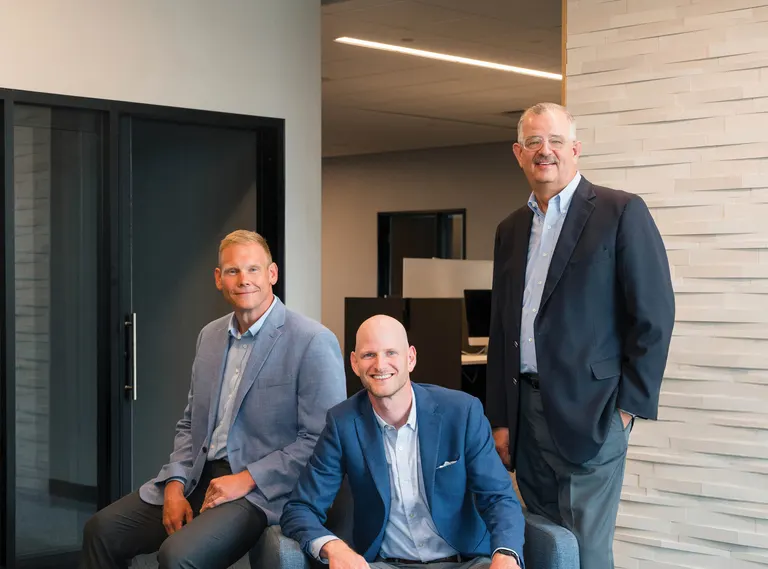
Ryan Aasheim
Chief Business Development Officer, GFMEDC
Why It Matters?
Speeds up decision-making for companies.
Reduces risk by eliminating “unknowns.”
Keeps Fargo-Moorhead competitive with larger markets
Why “Document Ready” Matters
The phrase “document-ready” may not sound as flashy as “shovel-ready,” but it’s deliberately chosen. Not every certified site is truly construction-ready—utilities may still need to be extended, or infrastructure work may be required. What matters most is that the due diligence is complete and there are no surprises lurking beneath the surface.
“It’s about eliminating uncertainty,” Aasheim said. “The goal is either to help us stay in the running for projects—or to quickly find out if we’re not a fit. Getting to ‘no’ quickly saves everyone time.”
That clarity can make the difference between landing on a shortlist or getting overlooked.
It’s about balance. We put enough information online to demonstrate competitiveness, but the deeper details are shared only once a company engages with us directly.
As Aasheim put it, “It’s a lot like hiring. If a résumé doesn’t have the key information you’re looking for, it goes in the reject pile. Document-ready sites ensure we’re still in the stack when the final five are chosen.”
What’s Documented?
Environmental and geotechnical studies
Utility capacity (power, water, etc.)
Topography & floodplain analysis
Transportation access (interstate, rail)
How It Came To Be
The program’s foundation was laid in consultation with Phil Schneider, a respected site-selection consultant who had worked with Xcel Energy on its own certified sites program. The EDC adapted best practices, built criteria around what site selectors prioritize, and began reaching out to landowners and developers willing to participate
Since then, the portfolio has grown steadily. Today, the Fargo-Moorhead metro boasts five certified sites, with more in the pipeline. These sites are intended to rotate over time—projects will take some off the market, and new ones will be added.
Of course, what looks like “five” sites on paper can appear larger to the untrained eye. Visitors to the EDC’s website might see 30 listings, but those are subdivided parcels within the broader certified sites. Developers often break large tracts into smaller, marketable lots, while the EDC’s focus remains on maintaining options for bigger, transformational projects.
“From our perspective, you want to keep large sites intact, because some projects require all 50, 100, or even 200 acres,” Aasheim said. “But developers need flexibility, and that’s why you’ll see multiple parcels within a single certified site.”
Power, Rail, And The Fine Print Of Site Selection
Not all sites are created equal. What makes one location attractive for a data center might disqualify it for a manufacturing plant. That’s why the EDC’s documentation goes beyond land size and ownership.
“For some projects, it’s all about power capacity,” Aasheim said. “A data center, for example, may need access to major transmission infrastructure. For others, rail access is non-negotiable. If we don’t have a rail-served site available, they’ll move on to another market.”
The EDC’s Certified Sites tool makes this high-level information available online. But not every detail is public. Sensitive data—like utility rates or capacity specifics—requires confidentiality agreements and coordination with providers before it’s shared.
“It’s about balance,” Aasheim said. “We put enough information online to demonstrate competitiveness, but the deeper details are shared only once a company engages with us directly.”
Current Inventory
5 Certified Sites (Subdivided into ~30 parcels)
Sites range from 40 acres to 200+ acres.
Mccara Site (Platinum)
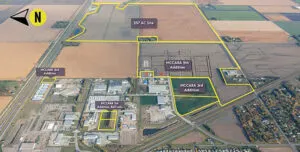
Moorhead’s MCCARA site is 197 acres and is at a Platinum level (the highest level available). The site is located just south of I-94 on HWY 52 in Moorhead.
The Crossroads (Gold)
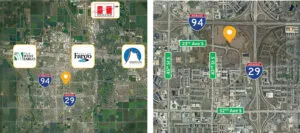
Fargo’s Crossroads Site is 50.39 acres and is at Gold level. The site is located at the crossroads of I-29 and I-94.
Veteran’s Industrial Park (Gold)
Fargo’s Veteran’s Industrial Park Site is 50 acres and is at Gold level. The site is located at 19th Avenue and 57th Street North.
Dakota Commerce Center – North (Gold)
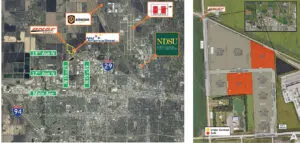
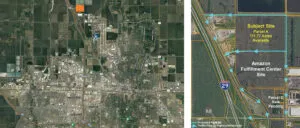
Fargo’s Dakota Commerce Center – North Site is 111.7 acres and is at Gold level. The site is located at 37th Street N and 52nd Avenue North.
Rln North (Silver)
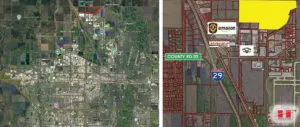
Fargo’s RLN North Site is 263.6 acres and is at Silver level. The site is located 1.5 miles East of I-29 along 52nd Ave N.
Supporting Local Growth
While big-name arrivals grab headlines, the majority of economic development projects are closer to home. Aasheim estimates that about 75% of the EDC’s work involves helping local companies expand.
“Firms like Marvin Composites, John Deere Electronic Solutions, and Border States all had options to expand in other markets,” Aasheim said. “They chose to reinvest here, but that wasn’t guaranteed. We had to show them why Fargo-Moorhead made sense.”
The Certified Sites program plays a role here too. Even existing companies need clarity and speed when evaluating where to grow. By maintaining up-to-date, consultantverified information, the EDC helps ensure those expansions stay local
And it’s not just established companies. Startups that scale into mid-sized employers—like Aldevron once did—eventually need the same resources. Today’s entrepreneurial success story can become tomorrow’s expansion project, and document-ready sites help make that transition seamless.
Looking Ahead
The Certified Sites program isn’t static. As projects take shape and parcels are sold, the EDC continues to recruit new landowners and developers into the fold. The ideal candidates are properties of 40 acres or more, with unique characteristics like rail access or large-scale utility capacity that stand out on a national stage.
“There are countless sites under 40 acres across the country,” Aasheim said. “What makes us competitive are the big, special sites—whether that’s 500 acres, a rail-served industrial park, or a location with exceptional infrastructure. That’s what gets attention in the national marketplace.”
For developers and landowners, joining the program means more than just a certification stamp. The EDC pays to have sites vetted by professional consultants, keeps documentation updated, and actively promotes the portfolio at high-profile events like SelectUSA (a global foreign investment conference) and the Site Selectors Guild.
it’s not just about putting a site on our website. We’re taking it to the national stage, directly in front of decisionmakers, at no cost to the landowner or developer.
Interested In A Site?
Reach out to Ryan Aasheim, Chief Business Development Officer, Greater Fargo-Moorhead Economic Development Corporation, at raasheim@fmedc.com
Greater Fargo Moorhead Economic Development Corporation
Editor of Fargo INC! — covering the founders, companies, and ideas shaping business in Fargo-Moorhead. Eleven years in, still no opinions, no politics, all business.