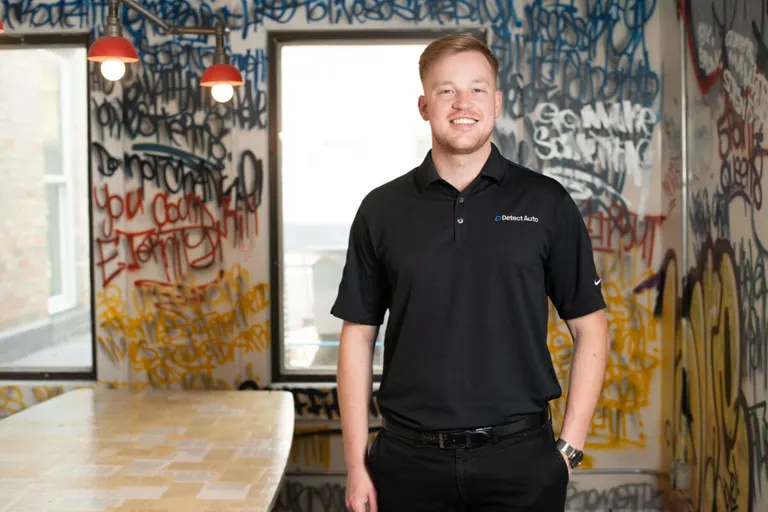
Detect Auto, a Fargo-based startup leveraging artificial intelligence to transform auto repair shops and dealerships, has successfully closed a $748,000 seed funding round. This seed round was “led by gener8tor 1889 with participation from Groove Capital and angel investors,” CEO Jonathan Cabak said.
The funds will boost the development of Detect Auto’s AI platform, aiming to improve auto repair processes through advanced computer vision technology. This milestone follows Detect Auto’s participation in the gener8tor North Dakota accelerator program.
We had the privilege to interview CEO Jonathan Cabak to learn more.
Q&A with Jonathan Cabak
Q: How does Detect Auto specifically use AI and computer vision to enhance the auto repair process? Can you elaborate on the technologies behind your platform?
A: We use AI in a couple of different ways to help repair shops and dealerships. Our primary application is our computer vision system that identifies vehicles and if a person is working on said vehicle. From there, we’ve trained our own proprietary model that identifies what work a technician is completing at any given time so shop owners can get a “real-time” view of how their repairs are getting completed. It’s like a Domino’s pizza tracker but for your car’s repairs.
If you want to get really into the weeds, our platform works by feeding an image into a neural network that our team trained. The best way to describe how our system works is that we’ve fed it so much data over the past two years that the network has effectively “learned” what features we care about tracking, and we use those insights to provide our customers with actionable steps they can take to make improvements.
One major disclaimer—we don’t use facial recognition in any of our products. Our whole platform was built with privacy in mind, and we’re very intentional about what data we collect and how it’s processed.
Once we’ve collected our image data from cameras we install into auto shops and extracted the relevant data, we combine these predictions with our customers’ software management platforms to provide context to our data. For example, we may read the license plate of a vehicle, figure out what jobs are supposed to be worked on, and then pair that data with our camera feed to determine exactly when those jobs are being worked on. When we first started the company, we were around 75% accurate. Over the past year, we’ve just cracked 95% accuracy which is something we’re really proud of.
Q: What challenges did Detect Auto face during the initial development of your AI platform, and how were they overcome?
A: It’s expensive to train your own model, especially if you don’t already have specialized hardware like a high-end GPU. To the credit of our team, we’re exceptionally scrappy, and we figured out that we could repurpose my old computer to train our models. We had that computer running 24/7 for months on end—it’s a miracle we were able to make that work.