Too many conferences are filled with great speakers who inspire and motivate in the moment, and yet the inspiration evaporates quickly as attendees return to their everyday lives and endless to-do lis
In shortToo many conferences are filled with great speakers who inspire and motivate in the moment, and yet the inspiration evaporates quickly as attendees return to their everyday lives and endless to-do lis
3 things to know
1Too many conferences are filled with great speakers who inspire and motivate in the moment, and yet the inspiration evaporates quickly as attendees return to their everyday lives and endless to-do lists.
2So Tellwell and DonorDock set out to create a different kind of event.
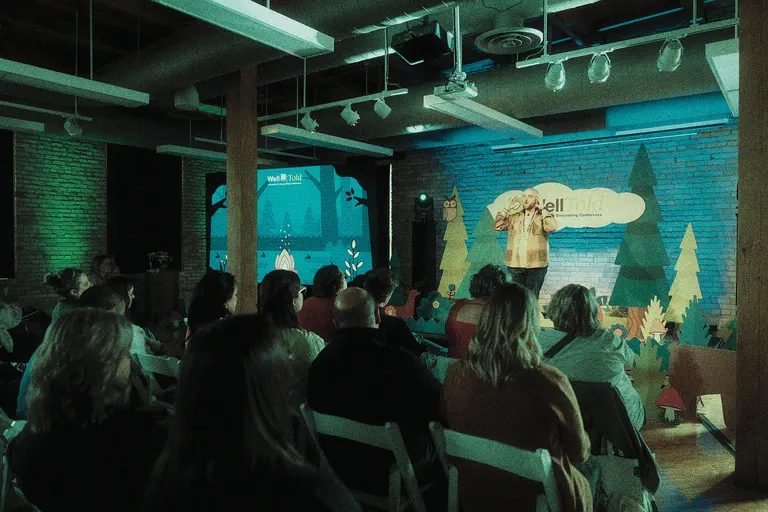
3WellTold: A Nonprofit Storytelling Conference is focused on equipping nonprofit leaders with tools to share compelling stories.
Auto-summary · grounded in this articleNever used on sponsored content
Too many conferences are filled with great speakers who inspire and motivate in the moment, and yet the inspiration evaporates quickly as attendees return to their everyday lives and endless to-do lists. So Tellwell and DonorDock set out to create a different kind of event. WellTold: A Nonprofit Storytelling Conference is focused on equipping nonprofit leaders with tools to share compelling stories.
Practitioners and adult learners need learning opportunities that are practical and readily applicable. We curated expert speakers who bring decades of experience with storytelling frameworks and donor engagement strategies that keep humans at the center. At WellTold, we invited nonprofit leaders to engage in deep learning and elevate the art of storytelling, ensuring every narrative contributes to a legacy of transformative change.
During the conference, each attendee created a storytelling roadmap in real-time so that they can put the ideas into action. When narratives are skillfully crafted and authentically shared, they unlock the power to create sustainable, far-reaching impact.
Through WellTold, Tellwell and DonorDock are cultivating a legacy of storytelling that transforms missions into movements. Because when every story is well told, it holds the unstoppable potential to foster change and elevate communities.
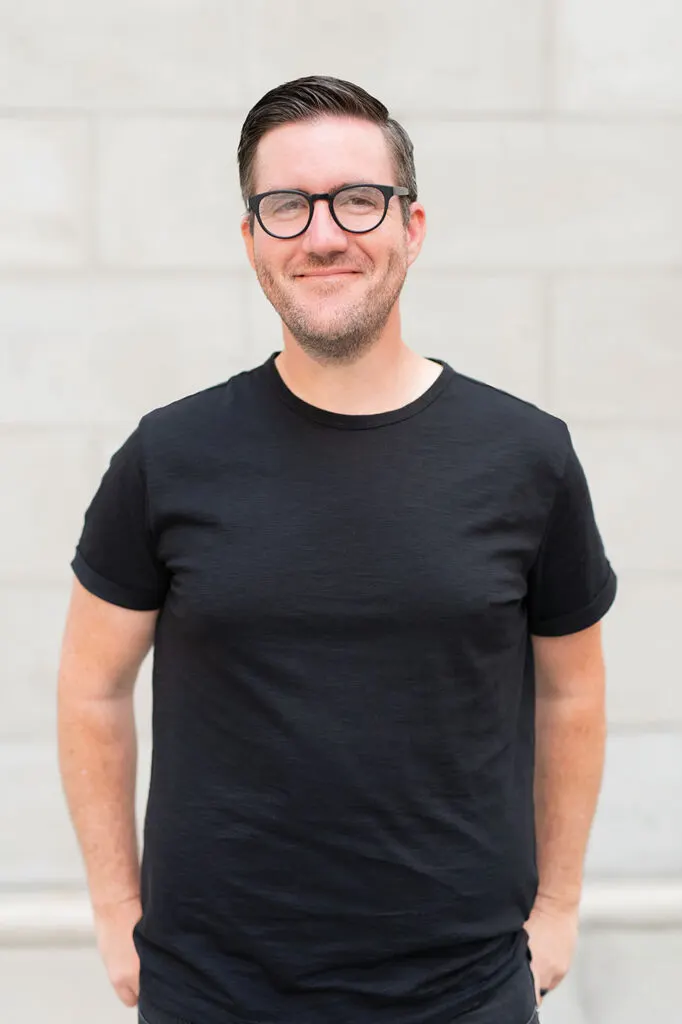
John Lepp, Creative Director and Partner, Agents of Good
Q: What message do you plan to share with the attendees of WellTold?
A: That our sector needs more creatives. This means, don’t come to your work to check a box and go home. We need a sector flooded with people who have the space and desire to express themselves through their craft and through their storytelling. And when you do that, you not only feel better about yourself, you feel a deeper connection to your work and to the donors you serve.
Q: What is the most common mistake mission-driven organizations make when trying to tell their stories, and how can they avoid it?
A: That so much of the ‘marketing’ is about ‘what we do’ and ‘look how amazing we are.’ You can avoid it by changing it to a ‘conversation’ about ‘what you make possible’ and ‘you truly are an amazing human.’
Q: Do you have tips for technology or software that can help businesses share their stories more effectively?
A: Your heart and head connected together is the best place to start.
Q: How can organizations effectively measure the success of their storytelling efforts?
A: By the love a donor shares back to them. This is a slightly convoluted answer, but that’s the nutshell.
Q: What are the best strategies to identify the stories that an organization should share?
A: Charities that are built on a structure of empathy, vulnerability, and active listening have no problems finding great stories to share with donors.
Q: Is there anything else you’d like to say to the readers?
A: It’s time for change. Our sector has barely progressed in a generation. The more human you can be to these other amazing humans, we call donors, the more money you will raise for your mission.
About Agents of Good
Agents of Good is a fundraising and marketing agency that specializes in donor-centric strategies and storytelling to help charities in enhancing donor engagement and increase fundraising outcomes. Founded by John Lepp and Jen Love, the agency emphasizes creating emotional connections between donors and the causes they support, employing innovative campaigns that include personalized direct mail, compelling storytelling, and distinctive fundraising across all channels.
The agency collaborates with nonprofits globally to improve donor communication through their “donor-love” approach. Their portfolio features a diverse range of projects, such as newsletters, direct mail appeals, campaign case statements, and legacy giving programs for various clients.
Agents of Good has earned recognition in the nonprofit sector for their commitment to producing high-quality, impactful campaigns tailored to each client’s unique donor base. Their approach is designed to ensure that fundraising efforts are not only effective but also foster lasting relationships between donors and organizations.
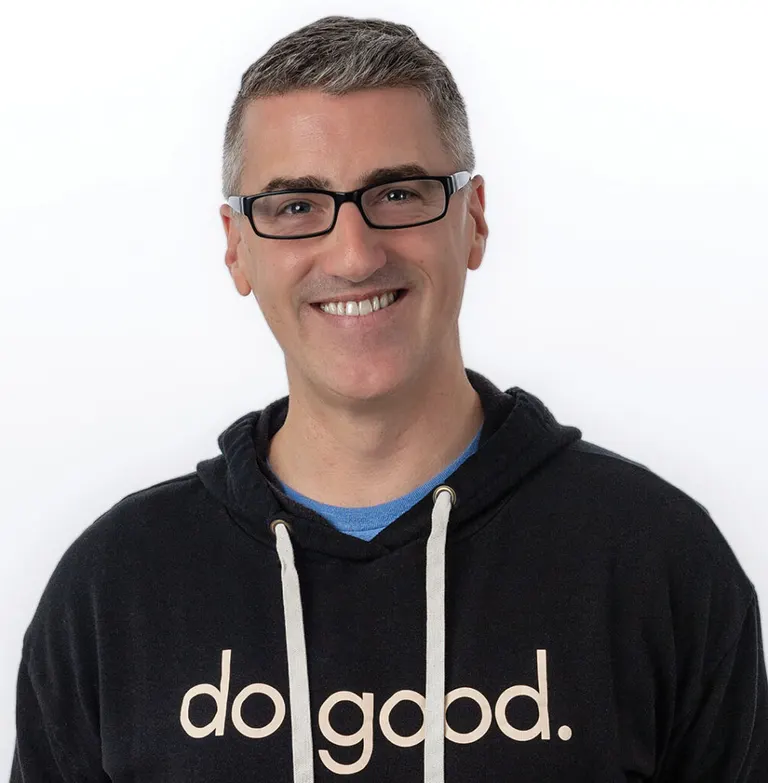
Patrick Kirby, Founder, Do Good Better Consulting
About Do Good Better Consulting Do Good Better Consulting is a consulting firm that helps nonprofits suck less at fundraising! As a 20+ year veteran of the nonprofit/development realm, Patrick Kirby helps organizations create doable fundraising programs, campaigns, events, and navigate the fun world of getting board members to make connections and open doors.
Q: What message do you plan to share with the attendees of WellTold?
A: My job during the event is to help solve the seemingly impossible or unsolvable fundraising problems that may be roadblocks in the attendees’ organizations. We go to these incredible conferences and are inspired by amazing speakers with awesome ideas, but get back to our desks, open our emails and everything in our inbox has nothing to do with what we just learned because of some ticking time bomb of an issue we need to deal with before we can implement these great ideas. So, over lunch, I’m going to act like their own personal fundraising therapist and help navigate those fundraising, board member, or donor roadblocks with an “Ask Me Anything” Lunch & Learn session to make sure that the inspiration they get from the day can be worked on immediately.
Q: What is the most common mistake mission-driven organizations make when trying to tell their stories, and how can they avoid it?
A: Nonprofits think that they need to complicate and overexaggerate their mission and impact. In fact, simplicity is key. You have to make what you do understandable, approachable, and transparent. The more authentic you are, the more attractive you are to potential funders, supporters, and cheerleaders.
Q: Do you have tips for technology or software that can help businesses share their stories more effectively?
A: The telephone. Funny, that supercomputer in your pocket you use to watch TikToks in the bathroom can also be used to connect with, talk with, laugh with, and storytell with your donors! And it’s becoming a lost art. The simple act of picking up a phone and calling your supporters to say thank you and update them on what their gifts have done for the organization is probably the best single strategy to interact with your donors outside of sitting down across from them while sipping on a coffee.
Q: How can organizations effectively measure the success of their storytelling efforts?
A: When listening to your donors in conversation, do they mention the cool or awesome stories that you tell consistently? If so? It’s working!
Send a survey out to your supporters and ask which story that you tell to your community is the most impactful! If they note one of your favorites…Hooray! It’s working!
Now, if they DON’T know your stories… keep telling them. Consistency is KEY! And acquisition takes a long time. And because there is so much competition to hold your attention—you’ll need to mentally play the long game.
Q: What are the best strategies to identify the stories that an organization should share?
A: Ask your volunteers, ask those you serve, and ask your closest supporters for those who love your nonprofit what they love most about your organization, and what you do to make your community better. If they love that story? The rest of the world will too. Sometimes your best and most powerful stories are the ones that you are already telling… and magnifying that story is the easiest and most effective tool in your belt.
Janese Evans, Principal, Strategic Toolbox
Q: What message do you plan to share with the attendees of WellTold?
A: I find that teams feel stuck using traditional problem-solving methods that don’t yield fresh insights. My approach—called Brain Noodling—is a structured, repeatable framework that helps them think expansively, challenge assumptions, and facilitate better decision-making.
I’m a firm believer that better thinking comes from asking better questions. My presentation encourages participants to better define their goals and challenge their assumptions. Actually, beyond just encouraging a new approach, my session focuses on specific tools and techniques that get results. I’m breaking down these bigger, esoteric thinking concepts into distinct, achievable components. The ideas I’m presenting are suitable for more than organizational planning…they are life skills, as well. So, participants should anticipate professional development as well as personal skill-building.
I’ll provide some great tips, tools, and practical approaches to help participants think differently and make more insightful, strategic decisions. They will leave with ideas that can be implemented immediately.
Q: What is the most common mistake mission-driven organizations make when trying to tell their stories, and how can they avoid it?
A: Many organizations fail to identify a meaningful point of difference that resonates with new audiences. In my work in higher education, we called it “three and a tree.” The idea is that the typical college brochure has a cover picture of three diverse students in logo wear sitting under a tree.
In a stack of brochures, the college brochures look remarkably alike. Nonprofits have the same challenge: identifying and communicating a meaningful point of difference. That’s why this WellTold Conference is so very important. We need to find ways to better tell our stories. I think one part of the solution is to look at a story from multiple perspectives.
We’re looking for the intersection between what matters to our stakeholders and what differentiates us from their other choices. Listening to constituents—including those who are loyal, some newly acquired and those who have left us—is essential to understanding messages that motivate or discourage affiliation.
About Strategic Toolbox
“Strategic Toolbox offers a mix of tools to help clients make better, more strategic decisions. We are great at facilitating creativity and planning meetings, conducting marketing research, and providing insightful, actionable results. So, in non-marketing speak, it means I help teams get unstuck! The approach is always custom-designed and leverages tried and true practices. I started Strategic Toolbox 25 years ago; since then I’ve done work in 63 countries and 26 languages. I’ve had the privilege of working across multiple industries including higher education, consumer packaged goods, heavy industrial, high tech, and health and wellness. It has been wonderful to see issues from their multiple perspectives and help teams align and move forward!
Beyond the custom client work, we offer the Brain Noodling™ tools. Brain Noodling is a facilitation framework that helps brand strategists, creative agencies, and innovation-driven teams sharpen their thinking, challenge assumptions, and make better strategic decisions. The tools and techniques featured in these decks foster insight-readiness practices that coach teams to shift from reactive problem-solving to intentional, expansive thinking.”
Lisa Nelson-Hayes, Executive Director, StoryCorp
Q: What message do you plan to share with the attendees of WellTold?
A: The importance of ethical storytelling and asset-framing.
Q: What is the most common mistake mission-driven organizations make when trying to tell their stories, and how can they avoid it?
A: One of the most common missteps is telling stories from an institutional perspective rather than through the lens and voice of the communities they serve. While this approach requires more time—building trust and, at times, letting go of control— the outcomes often far exceed expectations.
Q: Do you have tips for technology or software that can help businesses share their stories more effectively?
A: Marketing and communications teams are often stretched thin managing major institutional initiatives. To help address this limited capacity, it can be incredibly effective to train other staff in the basics of content creation using accessible tools like Canva and WeVideo. With guidance and pre-approved templates, team members can contribute social media content tailored to various platforms. This not only expands capacity, but also supports staff skill-building and brings more diverse voices and perspectives into the organization’s messaging.
Q: How can organizations effectively measure the success of their storytelling efforts?
A: Effective measurement starts with alignment—your storytelling goals should tie directly to your mission. Are you trying to shift perception, elevate unheard voices, or mobilize action? Use both quantitative data (reach, engagement, conversions) and qualitative insights (sentiment analysis, narrative feedback, behavior change). A hybrid approach captures both reach and resonance.
Q: What are the best strategies to identify the stories that an organization should share?
A: The best strategies for identifying stories start with clarity on your goals: What are you trying to shift— perceptions, behaviors, engagement, or something else? Once your objectives are clear, a powerful tool is to create a story selection rubric. This rubric can help evaluate potential stories based on criteria like alignment with mission, relevance to key audiences, emotional resonance, representation of core values, and potential for impact.
It’s also helpful to gather stories from across your organization—not just from leadership, but from staff, community members, and partners. Then use the rubric to ensure you’re not just telling the easiest or most polished stories, but the ones that truly reflect the diversity, depth, and direction of your work.
This intentional process not only improves the quality of storytelling but ensures your narratives are strategic, inclusive, and mission-driven.
About StoryCorps
“StoryCorps is a social justice organization grounded in narrative change.”
Jon McCoy, Co-Founder + CEO, We Are For Good
Q: What message do you plan to share with the attendees of WellTold?
A: I want to shift how we think about storytelling. It’s not just a way to communicate—it’s a way to build belief. And belief is where movements begin.
It’s also the heart of the Impact Arc, our framework built around four key steps:
Stage. Set the foundation by identifying the belief you want to spark.
Storytell. Craft and share stories that are human, honest, and full of purpose.
Syndicate. Share your stories in multiple ways and across platforms so they ripple.
Stoke. Engage your community to carry the story forward and build momentum together.
We’ve used this framework to launch and scale campaigns, chart a number 1 podcast, and grow a global movement through ImpactUp. And we’ve seen these same patterns show up in movements all over the world.
In this workshop, we’re making it hyper-practical.
Q: How do you use story to build believers and grow the ripple of your movement?
A: We’ll dig in together with a worksheet to help you start mobilizing today.
And of course, we can’t do this without highlighting the stories of incredible changemakers who are using this same playbook to grow and scale their impact too.
Get ready for some bingeable podcast playlists and real humans to follow online who are putting it into action.
My hope? That you walk away with belief in what’s possible, and the framework and fire to build something far bigger than any of us could do alone.
Q: What is the most common mistake mission-driven organizations make when trying to tell their stories, and how can they avoid it?
A: One of the biggest mistakes is focusing all our energy on creating content, but we don’t spend nearly enough time getting leverage out of it.
We pour hours into writing a blog post, editing a video, crafting the perfect email, or writing a script for the next gala. Then we share it once and move on.
We need to flip the script. Spend less time constantly creating, and more time syndicating that content by bringing pieces of it into many conversations—multiplying your opportunity for connection, engagement, and growing the ripple.
A great story shouldn’t live in just one place. Your best original content can be repurposed into so many impactful touchpoints if you do that by looking at it through a syndication lens. How do I get more leverage and engagement by turning it into micro content?
We’ve found that by creating more moments for engagement and connection is how belief spreads. And in growing belief, movements grow.
Leverage isn’t about doing more. It’s about making what you already have go further.
About We Are For Good
“We Are For Good is a movement to revolutionize the nonprofit and social impact sector by cultivating an impact uprising. At our core, we’re a global community of changemakers showing up for open convos, meaningful connection, and bold activation. We gather and grow together through the top-ranked We Are For Good Podcast, our thriving community membership, and quarterly ImpactUp gatherings—now hosted in more than 50 cities around the world.”
Q: What message do you plan to share with the attendees of WellTold?
A: In an environment where mission-driven organizations are stretched thin, the most powerful thing you can give a team isn’t another tool—it’s the ability to act with confidence. Messaging isn’t just about sounding good. It’s about helping overwhelmed leaders know what matters most today and giving them the emotional permission to believe their work is moving the mission forward. We are sharing our Smart Steward Method to help nonprofits have an actionable plan they can implement today!
Q: What is the most common mistake mission-driven organizations make when trying to tell their stories, and how can they avoid it?
A: The biggest mistake is telling the story of the organization instead of the person. Too often, nonprofits focus on their history, structure, or general mission. But what resonates are the specific, human-scale stories—the volunteer who shows up every week, the donor who made their first gift, the life that was changed. To avoid this, flip the lens.
Ask — If I were in my audience’s shoes, would this make me feel something? Would I see myself in this story? Start with the people your mission touches, not the mechanics of your work.
Q: Do you have tips for technology or software that can help businesses share their stories more effectively?
A: The best tools are the ones that simplify storytelling, not complicate it. There are tools to help make your content creation lightweight and authentic, even with a tiny team.
Look for CRMs or fundraising platforms—like DonorDock—that turn your donor data into actionable steps. If you’re spending all your time hunting down what to do next, you’re missing the moments that matter. Tools that surface who to thank, who to re-engage, and when to follow up make it easier to tell your stories, grounded in actual relationships.
Q: How can organizations effectively measure the success of their storytelling efforts?
A: You measure storytelling by what it moves. Did a story lead to a donation? Did it spark a reply? Did someone forward your newsletter to a friend? Metrics like engagement rates, email replies, and donation page conversions tied to specific campaigns are your indicators. But also measure internal impact—if a story helped your team feel more connected to the mission or gave a board member language they didn’t have before, that’s success too.
If someone says, “That story made me act,” you’ve won.
Q: Is there anything else you’d like to say to the readers?
A: We are excited to host WellTold and help nonprofits move their mission forward.
About DonorDock
DonorDock is an all-in-one donor management and fundraising platform. It combines CRM, online giving, marketing, and automation in a streamlined, easy-to-use system. Their Smart Steward Method helps your team take action with timely, suggested touchpoints. The system nudges you toward better donor care with our Journeys, Automations, and ActionBoard features.
Editor of Fargo INC! — covering the founders, companies, and ideas shaping business in Fargo-Moorhead. Eleven years in, still no opinions, no politics, all business.