Q & A with Economic Growth Pioneer Victor Hwang

Written by: Brady Drake

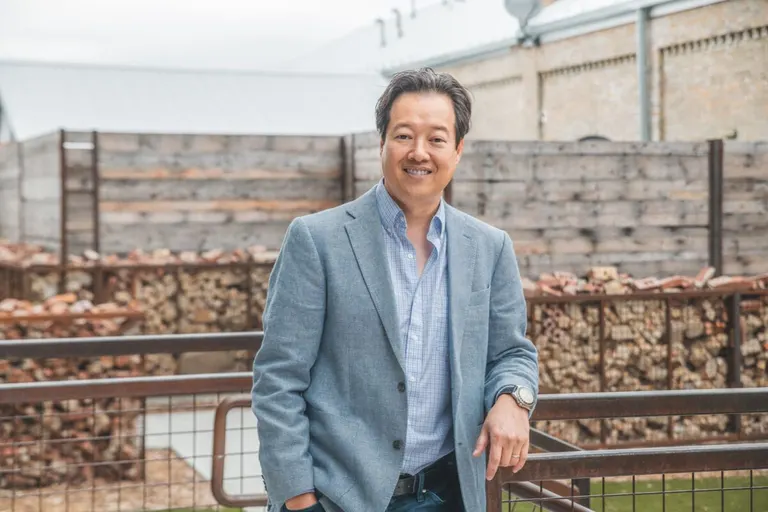
As the founder and CEO of Victor & Company, an economic growth consultancy, and the driving force behind Right to Start, a campaign dedicated to expanding entrepreneurial opportunities, Victor Hwang has reshaped how communities approach innovation. With a career that includes serving as Vice President of Entrepreneurship at the Ewing Marion Kauffman Foundation—where he launched initiatives that impacted more than 200,000 entrepreneurs—Hwang’s influence is as expansive as it is impactful.

Hwang’s own entrepreneurial journey includes co-founding Liquidity, a Silicon Valley company pioneering nanotech-based water filtration, and T2 Venture Creation, a firm committed to building startups and fostering innovation ecosystems. His co-authored book, “The Rainforest: The Secret to Building the Next Silicon Valley,” is a widely regarded blueprint for cultivating innovation in any community.

With degrees from Harvard and the University of Chicago, and a history of contributing thought leadership to Forbes, The Wall Street Journal, and Entrepreneur, Hwang’s insights continue to shape economic strategies across communities.

So what was he doing in Fargo?

In this Q&A, we learn why Hwang thinks Fargo is special while learning more about his perspectives on fostering inclusive entrepreneurship and his vision for creating a world where anyone can access the tools to innovate and succeed.

Can you tell me about why you are in North Dakota?

A: I am on a cross-country road trip and I’m starting the second half here in Fargo. The idea of the road trip is to meet with entrepreneurs and those who support entrepreneurs all across the country and understand the issues they’re dealing with, their stories, and their concerns, and then take that information to Washington, DC. So I’m going from California all the way to our nation’s capital to send the message of entrepreneurship to our nation’s leaders.

How do you define innovation, and why do you believe it’s crucial for economic growth?

A: If you look at the research data, entrepreneurial innovation is the source of almost all net job growth. Big companies, older companies will shed jobs over time. It’s the new, young businesses that create almost all the net jobs in the economy. More entrepreneurial businesses actually lead to higher lifetime income—it increases community wealth. So every 1% increase in new entrepreneur activity in a county actually creates almost a $500 in average household revenue income increase—it helps fight poverty. For every 1% increase in entrepreneurial activity, there’s a 2% decrease in poverty. Entrepreneurship is powerful because it actually lifts up all of society at the same time.

What are some of the biggest challenges that companies are facing when they’re trying to innovate?

A: It’s really broad-based. Entrepreneurs die deaths of 1,000 cuts. And if you think about all the things they deal with, it’s actually a little bit of everything. We took a nationwide bipartisan poll to ask American voters if they had thought about starting a business. We also asked them if they didn’t, what got in their way. From that poll, we found out that it’s a little bit of everything. It’s unfair tax systems. It’s red tape. It’s lack of capital access. It’s the way education systems are structured. It’s government contracting. It’s health care. It’s child care. It’s really a combination of things that cut across partisan divides. The entrepreneurial journey is one that touches every aspect of life, and so we have to address it in a way that’s comprehensive. We have to think about how all the different aspects of our civic life and our policy infrastructure affect everyone’s ability to start and build something.

You talk a lot about the importance of building innovative ecosystems. What are the critical elements of a successful ecosystem?

A: An ecosystem is really like the difference between a farm and a natural forest. In a farming system, you have a predictable set of crops that you’re trying to produce, and you’re trying to maximize the yield of that crop. Economies are more like natural systems. They’re like forests where you’re allowing everything to grow organically. So, everything has a chance to potentially grow up someday and become really important. So, with economies, we try to look at the whole environment. When you allow entrepreneurship to flourish, you actually have to make sure that capital is there, that people are trained the right way, that the resources are there, that the new technologies are there, and that the services are there. You also have to be mindful of the way people behave. You have to pay attention to their culture, the way they interact, and the networks between them all. It really is a full 360-degree view of economic life.

Can you give an example of an organization or a community that has effectively built an innovative ecosystem?

A: Well, I think here in Fargo, you’ve done something really, really powerful. Emerging Prairie and so much of what you’ve created in Fargo has been the model for the rest of the country. When people walk in the door into Fargo, they’re able to get connected to all different parts of industry. That’s unique. There are not many places where you can really do that. I’d say you’ve got a great example here of what’s possible. But then the question is, what about the rest of the state and about neighboring states? What about communities that have been left behind? How do you make sure that everybody’s got a chance to be able to participate fully in that economy? I think you should be very proud of what you built here. And I think you should continue to think about what more you can do.

What role do you think government policy should play in fostering innovation?

A: Policy really affects things. It’s like the air and the sunlight and the nutrients in the soil in a natural ecosystem. Policy really affects things in profound ways. If you look at all the types of policies that affect the entrepreneur’s journey, it’s from the tax systems, the regulatory systems, the capital systems, economic development, government contracts, workforce, healthcare, childcare, and education, all affect the entrepreneur’s journey in some way. What has not really happened is making sure the voice of the entrepreneur is involved in there to be able to lift that issue up and talk about it and try to break down those barriers. So right to start, that’s what we do. We really try to break down those barriers for entrepreneurs of all kinds, and really looking at policy as a 360-degree problem to tackle.

How can policymakers better support startups and entrepreneurs in today’s economic climate?

A: We’ve got a series of bills that we’ve been involved with. We have a set of policy recommendations, and 15 state legislatures have introduced over 40 Right to Start Act bills across the country so far, including two that have been passed by states and signed into law. There are also three states that have done parts of it through executive action. So if you look at what they do, they do a whole range of different policy initiatives. But at the core of the idea is addressing who is in charge of entrepreneurship at the state or city level because in most states and cities, there’s actually no one in charge of entrepreneurs. No one is really taking care of that issue. So if you start with that, then, as we have in some of these states, you can start looking at that office, or that director of entrepreneurship, or that office of entrepreneurship, to tackle the issues that are relevant to entrepreneurs, from government contract reform to providing an annual report to the governor and the legislature about recommendations to break down barriers for entrepreneurs to be able to cut red tape. If you can start to put someone in charge of it, then you can start to do something about it.

Where do you see yourself and your work in the next five years?

A: We’re planning to expand our work to all 50 states. Right now, we’ve engaged with all 50 states in some way. We’ve got a footprint in 30 states right now. We’ve got four states where we’re building active grassroots coalitions on the ground. We’d love to be able to build out 50 grassroots coalitions all across the country in the coming five years.

Anything else that you want to say before we wrap it up?

A: I’m excited about the potential here in North Dakota. This is a very special place, and the people here are special, and there’s a real energy that’s unique. I think there’s a lot of attention being paid to the Great Plains these days in America because in a time where in the rest of the country, there are a lot of stories of polarization and dysfunction, in the Great Plains, things seem to continue to happen. That energy can provide a lot of stories and lessons for the rest of the country.

Right to Start

righttostart.org
Facebook | /RightToStart
Instagram | @righttostart
Tiktok | @righttostart
Linkedin | /company/righttostart
Twitter
| @RighttoStart

Victor & Company

victorh.co
Linkedin | /victorwhwang
Twitter | @rainforestbook

TAGGED:
Share This Article
Follow:
Brady is the Editorial Director at Spotlight Media in Fargo, ND.