Matt Leiseth Steps in as Downtown Moorhead’s Momentum Turns Real · Fargo INC!
People
Matt Leiseth Steps in as Downtown Moorhead’s Momentum Turns Real
Downtown Moorhead, Inc. (DMI) is the nonprofit group the City of Moorhead partners with to help move downtown redevelopment from vision to reality by connecting developers, businesses, and public lead
In shortMatt Leiseth became DMI president and CEO in December 2025, leading downtown Moorhead's nine-block former mall site redevelopment through a public-private partnership targeting mixed-use, high-density development.
3 things to know
1The former Moorhead Center Mall site has been cleared; two or three developer groups are currently in talks for the nine-block redevelopment area.
2Kevin Bartram's 650 Center project, on roughly one-tenth of the old mall land, already carries a taxable value of $19M, exceeding the entire mall site's prior $15M taxable value.
3The Loop—combining Moorhead Public Library, a community center, and the Spark Center for Entrepreneurship—is set for move-ins around March and a grand opening in April.
Generated by Claude · grounded in this articleNever used on sponsored content
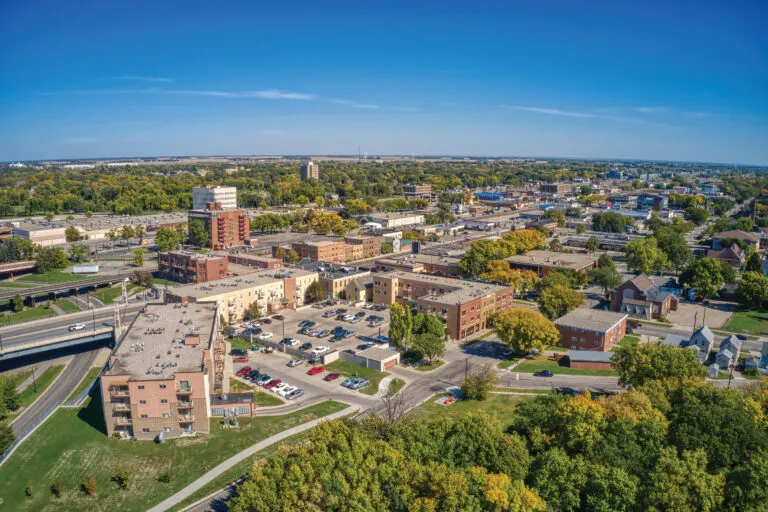
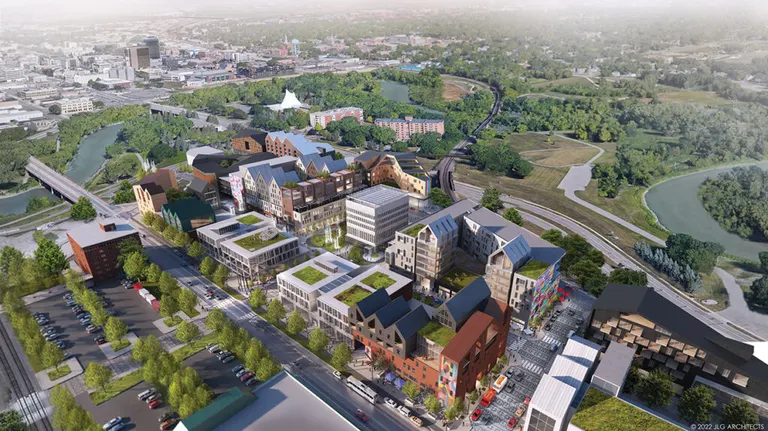
Downtown Moorhead, Inc. (DMI) is the nonprofit group the City of Moorhead partners with to help move downtown redevelopment from vision to reality by connecting developers, businesses, and public leaders around one coordinated plan. In the last year, that work has gotten a lot more tangible as the former Moorhead Center Mall site (a nine-block redevelopment area) has been cleared and prepped for new mixeduse development—housing, street-level storefronts, and public space designed to reconnect downtown to the river.
In December 2025, DMI entered a new chapter with longtime Moorhead resident and regional business leader Matt Leiseth stepping in as president and CEO after Derrick LaPoint’s tenure. In this interview, Leiseth talks about why he made the leap from board member to the day-to-day role, what he learned leading in the private sector, and what’s next: early developer interest, how incentives and approvals actually work, the coming impact of The Loop (the new community center and library hub), and why the biggest wins downtown are usually built one project at a time.
About Matt Leiseth
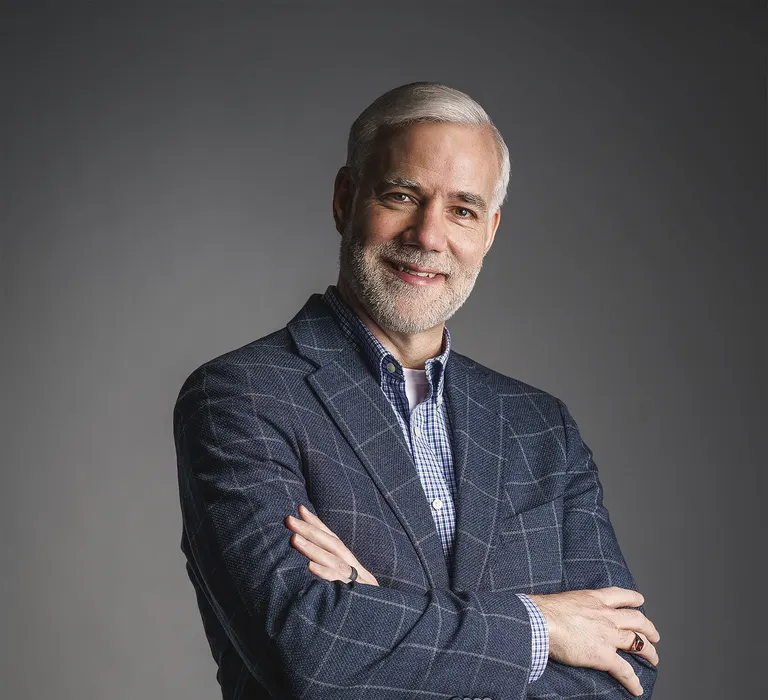
Matt Leiseth is the President and CEO of Downtown Moorhead Inc. He brings decades of business leadership to the role. A Concordia College graduate and longtime Moorhead resident, Leiseth spent more than 30 years with Hornbacher’s, rising from entry-level roles to senior leadership positions and developing a reputation for people-focused management and community engagement. He previously served on the Downtown Moorhead Inc. board and numerous local nonprofit boards, and now leads the organization at a pivotal moment, guiding downtown redevelopment efforts with a collaborative, long-term vision for Moorhead’s future.
Q: You started this role in mid-December, correct? What interested you in it?
A: Yes. I was on the board since before Derek got hired—about eight and a half or nine years. Downtown Moorhead Inc. started with some really good business leaders who wanted to create more excitement and do something different. The three college presidents on the Moorhead side and Superintendent Lunak from Moorhead Area Public Schools were all asking: how do we enhance what we’ve got to make it more livable and more exciting? How do we create our own destiny? Businesses said, “We can play a role here.” I’ve lived in Moorhead for 36 years. I came here for college and never left. I love Moorhead. You have to take economic development and planning into your own hands instead of waiting for it to happen. The city, business leaders, and the community all have to be involved.
Q: What were some early milestones?
A: We had a downtown vision that eventually turned into demolishing the Moorhead Center Mall—which was no easy task because of how the building was structured. Downtown Moorhead Inc. became a true publicprivate partnership: a nonprofit supported by businesses, contracting with the City of Moorhead to provide economic development. We set a goal of 500 new housing units in the downtown core in five years, and we hit it. That included projects like Kevin Bartram’s work on the Simon Warehouse and the corner of Eighth and Main, where Eventide has offices and apartments.
Downtown Moorhead Inc. (DMI) is a local nonprofit organization focused on catalyzing economic growth and revitalization in Moorhead’s downtown district. The group champions a communitydriven vision to transform downtown into a vibrant place to live, work, play, and learn by building partnerships with local businesses, residents, developers, and public institutions. Its work includes advocacy, strategic planning support, and helping advance the city’s downtown master plan through coordinated development efforts.
Since its launch in 2018, DMI has played an active role in shaping the redevelopment of the former Moorhead Center Mall site, supporting housing goals and catalytic mixed-use projects, and guiding initiatives that strengthen walkability, economic activity, and community engagement downtown. It operates as a relationship builder, educator, and advocate for downtown Moorhead’s long-term growth, working alongside public and private partners to help turn planning into tangible investment and new opportunities.
Q: When was that milestone hit?
A: I’d have to look it up exactly, but probably within the first couple years. It was before I was in this role.
Q: What made you want to move from board member to full-time leader?
I separated from Hornbacher’s in the end of 2024 and started consulting, which I really enjoyed and still do on the side. When Derek said he was leaving, I just felt like we were in such an exciting spot—for the city and for downtown. I’ve got a passion for this town, for growth, and for the storytelling that comes with redevelopment. I don’t think I thought about it for more than four seconds. Moorhead has always felt like home to me, despite growing up in Red Wing, MN. My parents grew up here. I’ve had family here longer than I’ve lived here. There’s legacy here.
Q: What does your consulting work look like?
A: My consulting work helps leaders close the gap between strategy and operations. Most businesses don’t fail from bad ideas, they fail because their resources don’t support what they say matters.
I use three circles:
What are you good at? (Be honest)
What do your customers want?
What will you get credit for?
Where those overlap is your strategy. Then, you need to look at your operations piece, and that’s where the disconnect really comes in. A lot of operators have their own strategy. They know what they’re good at, but when they start digging into where they’re putting their money and resources, they find that they’re not necessarily in alignment with their strategy. Sometimes, people get stuck doing things that they’ve always done, and that costs them a lot of money. I help businesses get to an operational excellence model because that’s the only way that you survive.
Q: Can you give an example?
A: Customers always want cheaper prices. But will you get credit for it? If you’re competing with Walmart or Amazon, and you discount a superior product, you’re probably not getting credit anyway. If your only reason for struggling is price, you might as well close—you’ll never be Walmart. So you focus on service, quality, people, cleanliness, and presentation. But to do those things right, you have to invest in people, and many businesses don’t want to.
Q: How do you think about marketing spend?
A: Some advertising is ROI-driven. Some is just being part of the community—like buying an ad in a high school program. That’s great, but you have to know why you’re spending the money. If you pretend everything drives business, you’re fooling yourself. Be honest about the purpose.
Q: What are key updates for downtown Moorhead right now?
A: Before demolition, the Moorhead Center Mall—minus city-owned property—had a taxable value of $15 million. Kevin Bartram’s 650 Center project, on about one-tenth of that land, has a taxable value of $19 million. One project already exceeds what we had before. The city owns the land and has done all the mitigation, so it’s truly greenfield—no contamination. You can build with confidence. The Loop will begin move-ins around March, with a grand opening in April. It includes the Moorhead Public Library, Lake Agassiz Regional Library offices, a children’s play center, a second-floor walking track, and the Spark Center for Entrepreneurship led by Laura Caroon. The underpass will be done in the fall. Highway
Downtowns aren’t overnight successes. Fargo wasn’t. Moorhead won’t be either—but it’s moving, and everyone’s rowing in the same direction.
About Laura Caroon
Laura Caroon is a well-known local leader in the FargoMoorhead area whose work spans entrepreneurship, community building, and public service. A former Moorhead City Council member, she has played a central role in shaping downtown revitalization efforts and supporting business development. Caroon has co-founded community organizations like Ladyboss Midwest, an empowerment network for women in business, and has worked professionally in marketing, content strategy, and engagement roles that emphasize connection, growth, and opportunity in the region. Caroon is currently leading the Spark Center for Entrepreneurship, a new downtown resource being developed as part of The Loop, which is Moorhead’s upcoming public library and community center. Guided by her vision of making entrepreneurship accessible and welcoming, the Spark Center will offer mentorship, coworking space, workshops, and support to aspiring and existing business owners, with special attention to historically underserved groups and the full spectrum of business ideas from food concepts to creative and service enterprises.
75 and Highway 10 will be rerouted through it, and Google Maps will automatically take people through— no more train delays downtown.
Q: How does the development approval process work?
A: It’s a downtown redevelopment and Tax Increment Financing district, so there are incentives—but with expectations. We want high density, mixed use, people living there. If someone wanted to put a $1 million building on land intended for a $20 million project, that doesn’t fit. This protects developers too—they know their neighbors will be held to the same standard
Q: Are downtown Fargo vacancies a concern?
A: Commercial vacancies are always a concern, but our commercial footprint will be limited. Rents will likely be lower on the Moorhead side, which could attract small businesses. Apartment mix matters too— efficiencies, one-bed, two-bed, price range. Both extremes don’t work. You want a mix of people downtown to support programming and vibrancy.
Q: How would you describe your leadership style?
A: Collaborative. I empower people. I’m not a micromanager. As long as we’re aligned on the goal, I’m open to different paths to get there. In this role, it’s about connecting people— developers to the city, helping navigate permitting and incentives, and making sure people understand the process.
Q: Where can developers learn about incentives?
A: It’s on the City of Moorhead website under economic development. But we prefer meetings—me and Amy Thorpe (economic development program administrator), so we can talk through vision, steps, timelines, and the approval path, which goes through the EDA first, then City Council. The key is you need incentives approved before certain construction steps—like don’t put in a foundation before approvals, or the incentive may not apply. We can help walk people through that.
Q: What’s your message to readers right now?
A: Momentum and potential. Nine blocks won’t be nine developers in one year, but if we get one or two every year, this is a five- or six-year plan. It’s not instantaneous. But it’s moved from “wouldn’t it be great if…” to “it’s actually happening.” The city is committed to programming and vibrancy, and it’s a true public-private partnership with city investment, business investment, and nonprofit structure all rowing in the same direction.
Q: How has interest been so far from developers?
A: Really good. Since the mall was completely demolished this fall, we already have development done, and there are two or three groups in talks right now. Developers are thinking about what would work for them, and they know what our expectations are—mixed use, high density, people living there, figuring out parking, all of that.
The city is going to do a lot more programming along the river. We’re fortunate that Moorhead is higher, so we don’t have a wall blocking the river like Fargo does. That opens up great space, and more programming will come. Eventually, it ties into the plaza west of City Hall. All these pieces start coming together
Q: What are some other common hang-ups you hear from developers?
A: A big one has been the unknown. Some assume everything is better in North Dakota because they understand it. On the Minnesota side, we weren’t communicating well enough that similar support exists—different programs, but the same goal. Kevin Bartram is a shining example—he understands Minnesota funding and has done successful projects in the Simon Warehouse, the Armory, new development at 14th and Main, and now 650 Center, and plans to redo the FM Center once City Hall moves. The programs work. The numbers pencil. Developers just need to understand them and see that they can succeed. People get used to what they know. If you did your first 10 projects in Fargo, you’re comfortable there. We have to keep communicating that Moorhead can work too.
Q: What kinds of businesses do you envision downtown?
A: More entrepreneurial, niche businesses like coffee shops, small cafes, sweets/ice cream-type places. It’s smaller spaces, high-quality concepts, and places that people line up for.
Q: How do you help developers who are unfamiliar with Minnesota or Moorhead navigate the process?
A: A lot of it is just education and communication. If you’ve only developed in North Dakota, South Dakota, or somewhere like Texas, you don’t know Minnesota’s system. In Minnesota, most regulations are passed at the state level in St. Paul, not city by city. That changes timelines and expectations. Running a business in Moorhead versus Fargo is the same stress, the same struggle—finding customers, managing margins. Starting a business is where it’s different. Permitting in Fargo is largely local. In Minnesota, there are more state-driven processes. Our job is to help people understand that and navigate it so they don’t get surprised.
This is about momentum and potential. It’s a great time to dream, but it’s also a time when things are actually happening.
Q: What kind of mistakes do you help people avoid?
A: Timing mistakes. Incentives have to be approved before certain steps happen. You can knock down a building and clear the site, but if you pour a foundation before approvals, you might lose eligibility for incentives. So we walk developers through what they can do and when. We want people to succeed. That’s the whole point—helping them understand the rules before they accidentally disqualify themselves.
Q: What else do you want readers to know?
A: This is about momentum and potential. It’s a great time to dream, but it’s also a time when things are actually happening. Downtown Moorhead is a true public-private partnership. The city is invested. Businesses are invested. Downtown Moorhead Inc. is a nonprofit focused on economic development. When things work, it’s because people are working together. Everyone rowing in the same direction—that’s how you build something lasting.
About The Loop
The Loop is a major new public space rising in downtown Moorhead at the intersection of 5th Street and Center Avenue, set to open in Spring 2026. It combines the new Moorhead Public Library with a community center designed to be a gathering place for people of all ages, offering room to read, study, play, and engage with neighbors in a welcoming environment. The name The Loop reflects both the idea of bringing people together and the facility’s indoor walking loop. The Loop will include spaces such as children’s areas, presentation halls, and public gathering spots, as well as the Spark Center for Entrepreneurship, a dedicated resource to support business development and innovation. The project embodies Moorhead’s commitment to connection, continuous learning, and inclusive community engagement—creating a central destination where families, students, creatives, entrepreneurs, and visitors can come together.
Editor of Fargo INC! — covering the founders, companies, and ideas shaping business in Fargo-Moorhead. Eleven years in, still no opinions, no politics, all business.