1Tailgating with a Teacher Just like thousands of fellow Bison fans, I arrived pregame to stroll around the tailgating lot.
2This time, I encountered my middle school math teacher from a long time ago.
3He was manning a grill and sporting a green and gold apron, red Solo cup in hand.
Auto-summary · grounded in this articleNever used on sponsored content
Tailgating with a Teacher
Just like thousands of fellow Bison fans, I arrived pregame to stroll around the tailgating lot. This time, I encountered my middle school math teacher from a long time ago. He was manning a grill and sporting a green and gold apron, red Solo cup in hand.
“Hey, Mr. Olson! How’s it going?” I yelled. “I thought you were a Sioux fan!” (Back in the day, he displayed a UND pennant on the classroom wall and joked around with us seventh graders, who knew we were and have remained Bison fans forever. We were honored by his friendly jest and even went to class early to banter.)
After more than 30 years, I still felt comfortable enough to initiate conversation with a wisecrack, but dutiful enough not to even think about greeting him by his first name.
“Yeah, I’ve been a Bison fan longer than you’ve been alive, but I wasn’t going to let that cat out of the bag,” Mr. Olson discloses. “We were having too much fun.”
The exchange turned heads. Apparently, no one in his crew knew he once purported himself to be a Sioux fan, nor had they ever heard him called “Mr. Olson” when tailgating, but none had ever been his seventh-grade math student either.
I don’t think that sort of exchange is unique to me, but do suspect that most people, when encountering teachers from no matter how long ago, dignify the teacher using “Mr.” or “Mrs.” Put it this way, students tend to revere their teachers and build lasting relationships in ways and for reasons that many people don’t know could even exist. Regardless, they impact us all.
Teachers and financial literacy
“By teaching our students and helping our citizens improve their financial literacy, we can have massive positive impacts in our state down the road,” North Dakota State Treasurer Thomas Beadle says.
This suggests, and I personally agree, that we are indebted to teachers for being students’ curators on the path to professional success and long-term prosperity. Those connections make teachers inseparable from the workforce and financial investment, two vital sectors of our economy
“Teachers help build foundational skills so students can fully participate in society. They are a critical safety net, helping catch the most vulnerable in our communities and wrap them in support,” Darcy Bakkegard, cofounder and executive director of The Educators’ Lab says.
Like Beadle said, providing students with the guidance and aptitude to determine their most suitable career and financial paths prevents problems. This is especially true for high school students and recent graduates, and North Dakota is responding.
However, implementing new ideas requires acceptance, adoption, and adaptation; steps that can be complex and difficult, particularly in schools.
“Making changes in education is hard because we all love our kids and want what’s best for them. When things are different, that can feel uncomfortable and scary,” Bakkegard says. “To create the most viable, impactful solutions, we must listen to those with firsthand knowledge of the problem: teachers and students.
North Dakota State Treasurer Thomas Beadle
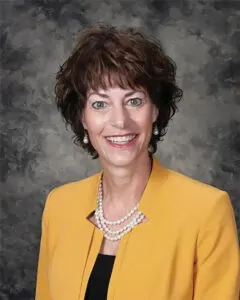
Co-Founder and Executive Director of The Educators’ Lab Darcy Bakkegard
“Then we can help them design and implement solutions tailored to their needs and communities,” she says. “We don’t have time to wait for top-down, one-size-fits-all all solutions.”
Teachers, schools, and career opportunities Cass County Career and Technical Education
Director at Cass County Career and Technical
Denise Jonas, Ph.D., is the director at the Cass County Career and Technical Education, a collaborative network of local school districts: Central Cass, Fargo, West Fargo, and Northern Cass.
“Our goal is to provide a scope and sequence of intentional learning which includes education, career experiences and citizenship,” Jonas says.
CTE and similar career preparedness programs facilitate that goal by empowering students to honestly understand and effectively apply what they learn in school to establish a gainful career. When that happens, students are positioned to attain the professional and financial success and quality of life they want, and everyone needs them to attain and perpetuate.
“Student success is when learners graduate from high school with confidence in themselves and are self-aware of their passions and aptitude to make informed decisions about their next step after high school,” Jonas explains. “It is important for students to recognize that life is a journey and there are on and off-ramps throughout their lives, and it is not just a linear path.
Hope, civility, and collaboration are themes guiding CTE’s educational programs and strategies. “Together, these philosophies can strengthen our community. Hope encourages students to believe in their future, supported by exposure to career pathways, mentorship and success stories that inspire their journey,” Jonas says.
However, CTE has already transformed many of those philosophies into functional realities.
“Living on Your Own” is an elective course available to high school students. It equips students with practical life skills such as budgeting, managing rent and insurance, meal planning, understanding credit, time management, college preparation, car ownership, and parenting.
Those are vital life skills that everyone must recognize and activate, but teachers are the safety net, ensuring that every student has access to them.
Sheyenne Valley Area Career and Technology Center
Rural communities are moving forward with career preparedness and financial literacy programs as well. They do not rival or compete with urban areas, but they do determine, implement, evaluate, and modify educational strategies and priorities at different paces.
“North Dakota’s smaller district size means teams can pivot and shift gears in more nimble ways,” Bakkegard says. “In addition, the North Dakota Department of Public Instruction has worked hard to ensure there are flexible options that maintain high standards while allowing districts to try new approaches.”
Headquartered in Valley City, Sheyenne Valley Area Career and Technology Center partners with businesses throughout a 50-mile radius that includes multiple school districts: Barnes County North, Litchville-Marion, Maple Valley, and Valley City
As a SVACTC transition program instructor, Kalyn Botz is the goto person for businesses and is interested in becoming program partners. She says that program agility spares students the cost of paying for credits that might not be necessary. It also ensures education relevance because Botz and her colleagues watch employment trends, monitor workforce needs, and work closely with businesses so SVACTC can respond with the programs according to what is best for students and the real world.
“There are careers that are not even created right now, but an essential element remains true—giving students the tools to explore and learn will never let them down. Teachers are the link between what students reach for, and businesses are willing to let them try.”
SVACTC programs combine classroom instruction and handson learning, such as life, social, and work-related skills, in addition to experiential opportunities. Plus, curriculums are always relevant to valued careers because employers advise what is or is not most important to the existing job market. After all, if education does not match the job market, the workforce dwindles and can take financial prosperity with it.
“The advisory board members consult with the teachers on what is needed from students, ‘student supply’ requests, and other variables determining workforce needs and opportunities,” Botz explains. “These members can be from industry, local farmers, and career resources such as North Dakota Job Service and prospective employers.”
The SVACTC board consists of school board members from each of the member schools and professionals from each of the program areas: welding, construction, auto, graphic design, career development, and agriculture.
Further, the programs are not nonchalant. Even if students enrolled in the SVACTC agriculture program grew up on a farm, academic credit for experiential education cannot be earned by working on their own family’s farm.
Bolz says this enables students to recognize, learn, and apply different approaches to agriculture, and each new idea is an opportunity to consider for their own farm upon completing the program and making agriculture their profession.
Here’s your paycheck. What will you do with it?
No matter what their career path or goals, students and new graduates must be prepared to make important decisions about significant financial issues, but will they know what financial options exist or have the financial aptitude to assess them?
Wealth Management Director at Fjell Capital Dan Schuster
“Financial education is one of the most important things we can teach our students,” Beadle says. “It’s not just about knowing how to manage money—students must also be equipped to recognize the wide range of financial and resource opportunities available to them after graduation.”
Dan Schuster, a wealth management director at Fjell Capital, introduces these opportunities to students as a CTE financial literacy instructor.
“Through the CTE, I’ve had the opportunity to speak with high school students in Fargo about real-world money management,” Schuster says. “We’ve covered practical topics like choosing a career path, preparing for the workforce, and the basics of building long-term wealth. My goal is always to give students tools they can start using right away.”
Although developing a financial plan and managing finances are always essential tasks, Schuster explained that wealth is built over decades, so he advises all people to “Save often and save early. If you’re just starting, commit to saving 10% each paycheck. Do this consistently, and that savings can really add up over time, especially for students.”
He stresses that “(h)aving a good financial strategy is vital, but does not mean the strategy has to be complicated. Sticking to a budget, saving every month, and having a plan to tackle debt are a few simple habits that can create a stable financial life early on.”
Early exposure to these concepts empowers students and adults to confidently navigate their financial lives, setting a strong foundation for future success regardless of career path or social status. North Dakota has initiated financial literacy programs accessible to all citizens, not just students
Beadle shared that the Financial Literacy Commission aims to foster collaboration across agencies and the private sector to raise awareness of financial education and provide all citizens with tools and education for taking control of their financial lives.
Also, he affirmed that the “Smart with My Money” initiative at the Bank of North Dakota is available. He invites all North Dakotans to visit smartwithmymoney.nd.gov to discover their money personality and learn tips to improve their outlook.
Before wrapping up, Schuster has another suggestion for students to consider.
“Invite a professional you admire out for coffee or lunch,” he says. “These conversations can open doors, provide guidance, and show the importance of smart career decisions in building a strong financial future.”
Thank a Teacher
Well, Mr. Olson and I didn’t have coffee during our tailgating conversation. However, I did realize how the life lessons that my fellow seventh graders and I learned from him during math class, over 30 years ago, enabled us to trust teachers’ guidance up the academic ladder and into the real world.
Again, I doubt such relationships are unique or rare, so thank a teacher for not only inspiring students’ academic success but also helping students determine a path into the workforce and how to understand and evaluate their financial opportunities when the paychecks start rolling in.