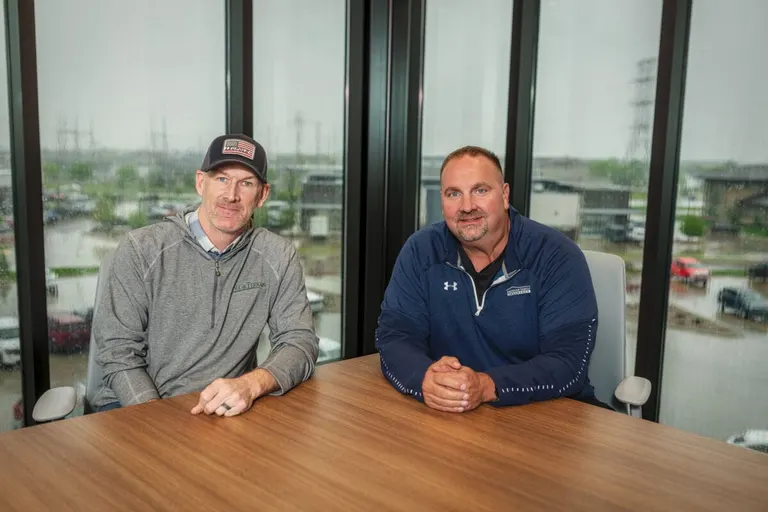
Introducing “Discussions with DJ,” where we’ll sit on exciting conversations between DJ Colter and other individuals who shape our community! At the helm of these conversations is DJ Colter, a name sy
In shortIntroducing “Discussions with DJ,” where we’ll sit on exciting conversations between DJ Colter and other individuals who shape our community! At the helm of these conversations is DJ Colter, a name sy
3 things to know
1Introducing “Discussions with DJ,” where we’ll sit on exciting conversations between DJ Colter and other individuals who shape our community!
2At the helm of these conversations is DJ Colter, a name synonymous with community engagement and leadership in Fargo.
3DJ, a successful entrepreneur, has also seated himself as a catalyst for local involvement and transformation.
Auto-summary · grounded in this articleNever used on sponsored content
Introducing “Discussions with DJ,” where we’ll sit on exciting conversations between DJ Colter and other individuals who shape our community!
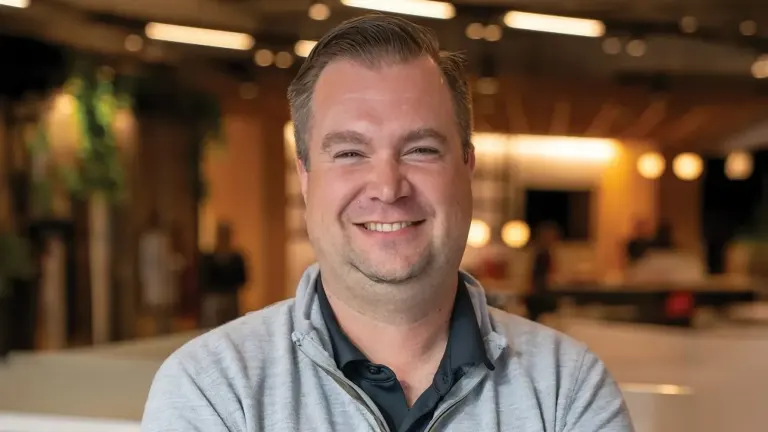
At the helm of these conversations is DJ Colter, a name synonymous with community engagement and leadership in Fargo. DJ, a successful entrepreneur, has also seated himself as a catalyst for local involvement and transformation. After leaving a career in teaching, DJ ventured into the realms of insurance and real estate. Eventually, he turned his own agency, DJ Colter Agency, into a dominant force in the Midwest insurance landscape. His commitment to service parallels his business acumen, a trait deeply ingrained in his upbringing in a family of educators.
Why DJ Colter? His extensive involvement across various boards— from the YMCA Of Cass & Clay Counties to the Fellowship of Christian Athletes and beyond—illustrates a profound dedication not just to leading but to listening and uplifting others. DJ embodies the spirit of “Givers Gain,” believing that true success comes from helping others succeed. His philosophy of service over self-promotion, inspired by his father’s example as a servant leader, makes him the ideal voice to bring forward the stories.
Periodically, DJ will sit down with a different community member, and through these conversations, we will uncover not just the achievements but the personal journeys and philosophies that drive these community leaders.
So, sit down, lock in, and join Fargo INC! Editor Brady Drake and DJ Colter as we explore the voices and visions that make Fargo a place of dynamic community engagement and innovation.
This month, we’re excited to introduce Ryan Such, the founder of All Terrain Landscaping, Fargo’s premier full-service lawn care provider. Ryan, a dedicated family man and enthusiastic outdoorsman, spent 20 years channeling himself into every aspect of his work, from comprehensive grounds maintenance to innovative landscaping solutions. His professional background, which began with a stint in law enforcement, pivoted early on in his career to boost him into the successful entrepreneur he is now. Under his leadership, All Terrain grew to become the largest and most certified lawn care enterprise in the region, offering a wide array of services tailored to enhance the beauty and utility of outdoor spaces across Fargo, Moorhead, and beyond.
DJ: Ryan, share what you feel comfortable sharing of your story because I think it really intrigues everyone, not just the small business community, but it’s just an awesome story that I don’t think a lot of people know about. So, you were a police officer in Fargo?
R: Correct, I was a police officer for two years, from 2001 to 2003.
R: 27 to 29. D: So, at 29 years old, you go from being a police officer to starting your own lawn care business.
R: Well, I started a lawn care company when I was like 18 years old.
D: You still had that going while you were a police officer?
R: I couldn’t have a real job because I played sports, I played baseball, so I was doing lawn care—about 20 lawns a week.
D: Just very part-time?
R: Yeah, just the ‘kid down the street with the push mower,’ and lawn care stuff. I got a degree to be a police officer and got a job in Fargo as an officer. I started mowing more lawns and then got married, and had two kids. Then my daughter, Ellie, looked at me one day and said, ‘Dad, I never see you.’ And it broke my heart. I said I have to decide, I’m going to do just one of these two. So, I gave [serving as a police officer] up and started mowing lawns and went into that full-time.
DJ: What did everyone think? You went from this prestigious police officer to, you know, mowing lawns, which some people might not look at with the same level of respect, so how did that go with family?
R: My family was very excited. I guess with my extended family, I don’t know that they were super excited.
D: What about in-laws, like you have young kids and you’re going to take care of them by mowing lawns?
R: I don’t remember that I asked a lot of [family], but I asked my wife.
D: What was she doing? R: She was a teacher at Fargo South High School. Her ultimate goal was to be a stay-at-home mom, and I told her that the path for her to do that was for me to be a lawn care guy.
D: Then what? R: I had needed somebody to do the lawn care stuff for me when I was gone being a police officer because [the business] kept growing. It wasn’t that hard of a decision because it got to the point where I was paying them more than what I was making as a police officer.
DJ: At the time, were you doing personal or commercial [lawns]? R: Both.
D: How were you getting your accounts? By referral or by doing a good job?
R: In our 25 years, I say, we never spent a dollar on advertising.
DJ: In 19 years, full-time, you built [All Terrain] up, how has that identify shift been?
R: I don’t know what the identity struggle is, I’m in the midst of it trying to figure it out. So life is different, life is weird for me right now. There were two companies All Terrain and the Out Front Power Equipment. So we sold and serviced commercial lawnmowers.
D: How did you get into that?
R: Well, the kind of lawn mower that we wanted to use, three or four other companies in town went bankrupt trying to sell them. So then, we started selling them.
D: So, now you’re selling lawnmowers to your competitors, this is where this gets so interesting to me.
R: ‘A rising tide raises all ships’ was our philosophy. So our competitors, (if you would say it that way) a lot of them who became dear friends over the years, would buy more from us when we did service for them. Our company would also do weed control and fertilizer, I think for 17 different companies in town, but what we would do in return is there are a lot of services that we would fill up on and we would refer them to those companies. So, for example, there are three or four or five landscaping companies in town that buy mowers from us, and we would refer our landscaping, sprinkler installs, artificial turf, spring cleanups, or snow removal to them in certain parts of town. So, we were constantly referring to our competitors because we believe that a rising tide raises all ships, trying to make everybody be able to put everybody’s kids through college instead of being at everybody’s throats. Not everybody subscribes to that philosophy, but I’d say the majority of the big players in Fargo did or do.
Brady: What made you think that you could make that arm of the business work though when three or four other dealerships went under selling those products?
R: Maybe I just do crazy leaps, like when the lawn care company had 20 or 30 accounts, and I was also working for another lawn care company that had 20 or 30 accounts. I ended up buying [the mowers] in a summer that he lost $80,000. I don’t know if my wife was happy with me on that, but we turned it into something profitable. And that’s the only thing we’ve ever bought. That was only 23 accounts to get the basics going. We believe in the product, and we believe we can sell it.
B: Just so I’m hearing you, right—so you bought that one business and then started on your own. And then separately, you also started selling the mowers and servicing company called Out Front Power Equipment. And I did hear you correctly, though, that there were other dealerships that went under trying to sell those products. So, why would you guys ever start selling, how’d you get that to work, where it wasn’t really working in the market before?
R: I think I think the fact that we use the machines and we quickly became kind of the biggest lawn care company in town. I think a lot of people looked at us and said, ‘Hey, what do you use?’ Buying a $20,000 lawn mower wasn’t on people’s radar, but when you see the product that it does, and the efficiency of it, then other people started using it.
B: And then at the same time, you’re fostering those good relationships with those other people by giving them referrals and stuff like that, it makes sense.
DJ: You just said that you became the biggest lawn care company in the region. What do you think the key to that success was?
R: I’m sure Jobs or somebody really smart like that said that you have to be first or the best, you got to be bold or something like that. So, I think we were the first all-inclusive. We did snow removal and lawn care. We started all of that back when I left the [police] department in ’03, and then the decision was made that we need to be all-inclusive. We’re not going to just mow, we’re going to do snow, lawn, sprinklers, have arborists, master gardeners, trimming—just just kind of the full circle so that people could just hire one company, residential or commercial, they could just hire one company for all their stuff. I think we had that idea, and we invested in that idea before anybody else did. So we got to lead that way.
D: You brought up the way you invested. How did you know when to invest in what? How did you know when to borrow money? How did you know when to try a new service? How did you know when it was the right time to do that?
R: Well, one, we wouldn’t borrow money. I am a tightwad, so we would save the money and then buy the equipment. We would always buy a mower before we needed it, so it was one ahead. There are two philosophies on that. You can wait until you have enough at cost to buy the mower, but my philosophy on that is then you’re making a whole bunch of people mad because you’re behind that whole time—or you can buy more before you need it. You can grow into it and you can be ready to do people’s accounts the next day instead of having them wait, so we always bought them all before we needed it.
D: Did anyone else around here do that? Were you the first one to do that?
R: I think we were a little better at the philosophy. I think that a lot of companies have done a really good job in the last 10 years doing that. I think there’s a lot of good companies in the industry, and they’ve really stepped up their game, especially as of late.
DJ: If you could give someone advice today—they’re going to start a business— what’s the number one advice you would give them?
R: My advice would be, don’t make your goal to be the biggest, make your goal to be the best. Because then you’ll probably become the biggest, there’s a difference. There’s a huge difference. If you want to be the best, you focus on being the best, you want to be the biggest you focus on being the biggest, and they’re different. We always had a motto of better, not bigger, so we were constantly trying to figure out ways to get better. And by getting better, people tell their friends and you ultimately end up getting bigger, but the goal is not to get bigger.
DJ: What was one thing you did, that you feel like changed your business or took it to the next level?
R: I would say I’m a huge fan of RV—real value—and there’s a lot to unlock there but it’s, just be real—the opposite of gossip. And we have a philosophy in our team where anybody can be real with anybody at any time about anything. So you can go into the boss’s office and tell him what you think about someone, in a kind, honoring way, but that type of culture is there for everybody to be able to do that.
D: Who really helped your culture? You kept the right people around, you paid them well, it sounds like you gave fantastic benefits, paid packages, and promised security in an industry that doesn’t promise security to your employees. Is there anything else you did that stands out or anything you feel is different that you did to help grow your business or keep it as strong as it did over those years?
R: I think we had a consistent, no drama, no shortcut culture.
D: You held that accountability, did you have any help in that? Or any structure? People to help you with that?
R: The ‘be real’ value internally helps hold that accountable. Matt bought the company and did a fantastic job. Outside-wise, we hired Sagency and they did a fantastic job of helping us articulate who we are and what we do.
D: So let me get this straight. The lawncare/snow removal company, hired a consultant, a business consultant to help, to give you vision and clarity in operation, is that what the main goal was?
R: Yeah, I mean, it was it was one of our key decisions that we made over the years.
D: How far along were you in the business when you did that?
R: That was about 10 years ago. I went on a fishing trip with a bunch of our team and I came back, and Mike—a friend of mine with Sagency. I met with him and I told him I was embarrassed to be the owner of this company, [that] we could do so much better, have so much better of a team. [I said], ‘I’m failing and I need you to help me figure this out.’ So, Mike and Tom came in and said, ‘If you want to do this the right way, you’re probably going to lose half your leadership team.’ And we did it, and the team that we have now, with 10, run [it]. We just made a huge investment in doing things, I would say, the right way. I think I had a lot of things to learn. I probably was trying to be people’s friend instead of a boss, if you want to say. I had a lot of things to learn and our leadership team had a lot of things to learn.
Brady: When and why did you think about transitioning? What led to that?
R: Well, the plan all along has been to be done when I could be self-sufficient, and then to volunteer my time to the kingdom. So, that time came along, and it seemed very apparent for a lot of reasons. I had a person in-house who had been there for 10 years and who is an awesome leader. Basically, I guess, that is the short answer.
B: So one of your employees bought you out, but he’s still running it very similar to how it’s always been run?
R: He and his wife, and he has done a phenomenal job so far.
B: Can I clarify what is ‘volunteer time for the Kingdom?’ What does that mean?
R: So I volunteer at my church, volunteering with Valley Christian Counseling & Wellness, doing the mentor program. That’s the main goal—to volunteer for faith-based things. Right now I’m involved with baseball, which I tell myself inside that God loves baseball.
DJ: What do you miss the most from when you were running All Terrain?
R: The team. I got asked in an interview about 10 years ago what was my favorite part of the job. [I said] The team. [They asked], ‘What’s the most challenging part of the job?’ The team. There’s there’s such great wins and losses there, but the team. There are a couple of key relationships there that you just missed doing the daily battle with.
D: What are you most excited about in future?
R: Hunting? Can I say that? I mean, I’m excited to see what can happen with some of these organizations that my wife and I are involved with, that’s the real true answer. But from a selfish standpoint, I’m excited about hunting and I’m excited about grandkids and I’m excited about waking up on a Tuesday morning and watching Ricki Lake reruns or Jerry Springer reruns, but just to be able to do that—I’m excited about that.
Editor of Fargo INC! — covering the founders, companies, and ideas shaping business in Fargo-Moorhead. Eleven years in, still no opinions, no politics, all business.