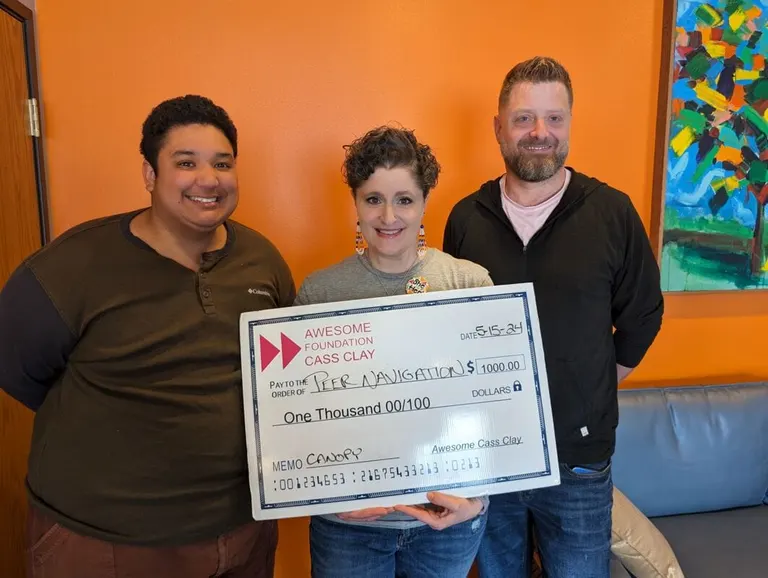
Connection is at the heart of every community—and the foundation of the Canopy Peer Navigation program run by the Canopy Medical Clinic located in Fargo.
“Some participants have some pretty long-term friendships from being in this group together for so long. They call each other. They text each other. They ask each other for rides. They’ll pick each other up from the airport. It’s a really well-established community,” said Athena Sfeir Canopy’s program manager.
The Canopy Peer Navigation program is the first dedicated peer support initiative for people living with HIV in North Dakota. Canopy Medical Clinic launched the Peer Navigation Program in 2022. While the program is new, one of its groups has existed through different organizations for 17 years. Canopy Medical Clinic is currently running the program in partnership with the North Dakota Department of Health.
The goal of the program is to provide access to mental health services and personalized support to those living with HIV, both individually and through the facilitation of group support meetings with the help of Peer Navigators who live with HIV themselves. Support programs are known to increase medication adherence and decrease isolation and symptoms of anxiety and depression for various illnesses. When the illness in question is one plagued with stigma and misinformation, that support is especially important to the over 500 people diagnosed with HIV in North Dakota.
“A lot of the public understanding about HIV is sort of stuck in the 90s. People are unaware of the medical advances in the treatment of HIV. People don’t realize that it’s similar to other chronic illnesses—it’s considered a long-term, manageable disease,” Athena said.
“Sometimes even medical professionals, still think of HIV as a death sentence. They have these large reactions that are not based on medical science, but on hysteria. However, people living with HIV can not only live normal lives, they can drop their viral load to a level where it’s untransmissible,” Director of Mental Health Services at Canopy Medical Clinic Kara Gloe said. “They can have normal romantic and sexual lives, too—which I think is an important thing to note, because people living with HIV can struggle with dating.”
“It comes back to the stigma associated with the illness. Not just the disease itself, but the populations it has been associated with over time. Because of those stereotypes, people that are not living with HIV can’t always relate in the same way to a person who is. Members of our program are matched with a Peer Navigator who is either living with HIV themselves or has some sort of lived experience with it through taking care of a family member or friend. They can provide support to help people navigate challenging systems, suggest how to advocate for themselves at doctor appointments, or emotionally support people who are unsure when to disclose their illness to family or a romantic partner,” Athena said. “Then we have our in-person support group and two online support groups. Sometimes we have speakers or share articles, but we always check in with people—hear about everyone’s triumphs and challenges, and people share tips and tricks with each other.”